Chandrika’s Blog

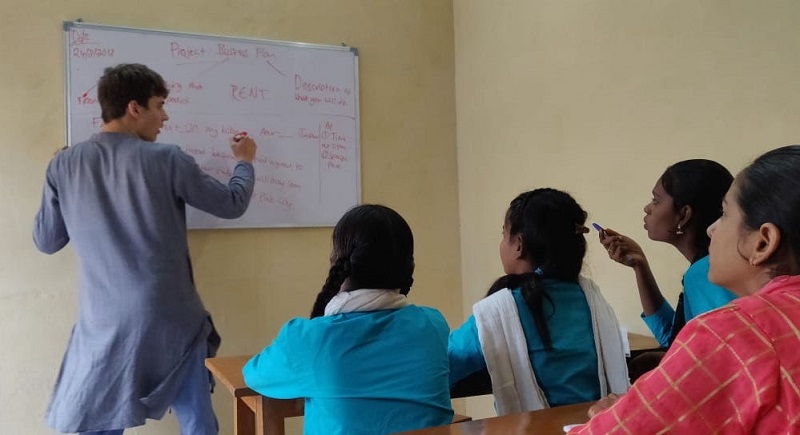
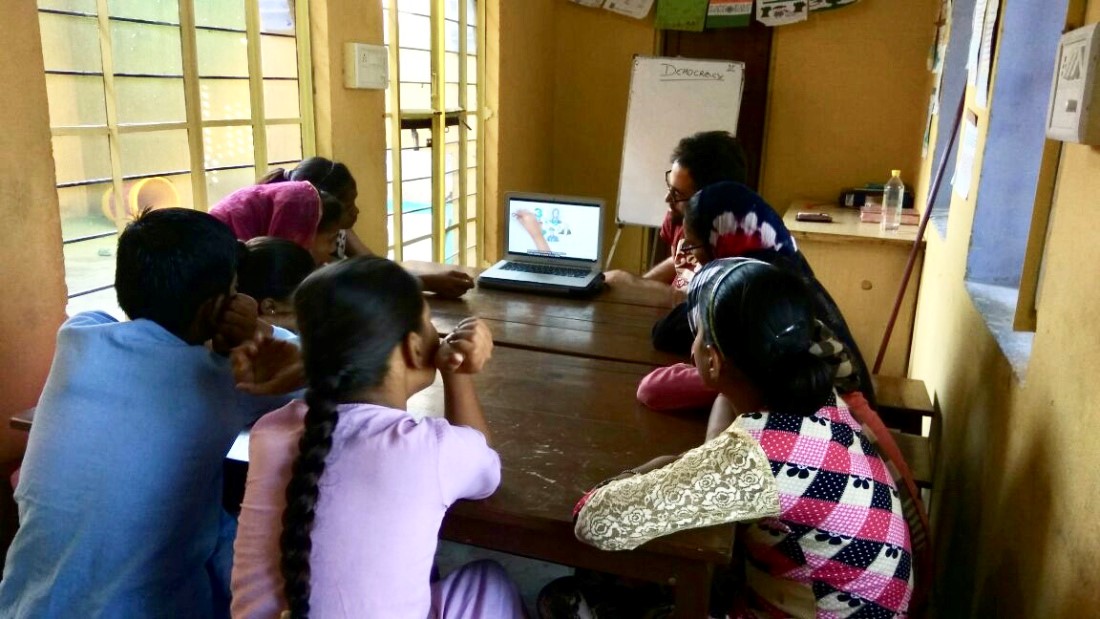
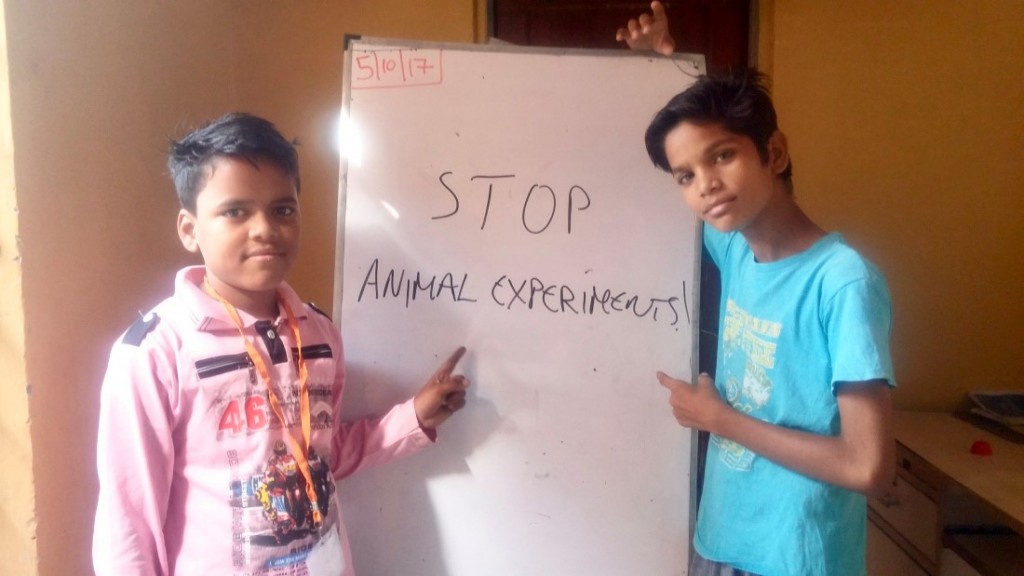
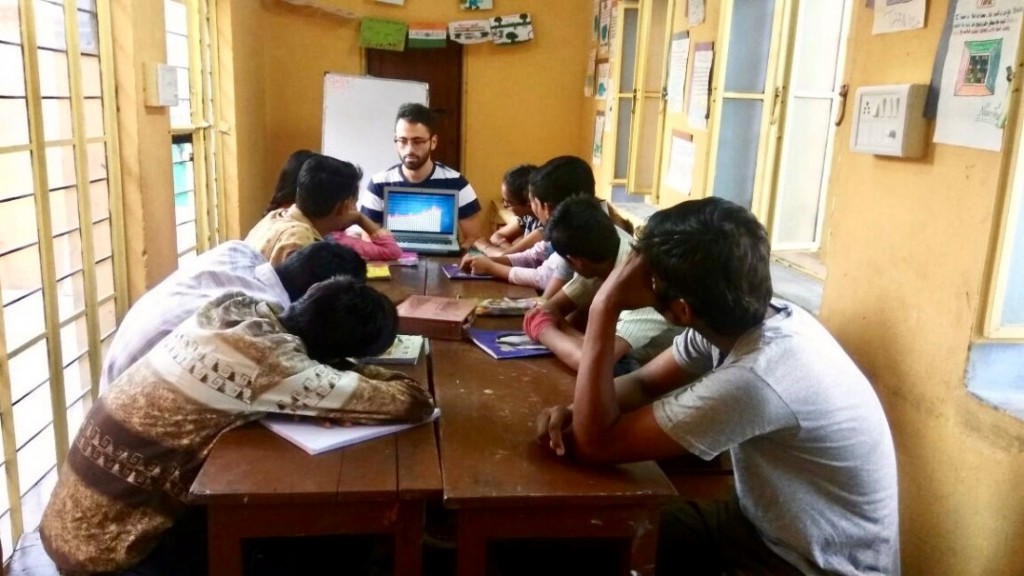
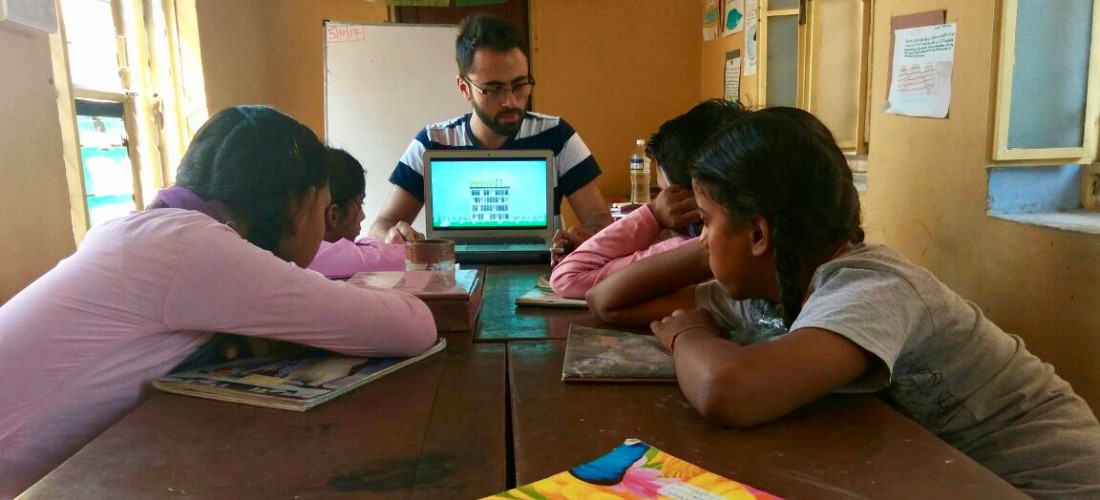
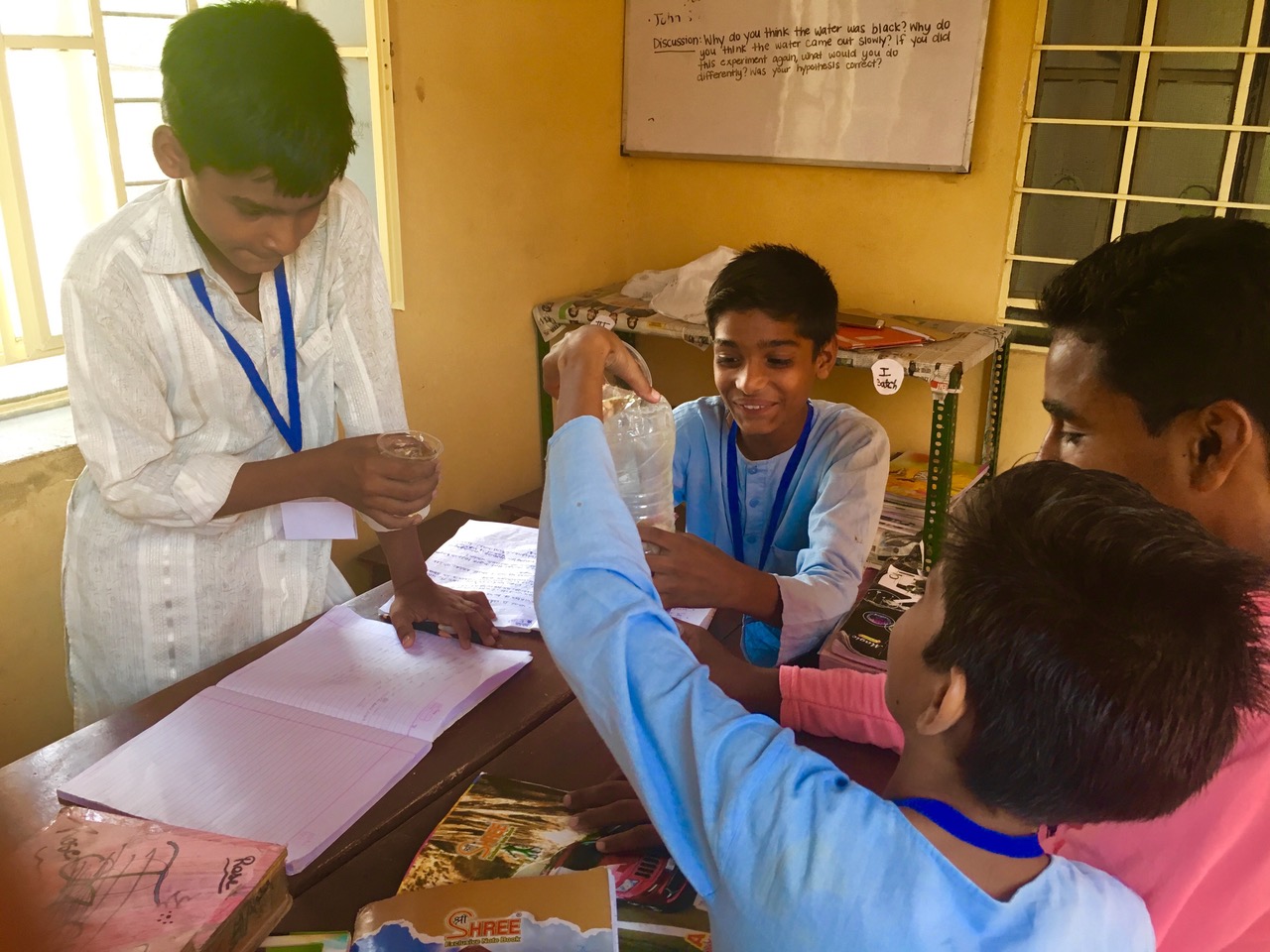
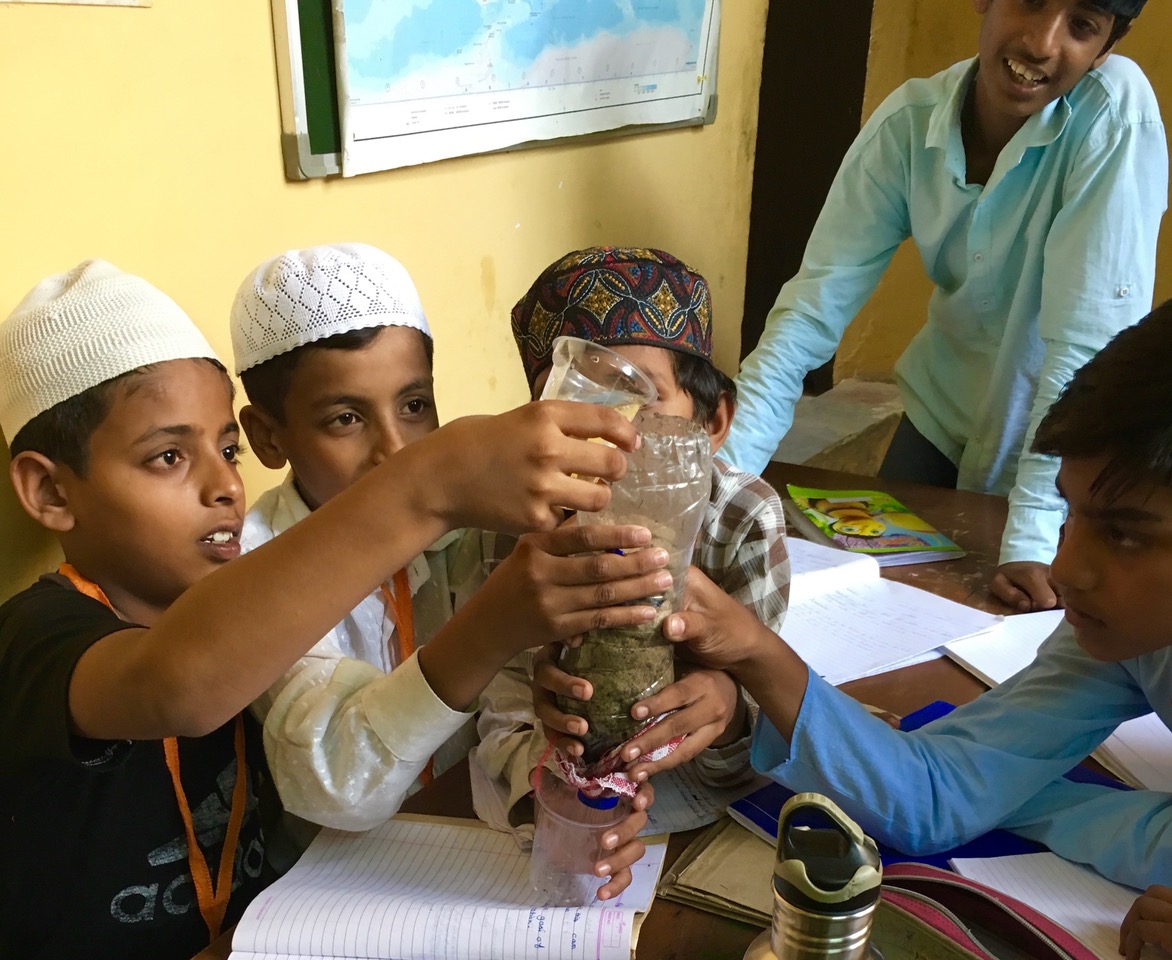
This was my last full week at the foundation! ☹ It has been so bittersweet: sweet because this week was wonderful and I think very very successful; but of course, bitterly so because it will all be coming to an end so soon. This week I was finally able to dive deeper into science than any of the previous weeks. I taught my students about forces, gravity, and velocity—and they seemed to grasp these complex concepts very well. I showed them many experiments in class about objects falling to the ground. I dropped a marker and a heavy book at the same time, and prior to doing so I asked the children which they think would hit the ground first—most said book, some said marker, and only one student out of all my three batches said “same time”. So then I showed them and I dropped it multiple times so that we could all come to a consensus, and they were all quite surprised to see that the marker and the book hit the ground at the same time. Then I dropped a piece of paper and the marker, and they saw that the paper fell slower. Then I crumpled the paper into a ball, and they were all surprised to see the paper ball and the marker hit the ground at the same time.

Indeed, observation and experiments were a big focus of this week’s lessons. I hope the children have taken away an important lesson: they themselves can test things out in order to learn new things about the word. After all, that is what science is all about!


3


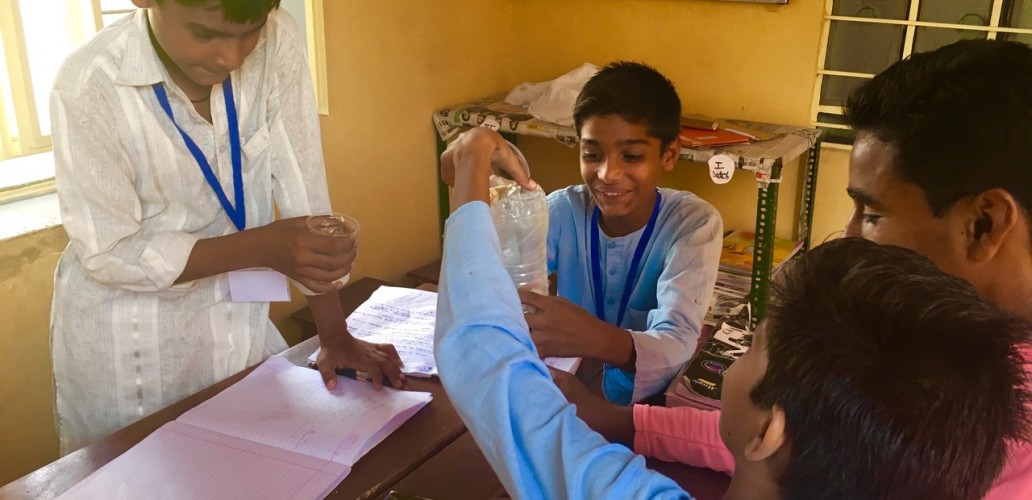
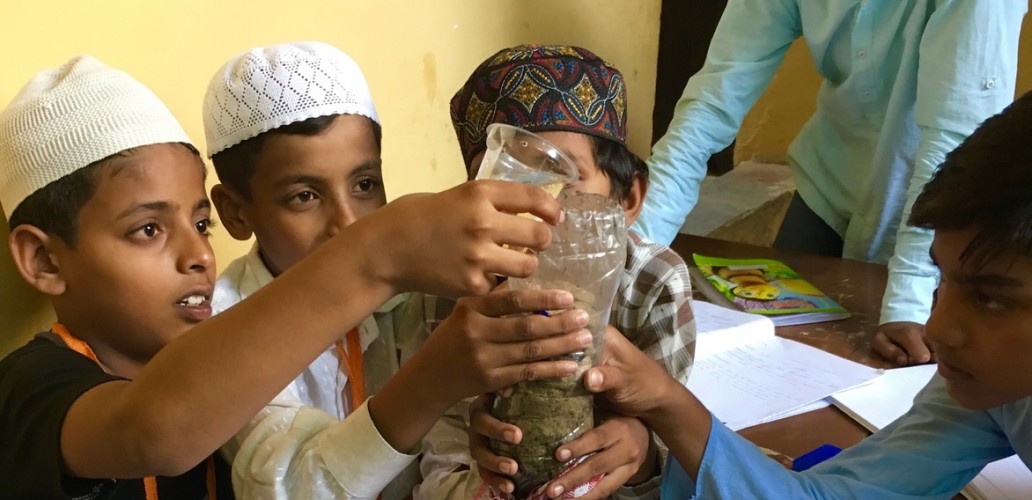
I think the greatest success this week is stitched into what was initially the biggest challenge this week: teaching the children why the moon goes around the Earth, and doesn’t fall into the Earth instead. This required a little bit of creativity on my part. I realized I needed to show them why this occurs, not merely explain. This way they would be able to see with their own eyes how it works! So I tied a ball at the end of a jump rope, and swung it around me with myself spinning in the middle. I showed the children that only when the velocity of the ball was perpendicular to the force being applied by the string, would the ball move in a circle. If, instead, the ball’s velocity was 0, and I pulled on it with the rope, it would simply fall into me. Or, if its velocity was not 0, but was in a direction along the line of force (again from the rope), the ball would fall in again. This is exactly the same way the moon goes around the Earth: it has nonzero speed and its motion is not in the same direction of the force acting on it (only here the force is gravity), and thus it moves in a circle, and does not fall into the Earth. I was so impressed—I think the children really got it! I was so incredibly happy and excited, because I remember how hard it was for me to understand this difficult concept.


1
I even had the children try swinging the ball, so they could feel for themselves the force being exerted by the rope. I also had them try swinging the ball at different speeds, and that way they could see that to swing the ball faster around the circle, they needed to pull with the rope harder. They were quite excited by this experiment!

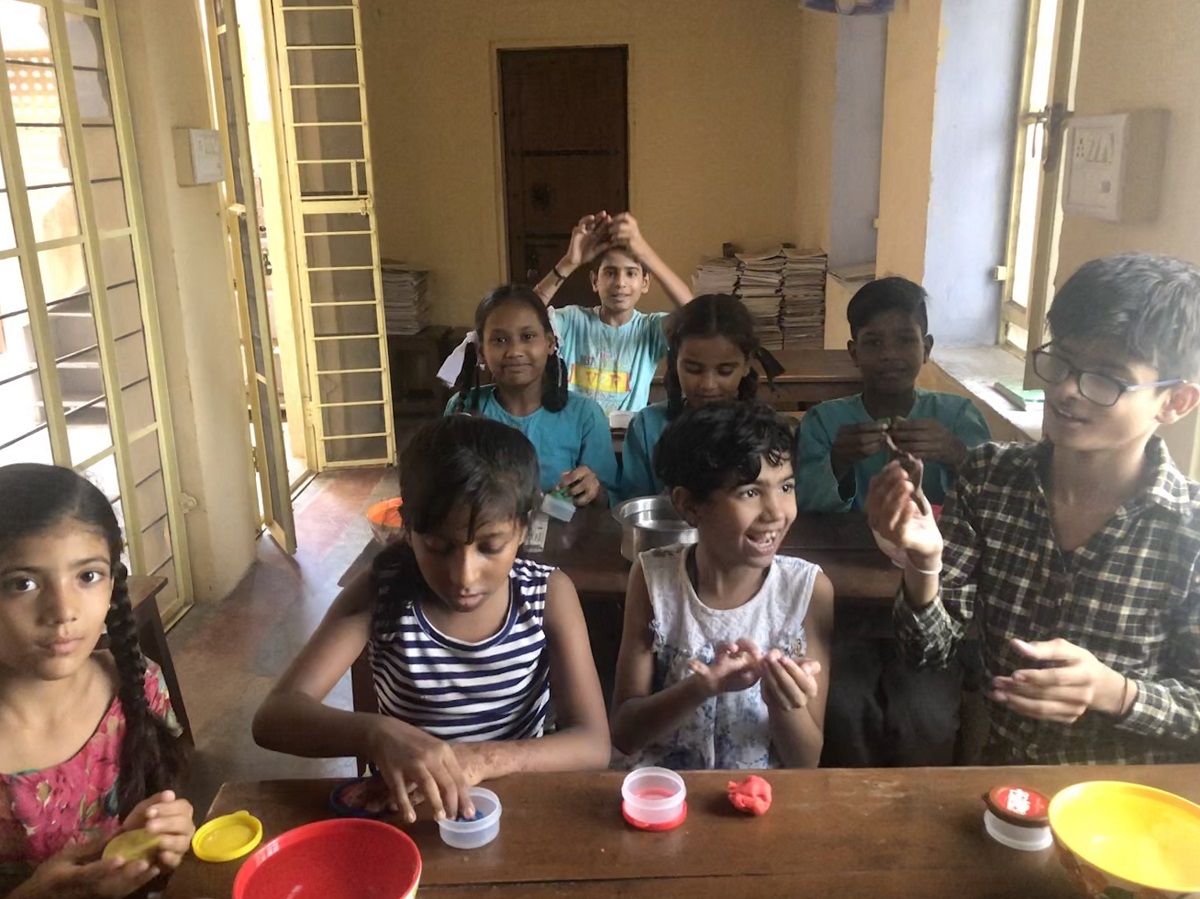
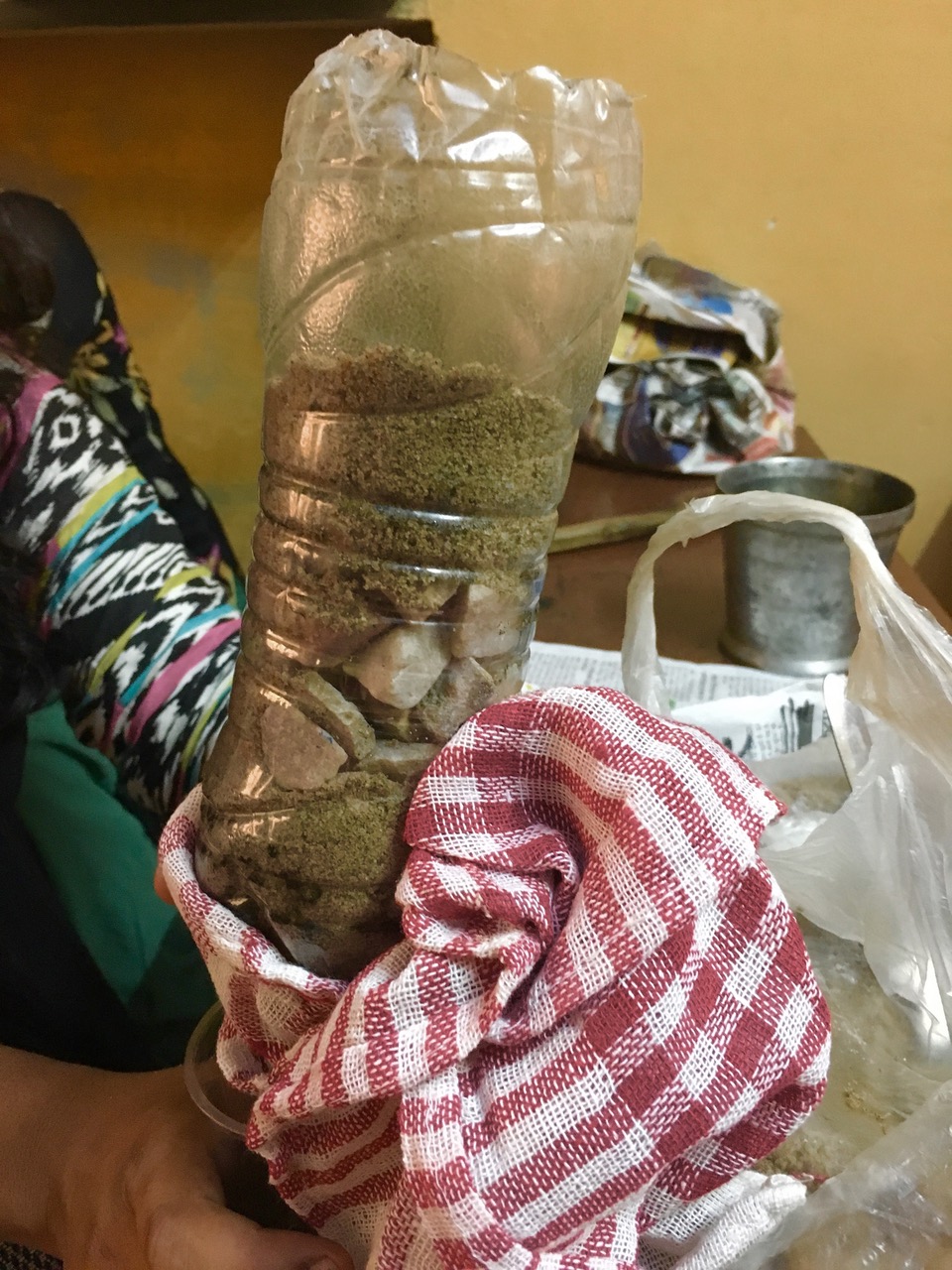
Next week I want to continue this experimentation thread and give them balls of clay, and tell them to try to make the clay float in the water. I think this will add a new and important dimension to our experimentation, because it will be the first time I give the children the opportunity to figure out a way to answer a question themselves!


2

Tushita’s Tiniest Teachers by Victoria Lord

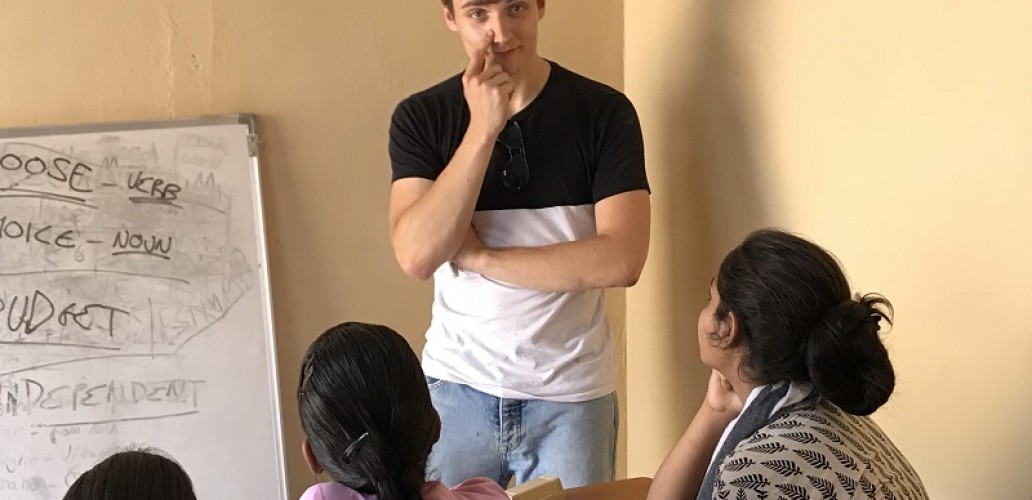
“Dopaminergic projections from the ventral tegmental area to the nucleus accumbens are responsible for reward processing,” I used to explain to my tutees. Boarding a plane to India, I fooled myself into feeling fully equipped to teach based off of my years of experience tutoring neuroscience, chemistry, and biology. While the ability to contextualize quantum energy levels to university students was a valuable skill, I realized quickly that teaching at the Tushita Foundation would be quite different than any of my past experiences.

Nothing would be as different as the day I walked into the Sunflower Class. I entered mid-November jet-lagged and completely unsure how to teach the twenty-eight beaming faces looking up at me. I knew I loved kids and would thrive off of the boundless energy that six-year-olds possess, but I knew almost nothing about how to manage and educate them. To be honest, I floundered the first week. I didn’t know how to structure or pace the class – there was little learning and a lot of mayhem. I left that first Friday completely overwhelmed.

That weekend I began to reflect on how to approach my eager and rambunctious students, and I realized that to teach the little ones I needed to leave behind almost every tendency I’d developed in my western education. There were to be no desks, no tests, and no lectures. Instead there needed to be patience, instead of efficiency. Coloring, instead of outlines. More adaptability than structure. More singing than testing.

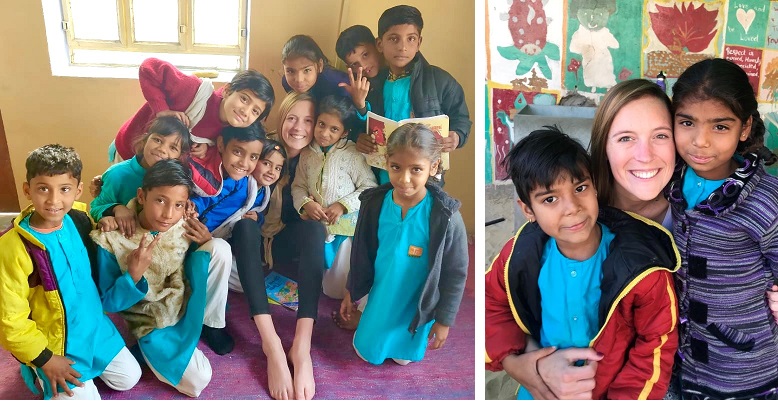
It is now three months later and I’m heartbroken to be rotating out of the Sunflower class. I’ll miss the way Sabreena leaps into my arms each day, the way Kohinoor always fights to sit next to me, the way Zoya rushes to help me sharpen pencils for the class while attendance is being taken, and the way Alfaz fist pumps to himself when he gets the answer correct. The little ones’ affection has certainly enraptured me, but what has made these past few months so special with them is much deeper than their infectious personalities.


1


I’ve stumbled across the quote, “In learning, you will teach, and in teaching, you will learn” a few times, but it wasn’t until working with the Sunflower Class that I fully understood its meaning. It is easy to objectively measure how my students have grown by the number of full sentences they can now say, but it is quite difficult to measure the ways they have changed me. The lessons I teach them have concrete names but the lessons they teach me are subtler, and yet likely much more profound. I’ll try my best to describe some of these lessons, but I worry that words will not do them justice.

You can always become more patient.

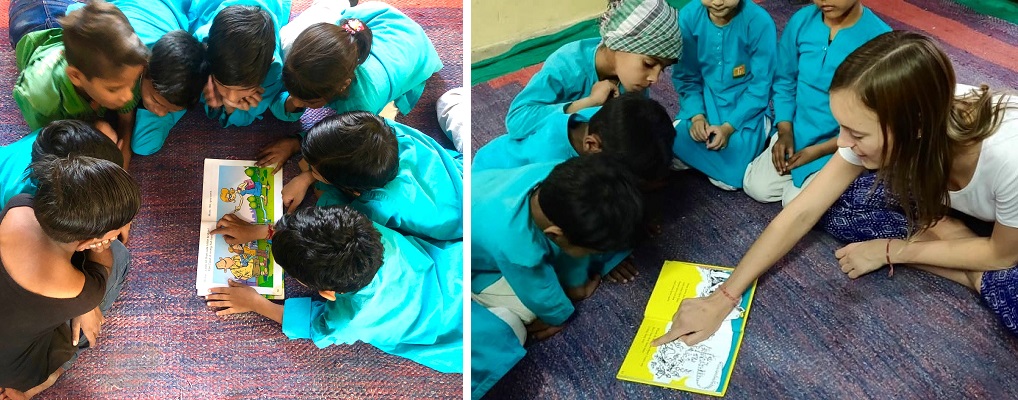
Few of us remember learning to read. The years we spent memorizing phonics and slowly stringing together syllables are not well encoded into our memories. Thus, when we sit with those just learning to read in a new language, the urge to blurt out the correct pronunciation is strong. The first couple of times we sat in a circle with Green Eggs and Ham, I had to forcibly hold my lips closed to not read out each line. The best Sunflower children are slow at reading, the worst may take an entire minute to string together a-n-d. But, I’ve found that if you stay quiet and stay with them, most children can read the words. They need time and they need space. I wonder how much talent and skill we’d see in each other if we always gave one another enough time and space. Each Friday dedicated to reading challenges me to develop deeper patience and thus shapes me into a better teacher and friend.


3


Somedays, playing is the most important task.

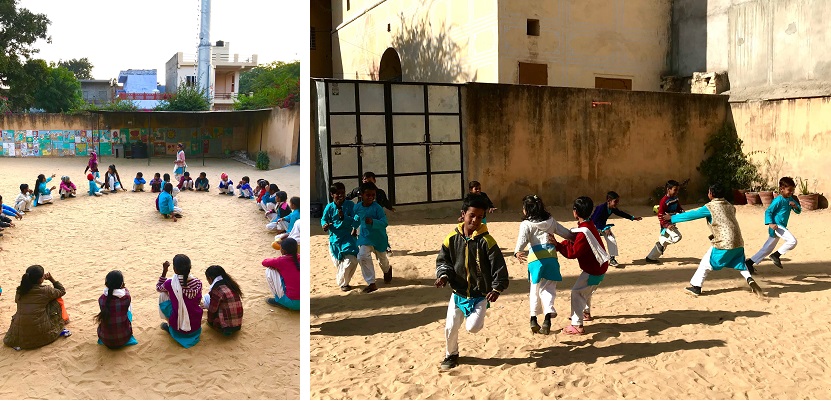
Days dedicated to writing and memorizing new vocabulary are important, certainly. But some days, the sun is shining, the children bound into class with loud giggles, and the classroom feels a little too cold and dark. Those days, we play. My previous plan-loving and efficiency seeking self would have worried that we were falling behind. As I watch the children run, laugh, and work together, I remember how important it is sometimes to just be free. We’re so often told to be quiet, be still, and be alone. The little ones playing are a perfect reminder of the power and importance of being loud, being active, and being together.


5


Little victories are often the most rewarding.

I’m used to measuring success by the percentage correct on a test or the letter grade marked on a transcript. In the Foundation, where tests are not given and success is demonstrated through elevated confidence, I felt unsure how to measure my students’ progress. The Sunflowers have taught me that growth can appear in small, unexpected moments. I’ll never forget one of these moments with a quieter student named Pooja. We had spent the week learning about the five senses, first learning the names of key body parts and then pairing simple verbs to the sensory organs. For example, we practiced sayings, “I see a cow” or “I taste a peanut”. Fast forward to a sunny Saturday, when the speaker has just begun to blast a recent Bollywood hit. I saw Pooja running across the playground and, as she stopped in front of me, a look of intense concentration spread across her face. “I….hear….a….a song…I hear a song!”. Just 4 words, 10 letters, but immense pride swelled in both of us. While the victory may be small, its meaning is often great.


7


Persistence, persistence, persistence.

Sometimes review questions at the beginning of class are met with blank stares. There have been days when I’ve left unsure that the little ones had absorbed anything we had learned in the past two weeks. I am tempted on these days to succumb to the doubt that they will never remember, but I remind myself that while little ones absorb quickly, they forget just as quickly as they learn. During our unit on the body, I’ve asked them every day what the heart and lungs do, and each day one more child has chimed into the collective, “The heart beats!”. Three weeks later and there is a chorus of thirty little ones responding with confidence. Yes, that meant three weeks of reviewing the same question. Three weeks of not giving up on them, of believing that even the quietest ones were capable of speaking full sentences about the body. I think sometimes we all need someone to stick with us for weeks and to remind us that forgetting is okay. I’m starting to understand how to be that person.


9


Perfection draws barriers, mistakes bring us together.

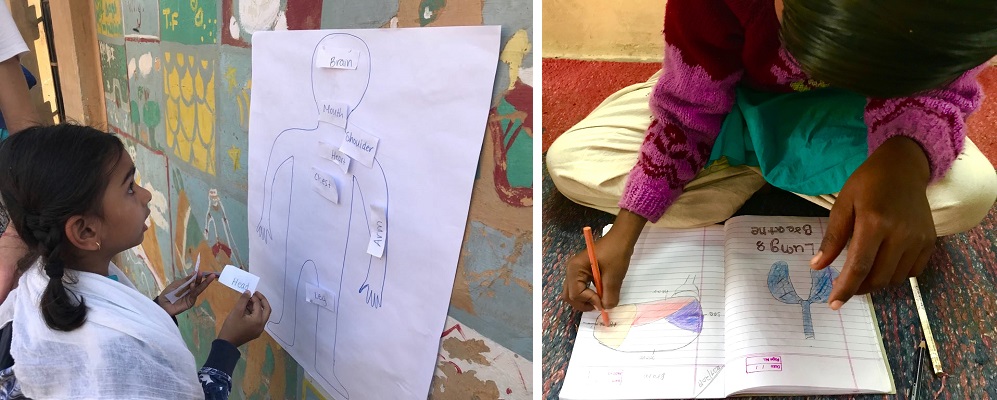
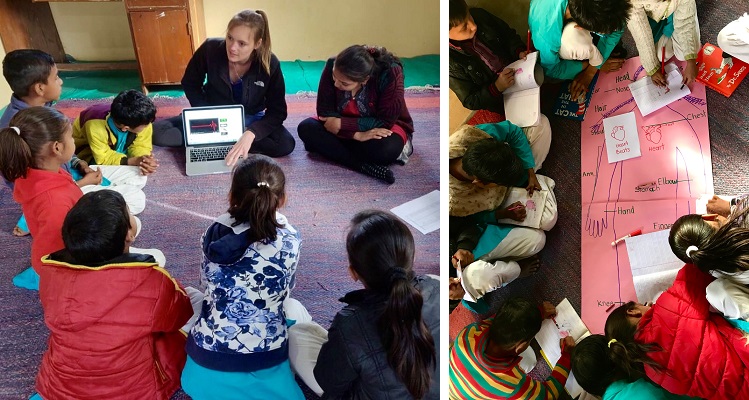
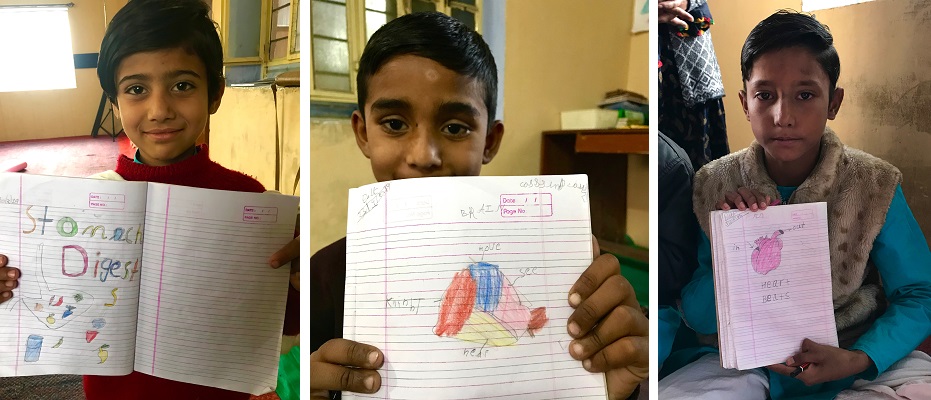
Almost everyone tells us to be perfect. We all try to put our best foot forward. Usually, this results in high grades or success at work but it also builds walls. I think we all inherently know we aren’t perfect, and yet our frantic drive to correct mistakes suggests that we are adamant to prove that we are. The problem is that this drive to set ourselves apart by perfection leaves us isolated. Halfway through my time with the Sunflowers, we began to draw very simple anatomy of the major organs (keep in mind here that these are six-year-olds). In our first picture, I attempted to draw the heart with perfectly proportioned valves and ventricles. I saw the children intently trying to mimic the shapes I drew, and the excitement in my voice when the most talented children showed me their success was undeniable. But, there were many children who struggled with drawing and whose pictures resembled a blob with tubes. They stayed quiet and closed their notebooks quickly when the bell rang. The next day as I was drawing the lungs on our large body outline, I made one lobe a completely different size than the other. My instinct was to erase the line and fix it, but I remembered the sheepish kids from the day before. So, I outlined my mistake in a bright purple and embraced the imperfect lungs. From then on, I saw the little ones draw more freely. Perfectionism has long defined me but I’ve seen that laughing off and accepting our own mistakes allows others to feel safe to make their own. I’m starting to think we could all use a little more imperfection in our lives.


11


Affection actually is key.

During a teacher’s motivation workshop several months ago, we listened to a speech by Rita Pearson called, “Every Kid Needs a Champion”. Much of this talk has transformed the way we have taught these past few months, but one line, in particular, has stuck with me. Rita jokes, “You know, kids don’t learn from people they don’t like”. Affection matters, friendship matters. Perhaps surprisingly, being able to speak the same language doesn’t. After the first couple of weeks in the Sunflower Class, I began to feel connections building with my students. They began to smile when they caught my eye and if there was an extra minute at the end of class we would dance, toss a ball around, or play rock-paper-scissors. The increasing warmth between us translated into children fighting over who would sit next to me in our circle each day. At first, only the most vocal and confident students would sit next to me but soon even the quietest students, like Asad, ran to my side. I have realized that when a child feels seen, the trust they build grows an openness within them to learn, to evolve, and to flourish. It is in this space that we as teachers can create a lasting influence. Loving those infectious personalities was the key all along.


14


Every day in India has taught me something new and every person I have met has shown me a depth of welcoming, kindness, and generosity greater than I ever expected. I knew this year would teach me and push me to grow, but I never imagined my greatest teachers would be these little ones.

House and Home by Catrina Bellucci-Dilizia

1


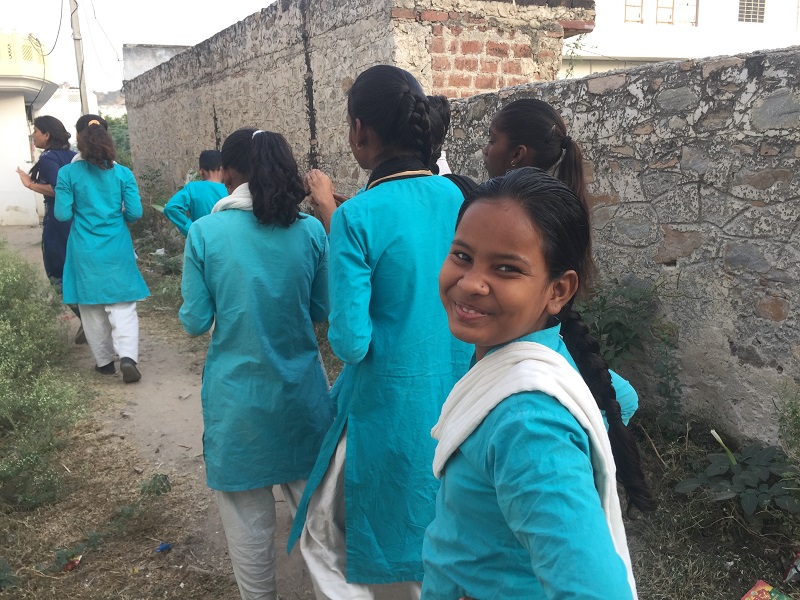
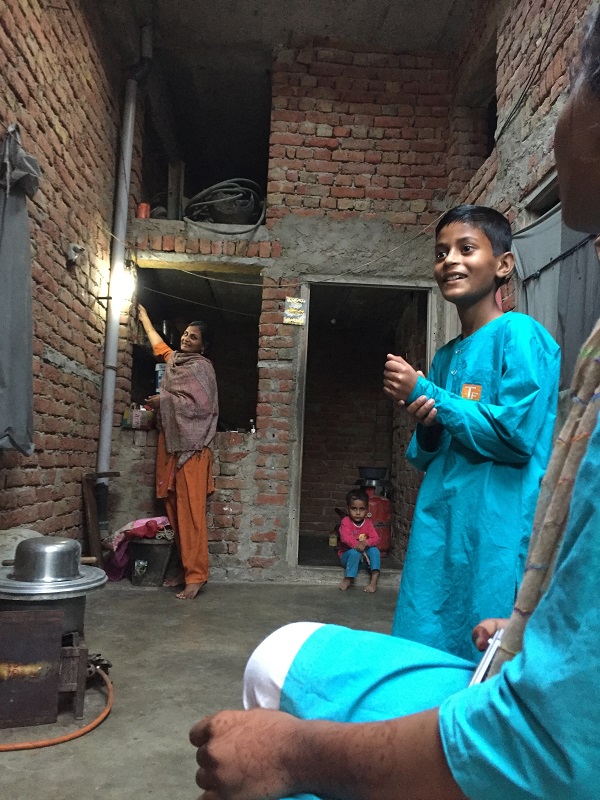
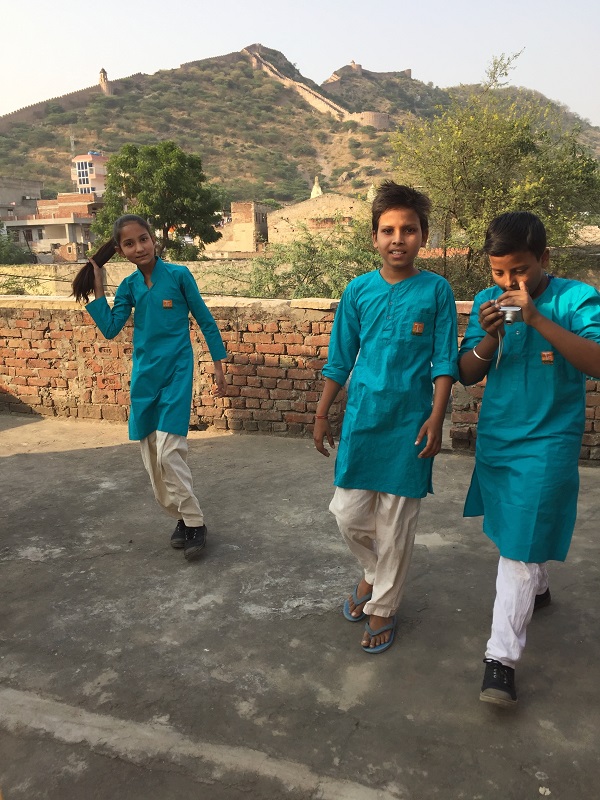
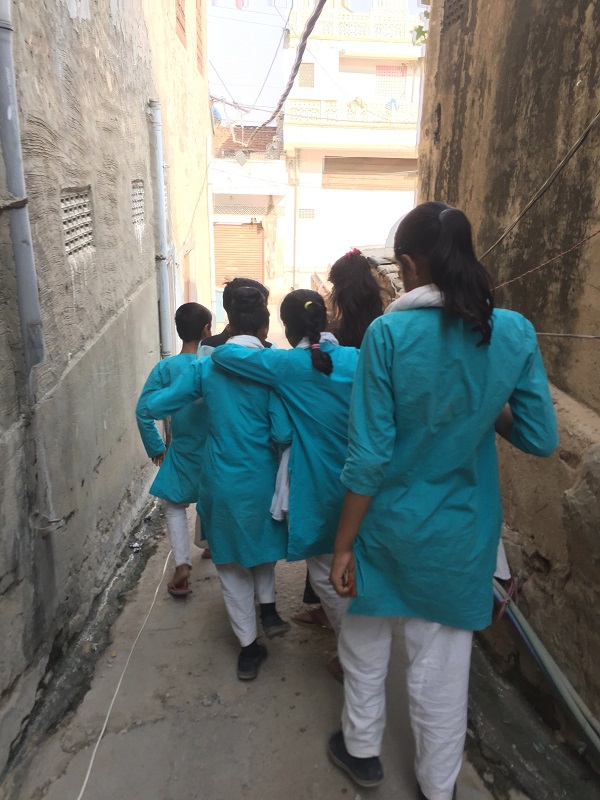
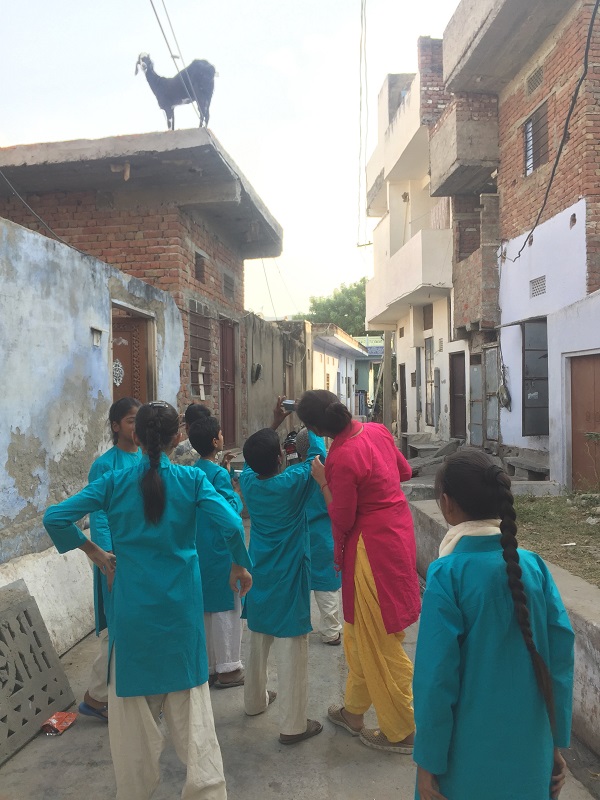
A beautiful thing about Amer is that friendly faces are always found during our time on the road. Whether it’s the students from other classes shouting “hello” from the balconies, or the curious neighbors inviting us in. Strolling down the streets and paths, cameras dangling from our wrists, we’d occasionally see the elderly peeking out of doorways signaling for us to take their portraits. Over the course of my past few months here at the Tushita Foundation, I’ve had the pleasure of interacting with the community of Amer in an unforgettable way. Through sharing my excitement for architecture with the Rose and Lily classes, I was able to get an intimate glimpse into the lives of our students in their village and in their own homes.


2


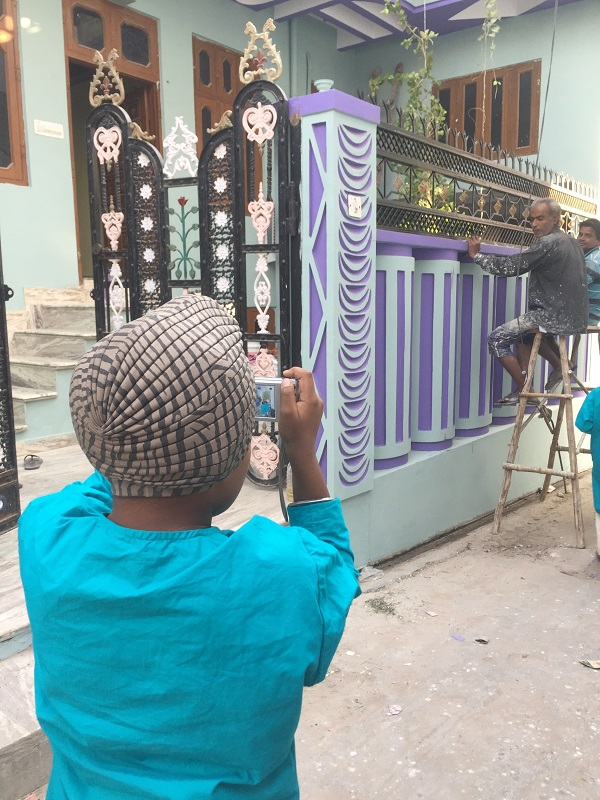
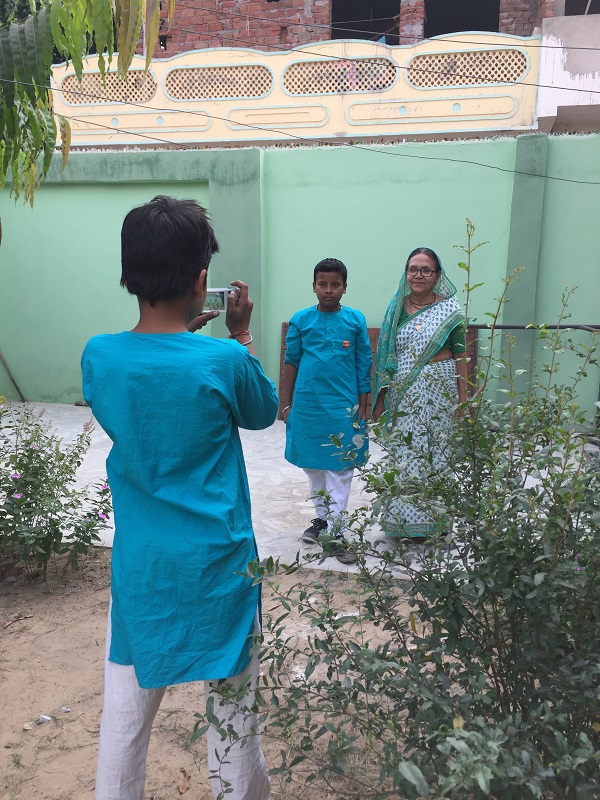
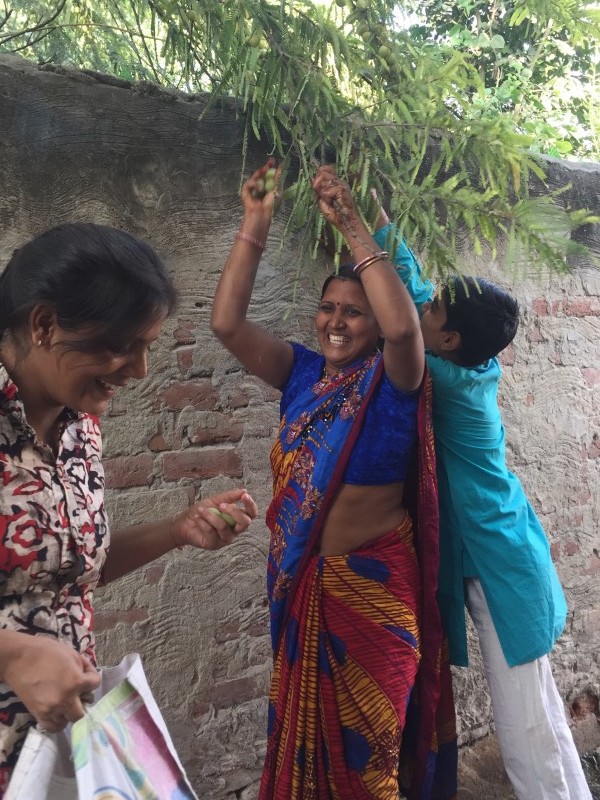
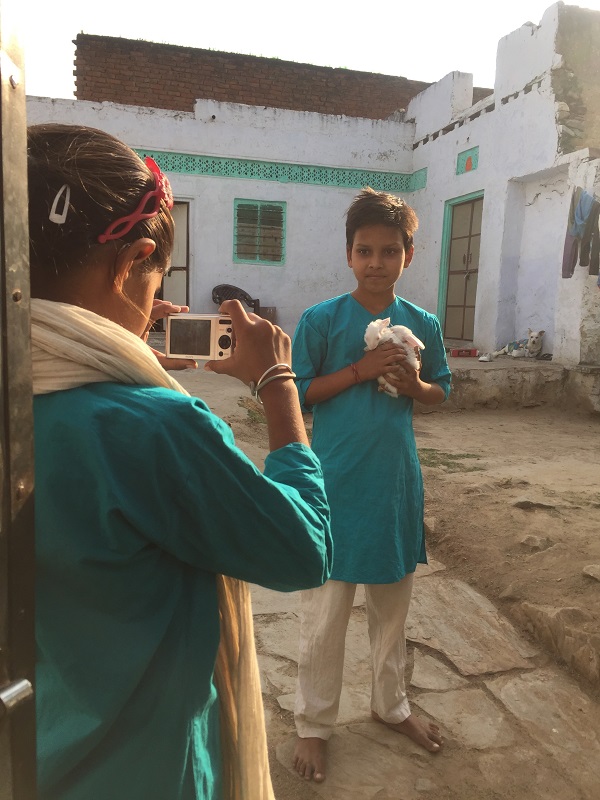
We were able to utilize cameras graciously given by Outside the Lens to conclude our time in class together which was spent learning about just what makes a house and what makes a home. The excitement over photography was palpable from more than just the students. Even painters, perched high on ladders adding beautiful bright purple paint to complement green walls, asked the children for their own photo shoot. We’ve been warmly welcomed down winding paths into an orchard to pick fragrant fruit from trees. One woman even jumped higher than all of us, and in one swoop grasped a branch filled with the little gems of fruit that were once unfamiliar to me.  We took these cameras with us on small journeys through Amer to each child’s dwelling where we were able to capture, through their own unique perspectives, just what makes their home so special.


3


In these instances, I’ve been able to appreciate just how incredible these students are outside of the classroom. From the start, I’ve known just how special they were; from their eagerness to learn and to ask questions, to their thoughtfulness and generosity in showering us with hugs and handmade gifts after class. They make the Foundation a pleasure to be in. It’s no wonder that while learning about the difference between a house and a home they enthusiastically categorize Tushita as the latter because for them it is a place to play, learn, and grow with friends they cherish. By the same token, and from what I’ve seen on our walks, these attitudes translate seamlessly to their environment outside of the classroom. The care and love they show for people in their community is heartwarming. It goes to emphasise the idea we go over in class; home can be further than just the walls that surround us. Having known these kids for some time, it was still enchanting to see just how their manners, sense of respect, and compassion also translate to their community outside the walls of the Tushita Foundation. This, of course, is reciprocated by the community members in our shared interactions.


4


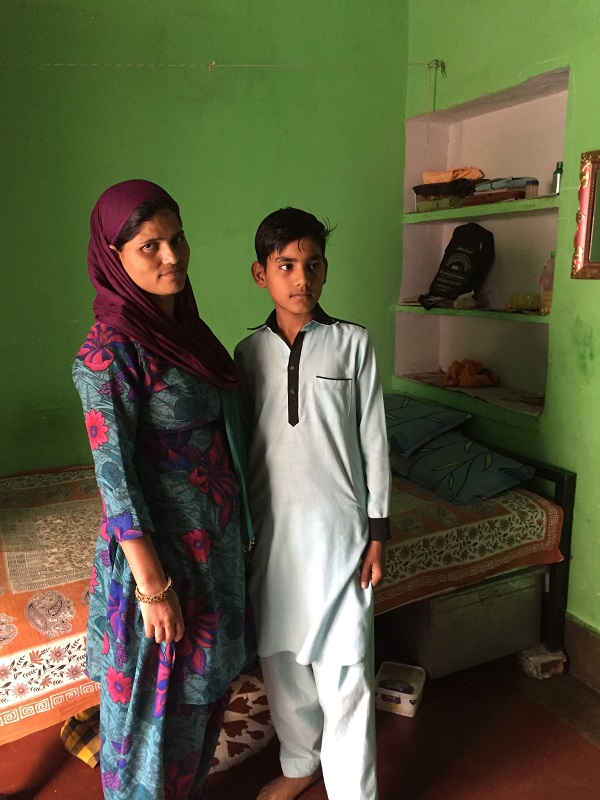
Most of the time when we visit a house we have to kindly refuse all the sweets in order to continue on our journey and reach other houses. Our unexpecting hosts, nonetheless, bring out all the water we could need. One day, in particular, it was extremely hot and I couldn’t resist. I was confused that what I was drinking was being poured out of a labelless-detergent-like-can, but I was also three hours into the walk. What hit my mouth was the most delicious thing I had ever tasted, rose water. Refreshing is an understatement, heavenly is closer to the truth. Sweets and treats are offered to all the children from the parents and grandparents regardless of whether they’ve known them previously and regardless of religious differences.


5


This sense of respect for others, especially across religious differences, was in fact what partially drew me to the Foundation. While indiscernible to me at first glance, after a few walks through Amer I was able to pick up on these slight variations that signal an invisible boundary has been traversed. Upon entering different parts of the village you notice subtle distinctions unfolding as the inhabitants’ faiths change. It is noticeable, for instance, in the attire that transforms as little girls and boys make their way running around the corners to reach the mosque for prayer.  As I’ve come to understand, the children go to the same schools, regardless of religion, but at the Tushita Foundation children of all faiths are given the space for and encouraged to play together. This makes interactions easier and consequently, forms strong friendships that cross any differences that I perceive while walking around. With the Tushita Foundation, the students have a reason to enter the home of a family with a different religion or walk through the different neighborhoods. They are warmly welcomed into these homes thanks to the foundation and the students’ willingness to share something so personal with each other.  One of the reasons I was so drawn to the Tushita Foundation when learning about it was that through the pursuit of education, it had become a de-facto community center for families of different religious backgrounds who wouldn’t necessarily get a chance to mix and engage with each other. Coming from the U.S. during a growing climate of intolerance, this really resonated with me. I found this exchange across religions, however humble, inspirational and I wanted to be in an atmosphere that fosters this delicate exchange.


6


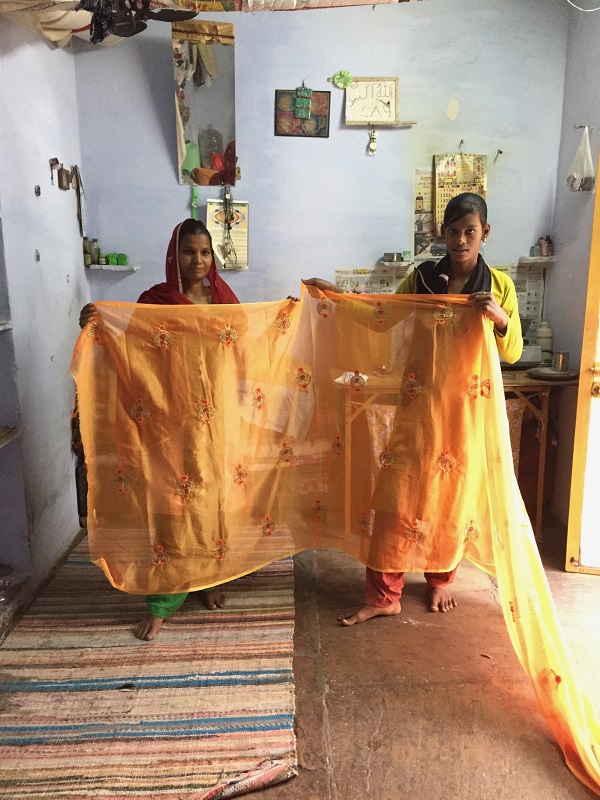
In another contrast from the land I left, I have been captivated by the sense of pride found in the homes of the children we would visit. Proud people in circumstances that others may not find glorious, yet they find glory in what they do have. Proud of their work, proud of where they live, proud of their children and proud of themselves- as they should be. Without prior notice, the parents would open up the doors to their homes for us and happily show us around. As we would enter, the faces of the children and parents glowed with satisfaction. The students would come alive in their element. As part of the students’ projects, they crafted poems to accompany the portraits they took in their house. Each student got a chance to reflect on just what made their house a home in their opinion. Some would run to their bedside shelves to show off awards and flower bouquets, other students were beaming as they introduced us to their grandparents, carefully finding a spot next to them as to not disturb their comfort. Still, others would run into rooms to find and pick up their precious baby siblings to bring back to us for a photo, holding them in a warm embrace.


7


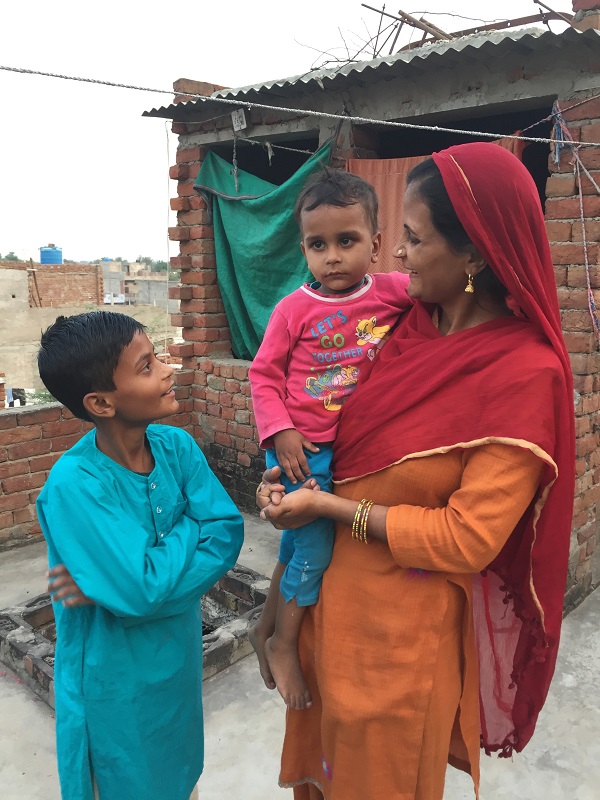
Our student, Bilal, once soft-spoken, shined as he showed off his house of exposed brick and dim lights. He glowed in this environment. He hopped up onto the terrace to airplane-walk across the thin wall to the top of his house where he has collected a myriad of things like branches and ribbons. It is his secret hideaway containing his prized possessions. These little moments of sharing while witnessing people in their comfort zone at home have brought me so much joy these last few months in Amer. Along the way, we’ve been able to witness the strong sense of community that permeates throughout and just how much love is collected around the home and town in general. I feel honored to be able to play my part in facilitating these interactions between families and students.


9


Oliver Northover Smith: Final Reflections

Doing anything for the first time is hard. It’s especially hard when you’re in a totally new environment to do it. The Tushita Foundation is a unique, homely, crazy, exciting, energetic and loving place. There is nothing quite like it.

I came to India to teach business and commerce alongside English with the dream of imparting entrepreneurial impetus to the students. On reflection I think I have largely done this – from Farha telling me confidently she will be a fashion designer to Aqib telling me that one day he will have a different BMW for every day of the week – but there are some things I would have liked to have known beforehand.

I settled into my time at the Foundation with great speed and had a wonderful experience. I felt supported and loved by the people around me and saw them as an extension of my family. They made my time here a pleasure. However, there are a few pieces of advice I would give to my past self. This piece is addressed to anyone who is looking to do a similar thing, so you can hit the ground running when you arrive.

Ollie 3

  • Be adaptable

You cannot afford to have any preconceptions in this place. Those that you have will leave you profoundly shocked and will perhaps turn your view upside down. Here are a few examples of this happening:

  1. Students, from their experience of the world, know far more than you think they do. I thought that discussion by their parents or on the news of interest rates would have passed over the children’s heads. For some, this was certainly the case. For others, they had astutely picked up on what was going on around them. Be ready to use the students who know these things as a weapon. They speak fluent “Hinglish” and are often your best weapon in the classroom.
  2. Students can be very advanced in some areas, but lack knowledge in areas you would have considered as prerequisites. Students can calculate compound interest without a problem but then struggle to use the correct pronoun or preposition in English. Be aware of this: students will need some instruction in areas you think are trivial. This will be frustrating but is ultimately necessary to succeed.
  3. Class control, noise and motivation will need to be taken care of. This I did not expect given what I was told about the students in the Foundation! Though almost always out of a burning desire to contribute rather than a desire to disrupt, you will find some students make teaching more difficult. You have never experienced this before, so use a mix of tools (using the teacher helper, engaging other students directly, mix students up to form groups with people other than their friends) to work around it.

Ollie 4

  • Be patient

Progress comes at its own pace. You need to slow your mind, tongue and expectations down. You have lived in a bubble for a very long time and being outside it for an extended period is a culture shock. You are anxious in the short time you have to maximise your impact. But remember that impact is measured in words understood and not words spoken or read. Do not let your excitement and enthusiasm leave the children behind. What good is a bus hurtling down the motorway at 100km/h with no passengers onboard?

Realise that the pleasure of teaching these children comes from seeing them explain something back to you or write something in their book that is correct and/or profound. Wait for these moments. They will come, and when they do you will be overjoyed. Seeing Jayant’s newspaper advert for his new car (his father is an artist and wants to replicate) or Rinku’s healthy fast food restaurant (he wants to introduce a chain that mixes Indian flavours with healthy fast food options) will be reward enough.

Be patient with yourself too. You cannot learn Hindi to native level in a month and a half. You cannot expect to say the right thing every time. You learn from your mistakes and you see them as hurdles on the way to the final goal.

Ollie 5

  • Be proactive

Good things do come to those who wait, but they also only come to those that are looking for them. This is a huge, diverse and profound country that is waiting to be explored. Finding its best bits require going beyond what you’re comfortable with. You will be on the go all the time and constantly exhausted, but you will make the most of your experience.

Meet locals. Have coffee with them. Ask them endless questions. Ask them to show you places only they’re likely to know about. Pack your weekend with exciting trips away from Jaipur. Learn playground games from the students that you don’t know. Embarrass yourself singing and dancing and writing in Hindi. All these things are the things you will remember from the trip.

Ollie 6

  • Learn from the teachers and students as much as they learn from you

Living in a different cultural environment, the teachers have vastly different beliefs and experiences to you. From casual conversations to the actual lessons, I learnt an immense amount from my colleagues and students. I have learned about their daily lives and concerns, their religious and cultural practices, and about how they most effectively learn. I were to have my time again I would make an effort to connect with all the teachers. I developed a strong bond with the teachers I had in my class and in teacher sessions, but this meant there were a few I was not as close to.

My advice to my past self, condensed into a single line, is “get stuck in.” You only have two months so you have to hit the ground running. It will be exhausting and crazy but necessary. I largely felt I was able to do that, but in retrospect there are some things I would have done differently.

Ollie 7

  • Why my experience was special

Though I would have changed some things, my experience overall was extremely positive. Here I would like to recognise and give thanks to the things that made it so special:

  1. Veenaji: she really is the backbone of the organisation and frankly the wisest person I’ve ever met. She made me feel welcomed, guided, loved, cared for and empowered all at the same time. From watching the paneer tikka sizzling on the tandoor to dancing to Bollywood (“Main tera boyfriend, tum meree girlfriend!”) in the basement, some of my best moments were orchestrated by her. But it was the subtle underlying support that made her so special. She really felt like a mother and for that I am truly thankful.
  2. India: this is a place of more colours, smells, tastes and sounds than I had experienced before. I ate amazing food; I learned how to be vegetarian; I saw beautiful elephants, monkeys and birds; I met wonderful, genuine and kind people wherever I went. I made local friends that I will keep for life. I will come back numerous times; I have experienced but a fraction of what this gargantuan country has to offer. The trips we did take out of Jaipur – to Udaipur, to Mumbai and to Goa – gave me a glimpse of the diversity of the country. Serene temples to world class nightlife to incredible verdant beaches; this country is incredible.
  3. My fellow volunteers: all three of my fellow volunteers played a role in making my experience special. Victoria’s passion and knowledge about the world and issues within it made for some fascinating conversations, and I am hugely confident she will make a world class doctor. Her razor sharp attention to keeping things structured and organised kept us all in check, and her desire to get out in the fresh air on Sundays made for some fun trips out. Sandra is a very thoughtful person from whom I learned a lot, most notably to ‘pick your battles.’ I feel very strongly about many religious and political issues, but putting these views forward often alienates others despite my not wishing it to. She taught me when it is necessary and desirable to discuss an issue, and when it is not. Her passion is enormous and everyone feels it, which is highly energising. CJ is a super resilient person and served as the backbone of the group. Never phased by anything and perpetually kind, I am immensely grateful for her presence.
  4. The children: never before have I met a group as eager to learn and as sharp as these children. In both Rose and Lily classes the students caught onto new concepts very easily, and very rarely caused trouble in the classroom. The final projects they produced were simply mesmerising. Intricately drawn pictures from cars to jewellery along with some intelligently considered English description of how they would start their companies characterised their work. I am confident that they will go away believing that entrepreneurship is not just for baraa log but for anyone. With an idea and some drive they will achieve great things. They will stride into the bank and understand the terms of their loan, which I hope will be transformative.
  5. Lilima: I made an impassioned plea for Lilima to be chosen in the first week and it was without a doubt in my mind the right decision. She was organised, made sure I delivered what was required of me, and helped me to plan my life at the Foundation. She helped bring the best out of both me and the co teachers with her intermittent drop-ins. But perhaps more importantly she was a great personal friend with whom I could share my concerns.
  6. Virendraji: a wonderful guy and a great driver; essential when you’re in the car for more than two hours a day! Being one of the only men in the Foundation, we were able to bond over our experiences and I am proud to call him a friend.
  7. Bheem, Thilak and _____: without these guys I would not have the energy to do the work I do. Bheem’s food is to die for and I will sincerely miss it when it no longer forms the most part of my nutrition. His spicy concoctions have inspired me to believe that a vegetarian diet can be pleasant. The caretakers at the Foundation keep the whole place ticking over and without them we’d all be doomed
  8. Jan and Rosenda: they were fantastic hosts in the first week and without their work the Foundation would be impossible. I look forward to keeping in touch with them and relaying how my experience with the foundation will contribute to the rest of my life.

Oliver’s Journal

Week 2, 16th July-21th July

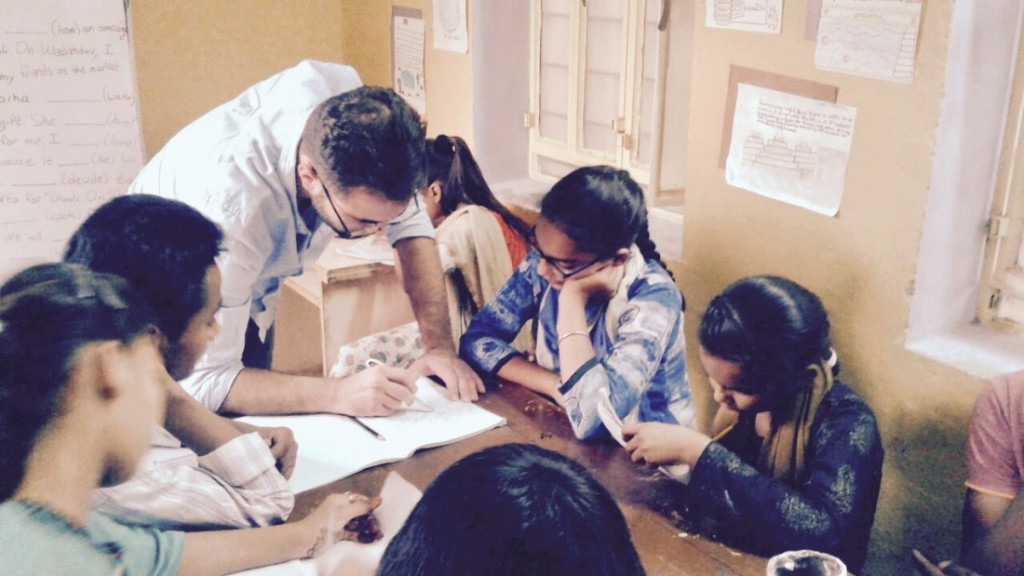
Week two began as week one had, but this time I had found my rhythm. Mixing theoretical lessons (with lots of class participation and work on the board) with practical lessons (we did lots of debates and the children were very lively!) seemed to be a great mix and I think the kids have learned a lot!

The debates were especially noteworthy because they showcased the students’ passion! In the (relatively) weaker batch we discussed whether they should choose a job for money or to help people. They were able to see the flaw in the prompt – that the two were mutually exclusive – and come to a sensible middle way whereby they could meet their basic economic needs while also positively Impacting others. I was very impressed with this, especially their ability to marshal case studies (like Ambani’s charitable work or indeed the Foundation!) to show how the dichotomy did not hold.

In the stronger group we discussed whether rich people should pay more tax. We covered the main taxes in India and the rate at which they’re levied, before progressing to write down and say the arguments aloud. The standard Western arguments about helping the poor versus encouraging entrepreneurship showed up, but I was surprised (perhaps due to naïveté) by the number of religious arguments I heard. Some used Hindu arguments about hierarchy to justify inequality while others cited religious reasons to share wealth. Overall I was impressed by the passion and level of English shown by the class.

At the end of the week we began the business project. Students were organised into teams of two or three who form mini companies for the course of the next week. The needed to choose a product area (we had choices from fast food to mobile phones) and draw and design their product on paper. We did the drawing in rough on Friday and I was very impressed with the students’ vocabulary shown in the annotations on their drawings including references to various building materials and technical specifications for cars (horsepower, torque and top speed), mobiles (RAM, screen size, internal storage) and more. Jayant’s drawing of a supercar was a highlight! These drawings will form part of a pitch to the banker for seed funding next week, so I was impressed how much effort the students put in.

In teacher sessions with Jyoti, Shaloo and Neha we decided to just do pure English. We covered a lot of grammar and vocabulary and the formerly quiet Jyoti contributed to class. Neha, who is there out of personal volition, is a joy to have in class and is eager to learn.

This weekend we are going on our first road trip to Udaipur. I am excited to see more of the country and will write more about it next week!


Week 3, 23rd – 27th July

My project was always going to reach a “crescendo” for me. We had to cover the ideas before we could put them into practice. This week was when we were finally able to do that.

Therefore, this week was very exciting for me. We started our businesses and the students were able to incorporate almost everything that they had learned. The best examples demonstrated an amazing ability to foresee gaps in the market (e.g. healthy fast food for the Indian market, or the world’s first supercar manufactured in India.)

Their designs were a highlight for me. They showed themselves to be so perceptive of the world around them. They had absorbed so much English-only vocabulary around them (eg. words to describe telephones’ specifications) without them realising it and were able to incorporate this into their work. Groups grasped the concept of market identification and sizing and were able to articulately express in English who their target market was and why their product would be successful in it.

Having some older students in the class certainly helped. There are some members of Rose class that are just 11 but some (Rinku, Lalit, Harsh) are older. Lalit especially is interested in business and brought some incredibly advanced vocabulary (collateral, capital, entrepreneur) which I would have judged too difficult for the class. Because he was there, he was able to explain the concepts in “Hinglish” which advanced the students’ understanding dramatically. I am sure that such terms passed over the youngest students’ heads but having him there meant that those who wanted to know more could do so.

In the new students I can see students coming out of their shell. At Ruchi’s and Lilima’s advice I slowed down the class dramatically and I saw that the most confident before became even more so, but the least confident showed increasing signs of strength. It is difficult for me to beat my pre-set intuition (garnered from years of private tuition and working as a school assistant) that all Indians are extremely bright and therefore pick things up extremely fast!

In a way I am very disappointed that I am here for only a month. By the time I have learned enough to be useful, I feel like I will be on my way!

And full-time work will prevent me from coming back for any extended length of time. It simply means that now the lessons have been learned, I need to make sure I am exceptionally effective in August!

Teacher sessions continued to be good. Jyoti and Shaloo have markedly improved their language ability. A continuing frustration is that in grammar sessions they show a strong grasp of the theory and then it goes out with the window in the conversation! I guess this is a consequence of their nerves and desire to speak quickly, but it is nonetheless a challenge to overcome!

The most interesting thing I’ve done this week is deepen my Hindi study. Having largely mastered the alphabet, I have moved onto grammar and have had to grapple with such nightmares as nouns with genders but no articles,verbs that need to agree with their subject,postpositions as opposed to prepositions, and a case system. No language I’ve studied so far has any of these qualities.


Week 4, July 30th – 3rd August

This week is my last in Rose Class and for that reason has been rather melancholy. We wrapped up their fictional businesses by discussing the topic of marketing and allowing them to choose a medium through which to advertise their product. Teams’ adverts ranged from pamphlets to radio jingles to posters. I was impressed by all of their work and the creativity therein, but I was especially taken by one slogan for Krishna et al’s TV company:

“If you want to avoid your beevee, then buy our TV!”

Both Ruchi and I were in stitches for at least a couple of minutes when we heard that one. Their ability to find a word (albeit a Hindi transliteration!) that rhymed with TV and make a slogan out of it really impressed me. It also demonstrated their firm grasp on English vocabulary and sentence structure (conditional sentences are hard!)

One thing that particularly struck me was that the students had been paying attention to the adverts they had come into contact with in their lives. They had thought about what made them effective and without prompt incorporated many key elements of the marketing toolkit into their work (for example, they designed logos and placed them effective places on their material. Overall, I was very impressed!

On Friday we played the “monsoon game” to review all the concepts we had learned. This included questions on everything from the household budgeting of the first week to the business concepts discussed in the final week.

The new students have also progressed nicely. We had to do a little bit of potentially dry review of grammar and vocab to clear up persistent errors they were making, but we were able to incorporate these lessons into lots of writing and speaking by the end of the week which was fun. Students seem to adore writing and cannot wait to have their work checked afterwards. Also, for some reason, willingness to speak in this class is very high and I have no difficulty soliciting good responses from the class.

In teacher sessions this week I started with Geeta and Ruksar. The higher level of English in the class was a welcome break for me because it meant I could discuss politics and economics rather than simply English. Ruksar in particular seemed very interested in political issues (Israel/Palestine, Syria to name a few) while Geeta was able to explain concepts (like that of a “good” or “bad” harvest) in Hinglish to great effect. I personally will never forget achee faisal and buree faisal (the Hindi words for good and bad harvest respectively)!

I am looking forward to moving classes but am apprehensive about adapting my lessons to their level. I am making a serious effort to plan for this change but am certain that any plan I make will need to be adapted and changed in the new environment.


Week 5, August 6th – 10th

This week has been my first in Lily class and I have found it surprisingly easy given what I was told about their level of English. Because there are no very young students (think Hizba or Aqib in Rose), the amount of schooling the members of Lily class has undertaken is higher. This means that though some of them are shier in expression, their ability to grasp things is actually often higher (eg. concepts like taxation or budgeting, and anything involving calculations.)

Early in the week we discussed household needs and categorised them into short- and long-term needs as well as tangible (food, water) and intangible (electricity, insurance) needs. We proceeded to make a “basket of needs” whereby the students produced small drawings of all the things households need and want (from phones to food) and they were placed in a bag which I have used as a prop since in class. The drawings were very pretty and the bag looks good!

We then moved onto a concept of a budget, drawing from our basket of needs to illustrate that some needs can be satisfied month-to-month from wages (food, water) while others require more protracted planning (phones, AC machines). We roleplayed the process of saving for a big purchase in the classes. We had AC and scooter salespeople, consumers and bankers who roleplayed the process of earning, saving and spending money. Though the students needed to be prompted at times (the AC salesmen were not very polite to start with, and consumers willingly handed over their hard-earned cash to bankers without knowing the terms or the interest rate!) I was impressed overall with the student’s tackling of the task and their level of English.

In the new students I have a very large class which has been a challenge. In order to ensure all are occupied all of the time I have done a lot of reading and individual writing tasks but have ways. Geetaji will be instrumental in this because we will need to split the class somehow (for example, for speaking) and monitoring that the students are working will be key!

With Ruksar and Geeta we had an excellent week of teacher sessions. We had a formal debate on the tension between globalisation and culture: Geeta gave an impassioned worry about the state of Hindi and Sanskrit language teaching (“There’s a school in Amer with a French teacher that doesn’t even teach Sanskrit at all!”) and Ruksar defended globalisation by saying it made her more tolerant while not losing her roots. Using articles as prompts has also proved useful. While the vocabulary in the serious English language press is often extremely difficult and this acts as a barrier, the girls enjoy the challenge and are diligent at making vocabulary lists and using the words they learn in their own work.


Week 6, August 13th – 17th

This week was short: Monday was a holiday, Tuesday we celebrated Independence Day at the Foundation, Wednesday was Independence Day itself, so I only taught on Thursday and Friday.

For Independence Day I prepared a play in three acts for the three batches of students. The first would show the early conflicts for independence, including notably the 1857 rebellion. The second batch showed the road to independence being achieved in the period after the First World War and up to 1947. The final batch showed what was great about modern India: democracy, diversity, culture, religion, spirituality, economic power and military prowess.

The students enjoyed the play, and all wanted to play a serious role in it. There was some reluctance to take major roles due to nervousness (Gandhi didn’t get as many volunteers as I had hoped), all took seriously the role of learning their lines. I hope you have been able to see the videos taken of the play; many at the foundation enjoyed it.

In regular classes we started the “public infrastructure project”. Students are tasked with designing something they believe their community needs, like a hospital, school or road. They then need to justify why their project is the most important and why the government should choose to elect their project above all others. The idea has been to show that the government suffers the same scarcity as private citizens and that all choices involve giving something up (“opportunity cost” in economics jargon). The students have drawn the links between how households budget (“What’s my income going to be?” “How do I apportion my spending?”) and how governments do the same (“What’s tax revenue going to be?” “How do I satisfy my voters subject to my financial constraints.”) I feel that they have understood the key point which is that all economics is about choices, and choices require giving something up; “There’s no such thing as a free lunch!”

With the new class I have discovered that dictation is an incredibly powerful tool. It forces the whole class to focus and helps their listening comprehension which in my view is perhaps the most useful of the four main language skills! It has also allowed me to identify weaknesses in their phonetics which I could correct. We also were able to apply the past tense stuff we had learned the previous week in a “Describe your Independence Day” exercise!

This week we only had one teacher session in which we gave the teachers situations to act out and vocabulary to use in it. This is a good exercise for them because it forces all the teachers to speak (we make mixed-ability groups) and makes them incorporate new vocabulary.


Week 7, 24th- 31st September

In Lily class the final week has been heartwarming. We finished the course by embarking on the entrepreneurial project. I was truly blown away by the quality of the work and the creativity of the students. Sonam and Muskan’s jewellery business was a particular highlight, with intricate and beautiful designs shown. The students showed an ability to recognise markets and explain how their product would meet a gap in it. The third batch especially was great to see with all the girls (and Shalin!) taking their work and presentation extremely seriously, and the result was very impressive.

As well as the designs, the students had to write a short plan of what they would do to start the business. They developed a sound understanding of what it takes to start a business and the sort of details a potential investor would want to hear about. Why was their product unique? They were very good at explaining this.

Because the third batch finished early we moved on to a final day on “making a difference.” The students adeptly noticed the good things around them in their community as well as the bad things (domestic abuse, plastic waste, alcohol and tobacco were all cited without prompt). They then wrote some truly impressive short pieces of writing about how they will try to alleviate these problems in their own way in the next few years. This course has been about empowerment and realising that nobody is too small to make a difference, and so I was touched to see what the students perceived themselves to be capable of.

We started using the ReadToMe in the second batch and it was largely successful. We need a solution so the audio is clearer but it worked well and the level of language is perfect. I suspect students fail to understand 10-20 percent of the words, which is ideal. We also did reading comprehension from the book and I am pleased to report that in this class the reading speed and phonetics have improved markedly since I started doing dictation and similar with them. Finally we did a section on wants and desires, noting the similarity between English and Hindi grammar with respect to the word “should” and the imperative form of verbs.

In teacher sessions with Geeta and Ruksar we watched a speech by Indian MP Shashi Tharoor about the legacy of colonialism in India. His rhetorical flair and very advanced English made for pleasant listening and it allowed us to consider the contemporary Indian policy debate about industrialisation and development (one of Tharoor’s key claims is that Britain’s industrialisation was achieved by deindustrialising India and exporting raw materials back to the UK.) Though they sometimes found the concepts tricky, and the vocabulary hard, they coped well overall and enjoy this kind of discussion.


Sandra Berlin – How is it already been a month?

Image 5


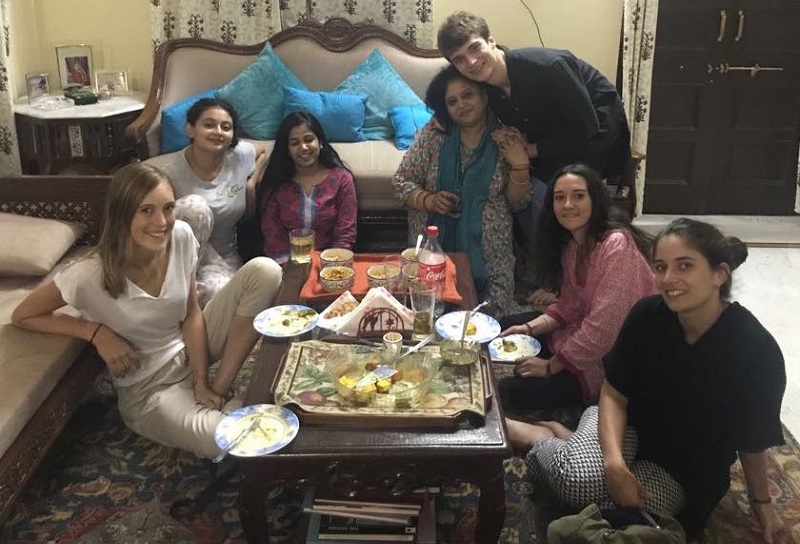
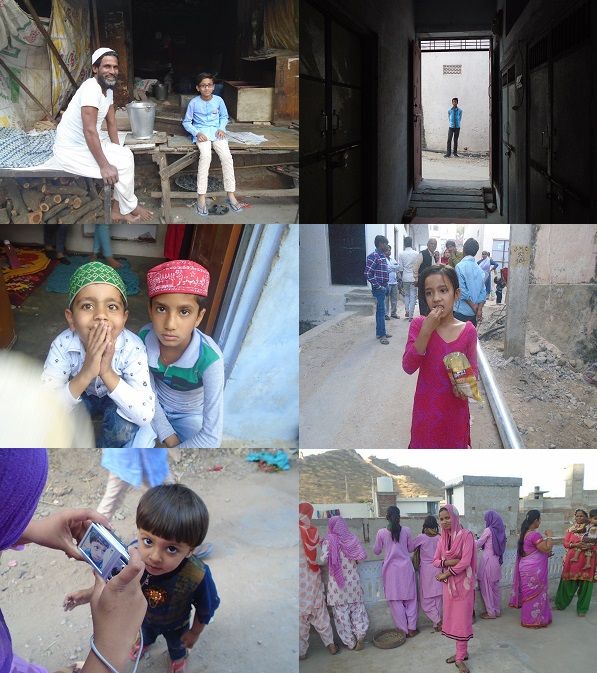
Yes, today it has been a month since I moved to India… I can’t understand how it’s passing by this fast… it actually makes me sad that i only have 9 months left, but I couldn’t have enjoyed this month more. Here are some of the things I’ve done, learnt and seen and the people that have been with me throughout this time.

  • Rajasthani food is truly the best… I know you think Indian food is only about curry. In Jaipur it isn’t. They use so many different spices, and flavors have the exact measurement to make it taste epic! The smell of chai in the morning is my favorite. They also mix a lot of sweet and salty flavors as in Mexico and they use the same chillies, so it kinda makes me feel like home. We all eat with chapatis instead of using fork and knife… so yeah, you can imagine how much weight I’m gaining by eating food with more food…

And, I could say I’m A VEGETARIAN NOW.

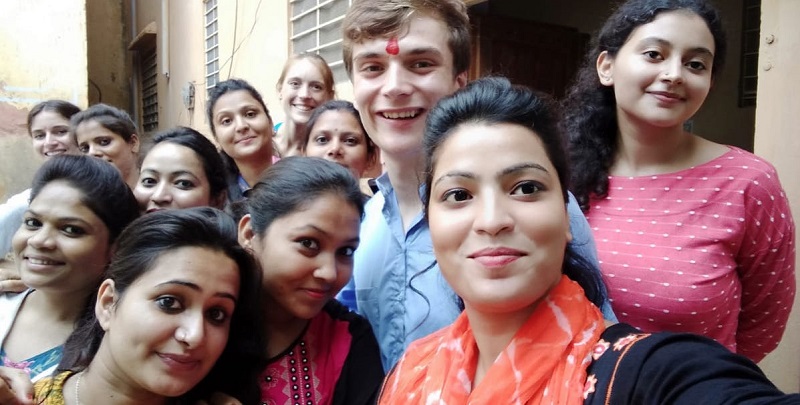
  • Indian people are the warmest and sweetest. Coming from Mexico, a place were everyone smiles and hugs you and is loud and sweet, I thought I wasn’t gonna find that anywhere else until I got here. The way people hug you is so honest and transparent, they are so warm with you and they share their feelings and emotions within a second. The friendships I’ve built in only a few weeks are so real and fun. I had a really bad day two weeks ago (I’m not used to crying) so I tried to go on with my daily routine without anyone noticing that I felt sad… but people here see through you… the teachers came to me and asked me what had happened and when I refused to speak, they just surrounded me and started hugging me and comforting me, I even got head and hand massage until they managed to make me cry… I felt protected and confident with them around.


Image 1


And talking about loud people like in my country, Indian’s laughters are THE BEST. The way the laugh is so contagious, you can hear them across the room or even from another floor and it’s impossible not to laugh along with them.

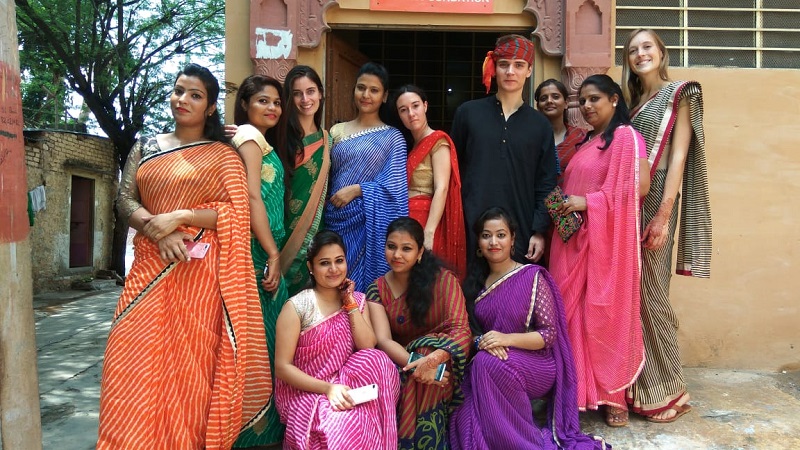
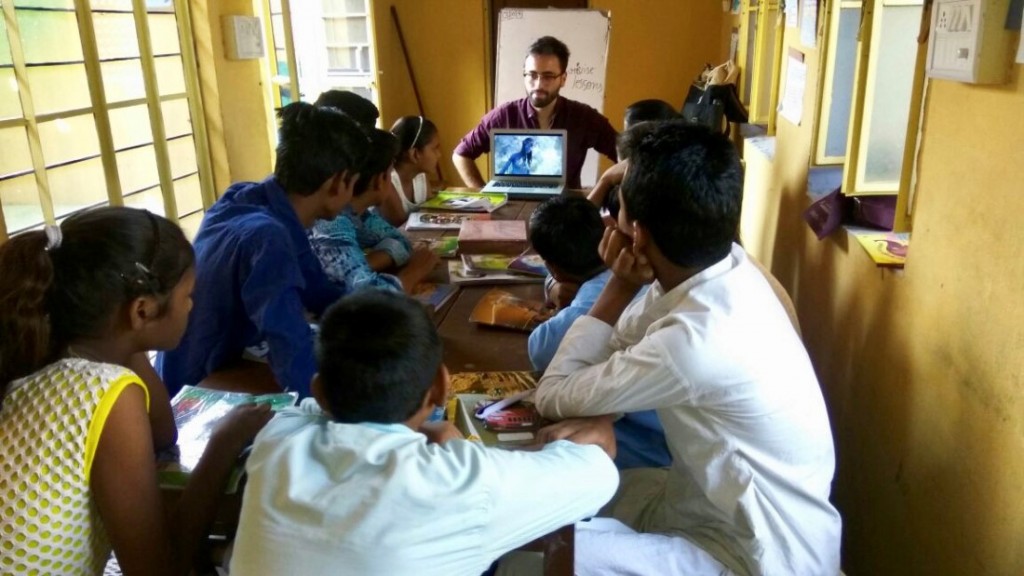
  • Traditions seem fascinating to me. I’ve only had the opportunity to see a few Indian traditions, but what I have noticed is that they all involve sharing, respect and colors. Seeing little children running around Amer exchanging colorful bracelets for friendship day was the sweetest thing.

Image 3


Birthdays are great too, the birthday girl ends up with multicolored layers of cake and frost on her face, but before that, she hand-feeds every person in the room, starting obviously by the eldest woman.

Mehndi tradition, when beautiful decorations are drawn on women’s hands nd feet with a natural paste, is of course my favorite! It is so relaxing and pleasing to see how fast they form shapes and flowers… at first I thought that only older people like the teachers could do it properly, only to find out that my 12 and 13 years old students are pros at it! They do their sisters wedding Mehndi, therefor they’re great at it too!

I’m so happy to have 9 more months because I will be part of so many Holliday’s that will show traditions from closely.

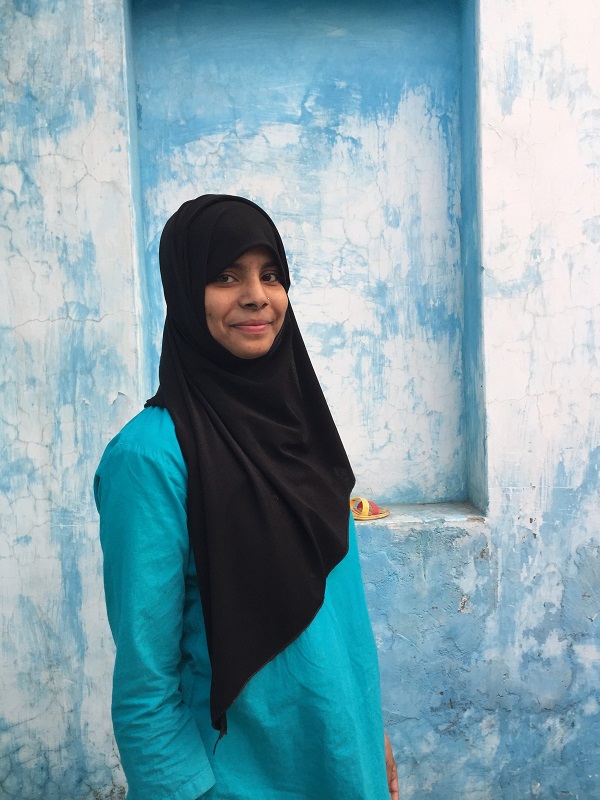
  • Religion in India is so diverse!! You would believe that there’are only Hindus and Muslims, but there are so many more religions in between these two, and this makes out of India the coolest place! I’ve also met Jains and Sikhs. Each religions have different characteristics, some of them are vegetarians, others can eat meat, there are some that won’t eat anything that comes out of the ground, so no onions, potatoes, carrots, etc. A lot of them don’t mix cold and hot food together. They all have different beliefs in which you can find that some of them don’t drink water by standing up while they have to drink milk by sitting down.


Image 4


Differences between religions are quite visible, but they all have spirituality in common. They all want good for the others, they all believe in common rights and respect for each other and I think that is what makes this country greater than I can describe in words.

It is also the only country I’ve been in, in which when I ask 10-12 year old kids what their favorite place on earth is, the answer is temple names. They say it’s the place in which they feel serene, grateful, happy and at peace. Can you understand how big that is? Children know how to meditate and speak to god from such a young age and without anyone telling them that they should do it.


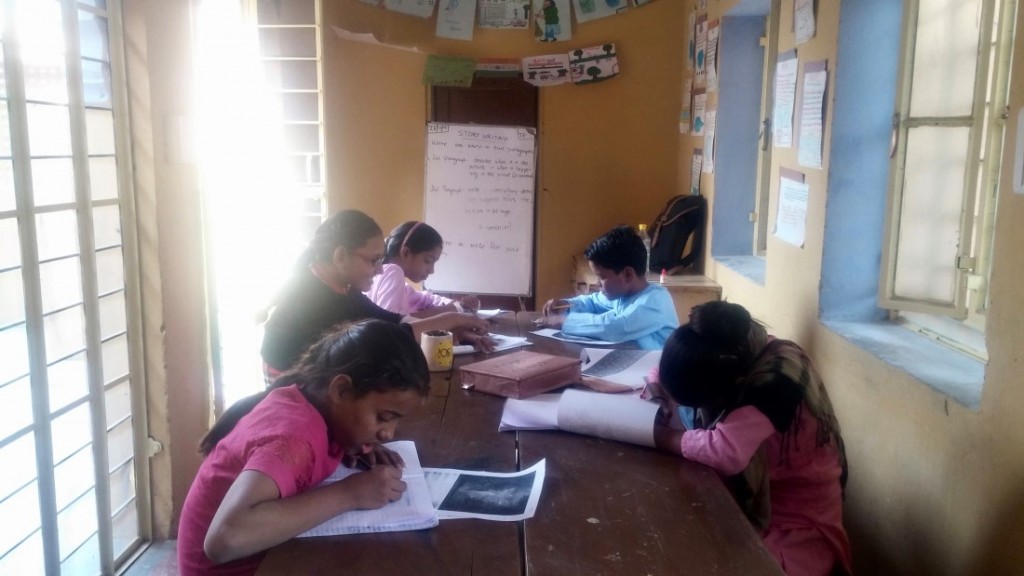
  • Tushita Foundation already feels like a home to me. Every time I cross that front door I feel instantly happy, teachers always welcome me with the tightest hugs and smiles. You can hear thousands of children voices saying “good afternoon, Ma’am” , even from the ones you don’t know. It is important to establish here, that it is thank to this amazing Foundation, Rosenda and Jan,  that I’ve had the opportunity of experiencing such wonderful moments and meeting lovely people.

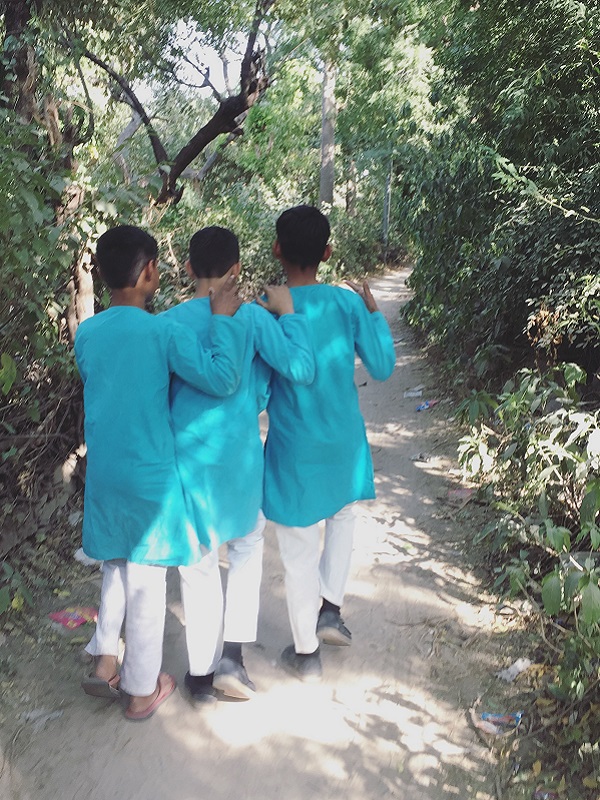
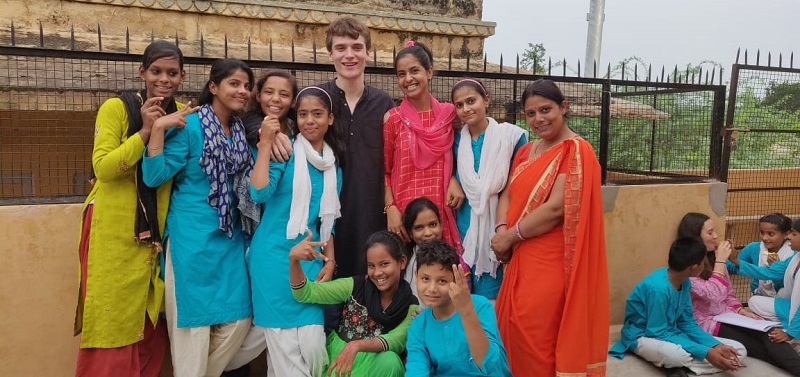
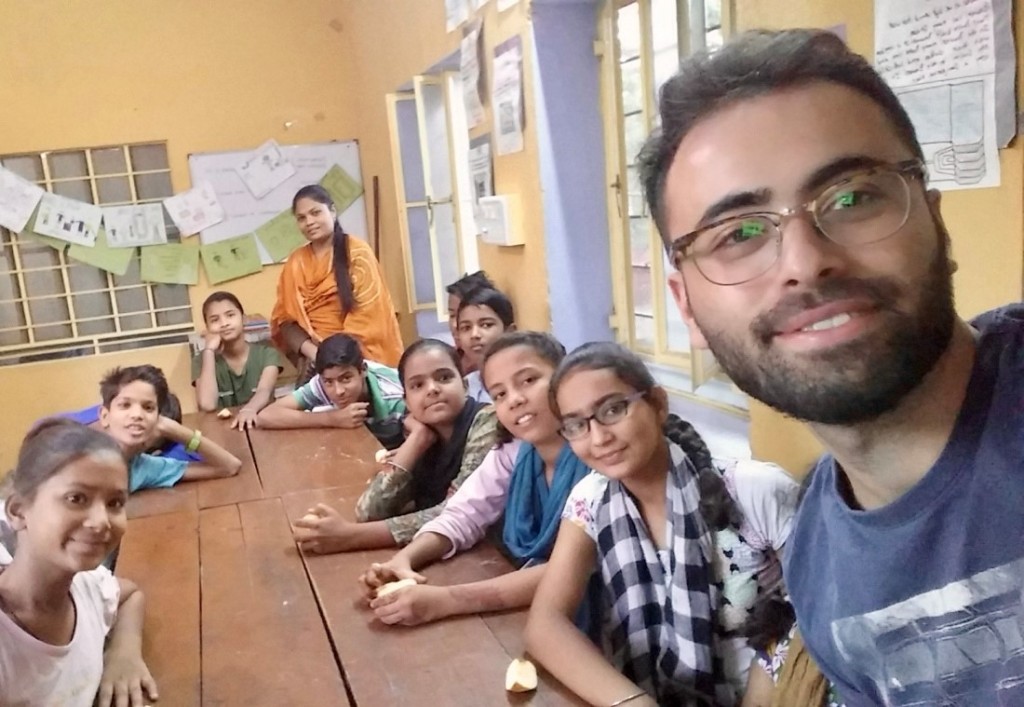
Working with my children is so enriching… seeing how they feel more and more comfortable with me makes me so happy. They’ve invited me to their houses, they’ve invited me to lunch, they give me gifts and one student even invited me to her sisters wedding. I feel blessed and speechless to have them around. To watch them learn so passionately, but most of all for teaching me and sharing with me a part of their world. They even take care of me on the streets… they push me aside when they see a cow, or scold me for looking at monkeys in the eyes.


Image 2


  • Bollywood songs have the best beat! I find it impossible not to dance to them even if I am not so good at it… Yeah… I even joined a gym to have bollywood dance classes. (I promise to get better at them). But why am I writing about Bollywood songs? Because I find it amazing how the second you play the music, Indians dance along and with the same choreography!!! It’s fun to see that the same thing happens everywhere you go, you can play the song in TF and the student and teachers will start dancing, you can play the song in the house and Bhim (the best cook in the world) will dance to it too. Or, you can play it in the biggest nightclub in India and people will dance along. It’s like a FLASHMOB happening everyday.

I must admit that I downloaded an app that has the best Bollywood songs and I can tell you I know the lyrics to some of them by now.


  • Writing Hindi was an impossible dream before I came here. I never imagined it viable to write or read those strange symbols. Thanks to Oliver, who got really engaged (or obsessed) about Hindi, we all started learning it.

What seemed impossible suddenly felt just hard… memorizing the symbols was a difficult thing to do… writing them was even harder… but the power you feel by being in the car and actually identifying the sounds of words and symbols is indescribable! I can officially announce, that after a month of intense work, I’ve learnt how to write in Hindi. (Don’t let me fool you, it is not that useful because I don’t understand what I’m reading and I can only write things in Spanish or English) So yes, I have a LONG way to go for speaking Hindi. I’m trying to learn the verbs now in order to write or read a proper sentence. But I’m really happy to be able to write in other characters.


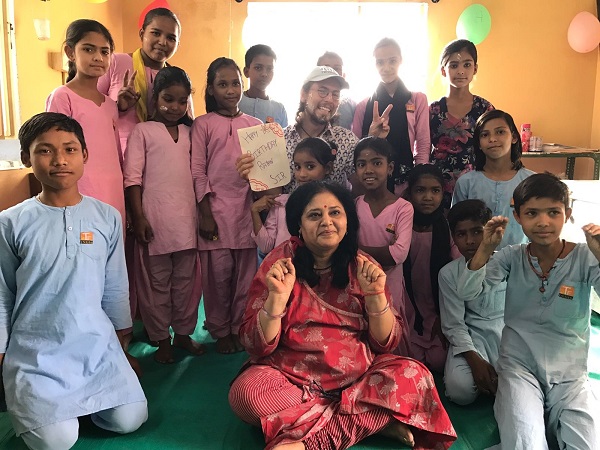
  • About the teachers (Ruksar, Jyoti, Rahela, Geetaji, Firdous, Shalu, Soomal, Payal and Ruchi), my fellow volunteers (Ollie my baby, Victoria and Cj) Lilima and Ankita:I love them not only as friends, but as family. I am so grateful for having you in my life and for the way you make me feel safe, loved and accepted. The laughs we’ve shared, the food, dancing, birthdays, hugs, the crying, singing, playing, bullying monkeys, exchanging mehndis, sharing candy, braiding our hair and doing massages, sharing traditions and culture and acknowledging our differences but making them seem so irrelevant… Thank you so so much for putting up with me.


  • Last but not least, Veenaji (My Indian “mama”). How could I describe her? I think if I try putting words for you to understand her, I can say that she looks like peace and she looks like home. Veenaji is the person in charge of the Foundation here in India and she is amazing. She’s a really strong woman. Strong minded and committed to her work… she even stresses too much some times. But I can tell you this: I have never met a person with a bigger heart. She only wants people around her to learn, to feel better, to smile, to be happy but most of all to outgrow themselves. She won’t let you settle and the most important thing is that she will give you any tool you need to improve.

Her cooking is out of this world, and everyday on our journey to work, she dances to the most modern and crazy Bollywood songs in such a smooth way!!

It is hard to keep your eyes away from her…she’s that type of person that makes everyone around her quiet the moment she starts speaking because you know that she’s gonna share WISDOM with you.

Thank you for taking care of me, for teaching me important things and sharing your culture and for being my mama.

.

.


Thank you, India for this amazing first month.

.

-You will never be completely at home again, because part of your heart always will be elsewhere. That is the price you pay for the richness of loving and knowing people in more than one place.


Ryan K Rosen Blog Posts

Blog 1

January 11th, 2018

When I first arrived at the Tushita Foundation I wasn’t quite sure what to expect. As we turned off the main road I knew we were close, and naturally I noticed my heart rate slightly start to increase. I was nervous. I was excited. I was ready for this new chapter of my life to begin.

Our van pulled slightly off the road and I was promptly told, “Ryan, we’re here.” I looked outside and there was a lovely building that had “Tushita Foundation” on top of the entrance door, and below were all the teachers waiting for me with a big sign saying “welcome Ryan.” From the start I was touched by their kindness, and after we were all introduced and they had given me some local gifts, we went inside to get to business.

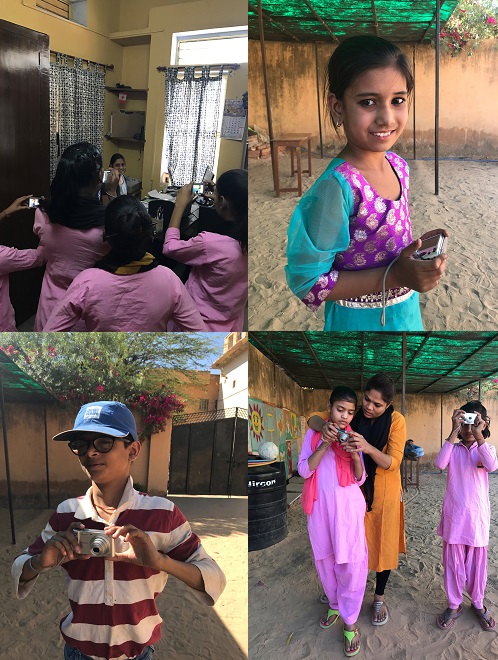
I spent a day sitting in on different classes but it was pretty quickly that I knew I wanted to start working with the Daisy class. Mostly compiled of 7-10 year olds, these cuties connected immediately with me, and by day two I was ready to start working with them. I’m teaching photography here at the Foundation – I’ve partnered with a non-profit from my home city of San Diego called Outside The Lens which has provided me with the necessary equipment to teach this class – and the children seem to love it! I’ve thus far been impressed with their keen artistic eyes, and have noticed my own perspective widen from looking at their photos. While they have a lot of room to grow, I believe that they have tons of potential to become excellent photographers. I’m very excited and grateful to continue working with these awesome students!


Thank you for sharing Ryan! Photography is such a wonderful way of looking at the world and the Tushita Foundation is all about giving the children freedom to express.

Are you planning an exhibition of the children’s work towards the end of your tenure with us?

Can you budget the cost of printing the images? Can we think of having the exhibition travel to San Diego and maybe further?

I am happy to have an occasion to talk about it with you soon when I’ll come to Jaipur on the 12th..

Meanwhile, your observations about your work, your children individually, the sharing with the local teachers and your fellow volunteer will make it easier for future volunteers and for us to understand your experience, besides it being very enriching for you to reflect on what you do.

I would imagine that you will want to intersperse this document with photos, wouldn’t you?

Make it a creative endeavor please!


Blog 2

January 18th, 2018

Before I came to India I was curious how long it would take for me to connect with my students. I knew there would be a language barrier, a cultural barrier, an age barrier, a Lakers nation barrier, and so forth, so I hedged on the side that it may take a while. Now that I’ve been here for a brief, and I stress a brief time, I can say that I was clearly wrong. The various barriers I previously identified were all undermined by a smile 🙂 Not to mention one of my students, Aslam from the third batch, wore a purple and gold sweater to class on the first day – Lakers colors – so I knew then and there the vibe would be ok.

I’m introducing my students to different photographic perspectives this week. Concepts such as bird’s eye photography, photos taken from above, or close – up photography, intimate photos of your subject, among others, and the students seem to be responding well. I’ve noticed a lot of conformity in their work thus far, everyone seems to want to take the same photo as the next person, so I’m eager to introduce a new approach to their work, one that emphasizes creative individuality.
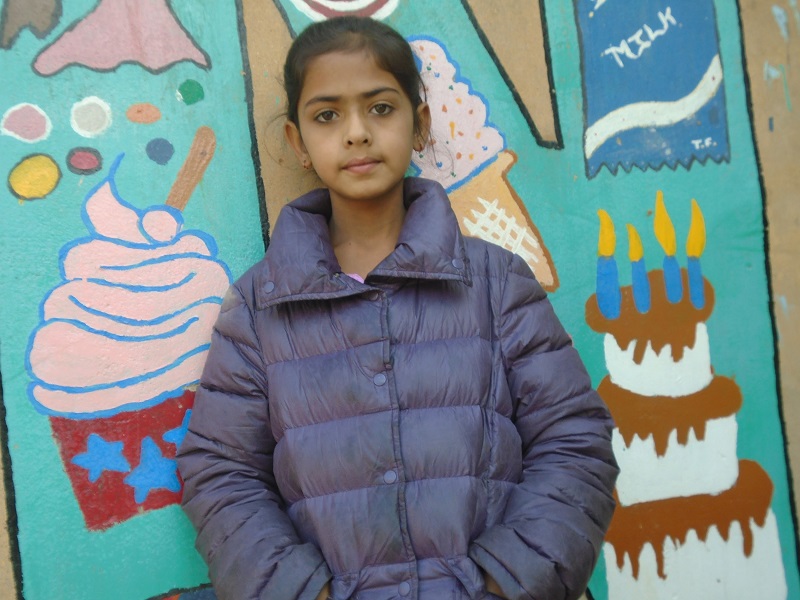
 

Blog 1


Lastly, I would like to share with my readers the attitude of the cook, and my friend, Bim. This guy epitomizes what it means to be genuinely positive. Every morning, rain or shine, Bim will be singing. We fist bump, I drink my tea, and then I leave to go slackline in the park with a classic, “Bim, me out.” Every night when I return from “work,” I say what’s up to Bim, he shows me the goodies he cooked, and then we fist bump and he hits me with “Bim out.” I’m a big believer in that your environment shapes who you are, and I feel very fortunate that my guy Bim, and his contagious positivity, is a daily fixture in my life. We also both agreed on “tora, tora” with the spice level, so I’m liking where this relationship is going.


Blog 3

January 25

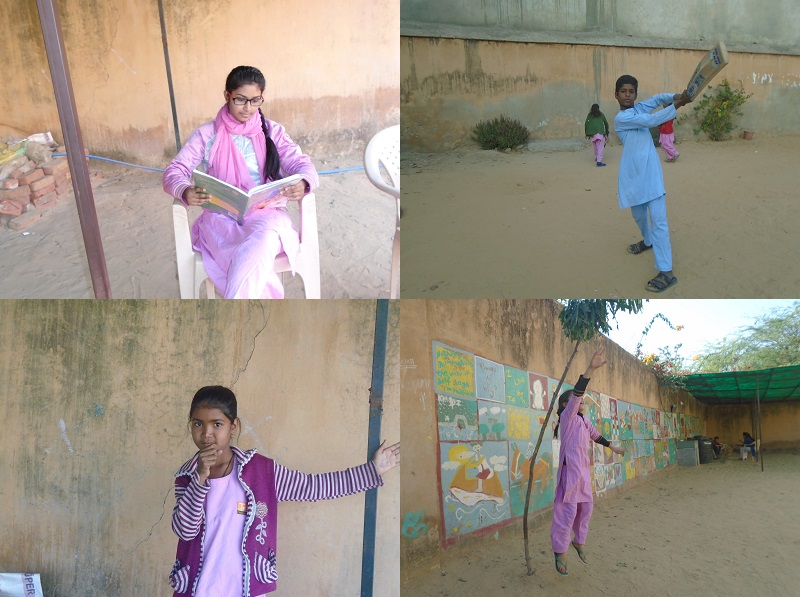
We completed our first project today. Titled “Three of Me,” the students were required to identify three things they enjoy in life, write them down and why the find their chosen things enjoyable, and then finally take three different pictures to capture the importance of these enjoyable things in their lives. The students seemed to pick from the same 5-7 options, chiefly dancing, singing, cricket, drawing, reading, and cooking. While I’m sure all of these students find these activities fun – who doesn’t – I’m still searching for some more creativity in their work. Same with their photos, a lot of the same, and we’re still learning our fundamentals. But the project was super fun! The students were very engaged, enjoyed themselves, and hey it’s only project number 1 so from here the direction we will go is only up!
 

Blog 2 a


Blog 4

January 28

I’m starting to feel more comfortable living in Jaipur. I’ve traveled through some of India, and I have to say Jaipur is the most livable city I’ve personally visited. While there is certainly an adjustment period that comes with moving to a new place, especially a place as culturally distinct as India, each day becomes slightly less challenging. Central Park is a daily stop for me, and there is an awesome gym within walking distance from the flat which has not only helped me stay in shape, but introduced me to some Jaipur locals. While all my students are my friends, and I call them my friends, it is also nice to have some friends who, when asked if they would like to go to the Taj Mahal, don’t interpret it as a literal question and respond by saying only if there mom says yes 🙂

Also, the Jaipur Literature Festival occured this weekend, and hands down it was one of the coolest festivals I’ve attended. I went to a great talk about the influence of Mughal art in the latter stages of Rembrandt’s career, a discussion about China’s hydro hegemony and the implications for the region, and a talk concerning the important of environmental preservation in India – fun fact the Antarctic Ocean is really deep.


Blog 5

February 1

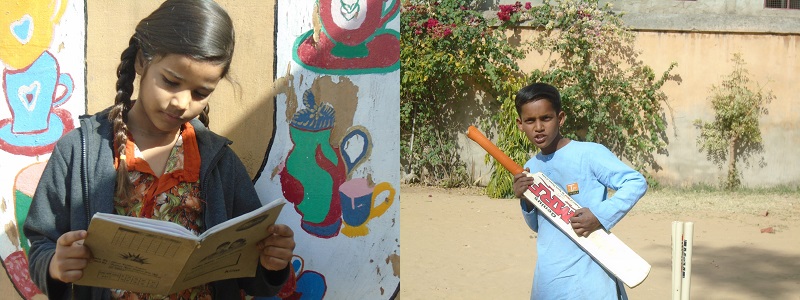
We completed our second project today, the “Here I Am” project. Again, this project is designed to provide the students with an opportunity to express themselves. The students had to write a poem, and then take one self portrait that they felt would offer a powerful insight into who they are. Similar to our first project, my students were looking to conform rather than stand out. I like the similar interests and approaches that they share, but my goal for this class is to offer them an alternative approach to their work, a more individualistic approach, and I’m still having a difficult time conveying this concept. A few of my students are starting to get it, I’m having success by telling some of the boys to be “silly” or “stupid” and ironically it is bringing out some creativity. Some of their poems were quite touching however, and I’m proud of my students for how hard they are working so far.
 

Blog 3 a


Blog 6

February 8

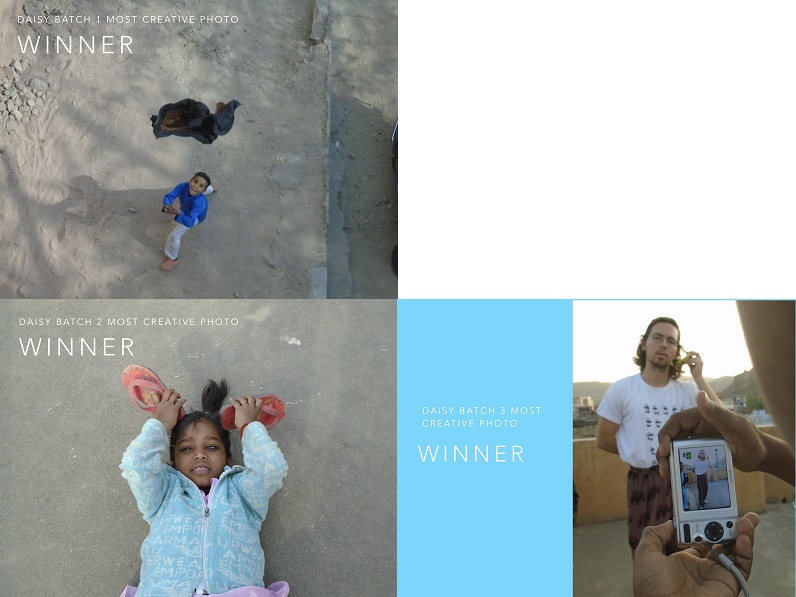
Today was challenging. Today was scary. Today was exciting. Today was the announcement of our first ever Tushita Foundation Photography Competition winners! The theme was creativity, and the contest simply called for the students to demonstrate their ability to think outside of the box; whomever did so in the most extreme way, while at the same time implementing the elemental design rules we have been learning, would be the winners.

Prior to today I could say with zero hesitation that this competition has been the best event my class has featured. The students were super engaged, and I’m super pleased with the topic I chose: creativity. As I have previously discussed, my students are having a difficult time not conforming. For the first month my students continued to take the same pictures, with the same perspectives, of the same subjects. There are literally hundreds if not thousands of photos on my laptop and various SD cards of  students staring at the camera, about 2 feet away, under the mural of the Taj Mahal. Some of these are nice photos, in fact I could even say that 200 of them are nice, and all the students are of course cuties, but it is not exactly what I am looking to get out of them. Ironically, I had to think of a creative path in order for these students to begin the process of understanding what it means to be creative. And it’s important to discern types of comprehension here; it is one thing to memorize a definition, and a completely different thing to develop a conceptual understanding. With a smile on my face, I’m happy and proud to say that my students collectively took their first step during this competition at developing more creative and unique perspectives in their works.
 

Blog 4 a


Blog 7

February 11

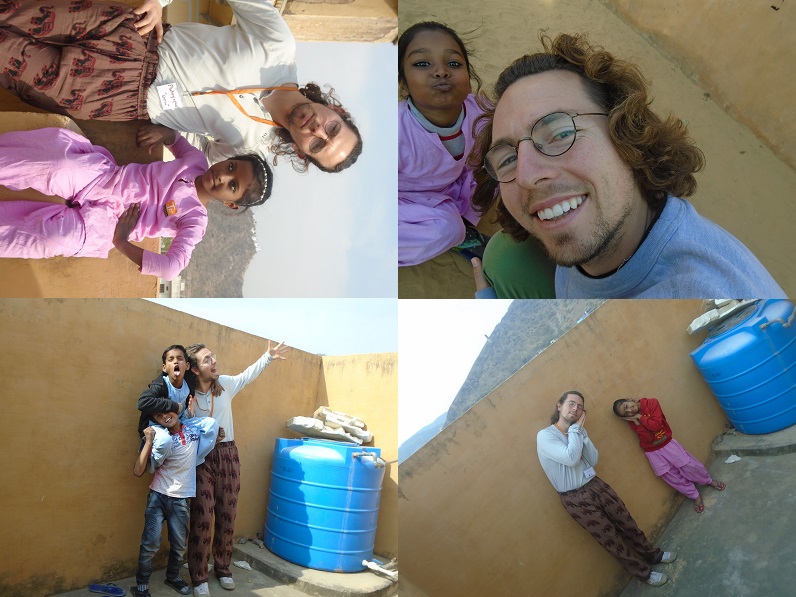
I love my students. I thought I liked them last month, but I’m experiencing something different now and it’s a genuine attachment to many if not all of my students.  I’m switching to Lilly class next week and one hand I’m stoked to teach that class, but on the other hand I’m super sad to leave my students! They were all upset when I told them I was leaving – less because of me and more because my departure implies less camera and crickets and more grammar – but I like to think a small part was still because they enjoyed my company 🙂
 

Blog 5 a


Blog 8

February 16

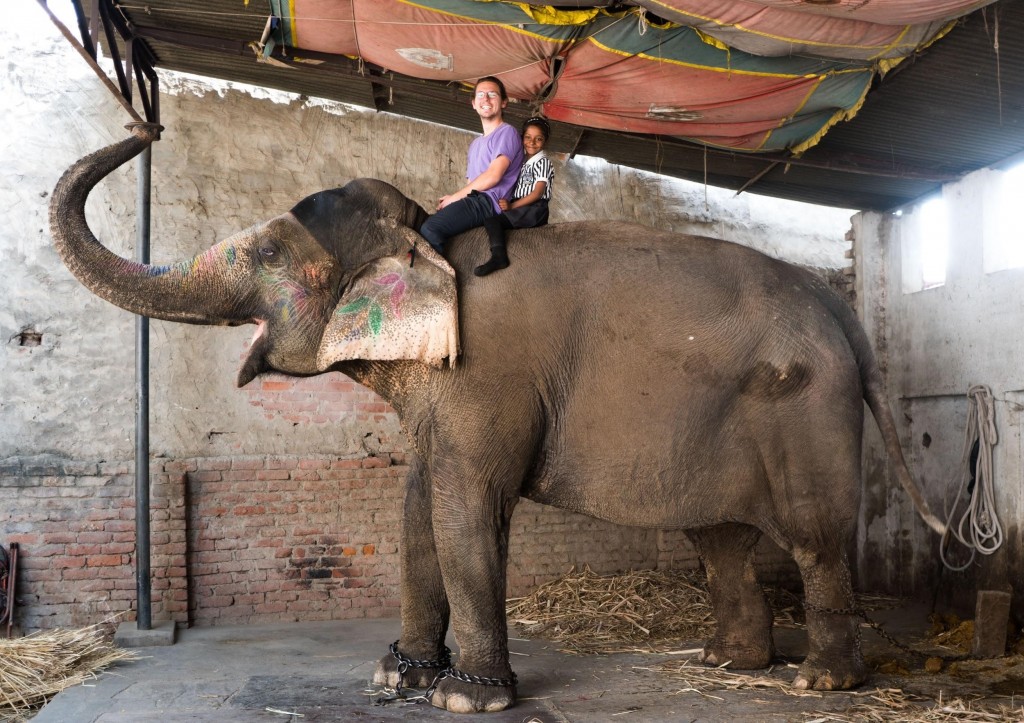
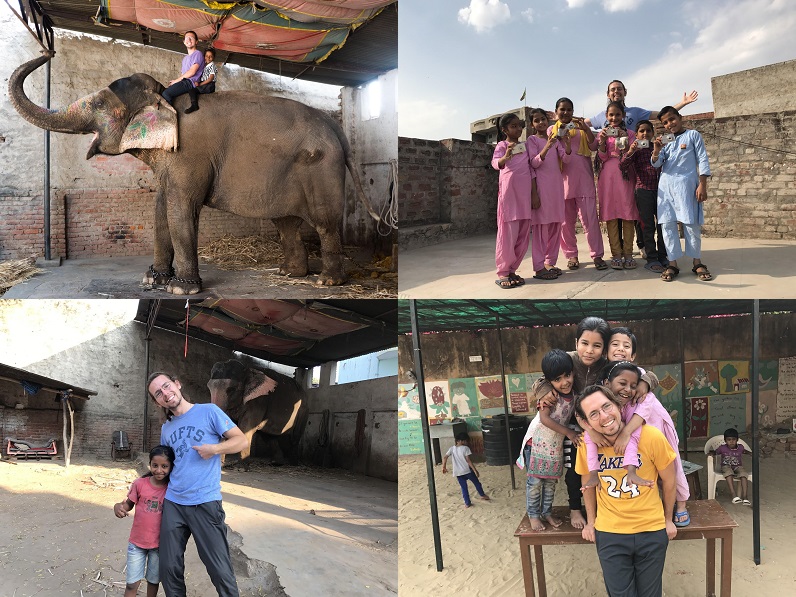
We took a Tushita field trip today! And to be clear, this wasn’t your typical field trip. It was a teachers only affairs (with a *little* exception), rather than us taking the students somewhere. It was a bonding experience, on an authentic level, between the volunteers, the Tushita teachers, and the Amer community. It was ridiculously fun and stereotypically Indian. It was us visiting our student Muskan’s elephant!
 

Blog 6


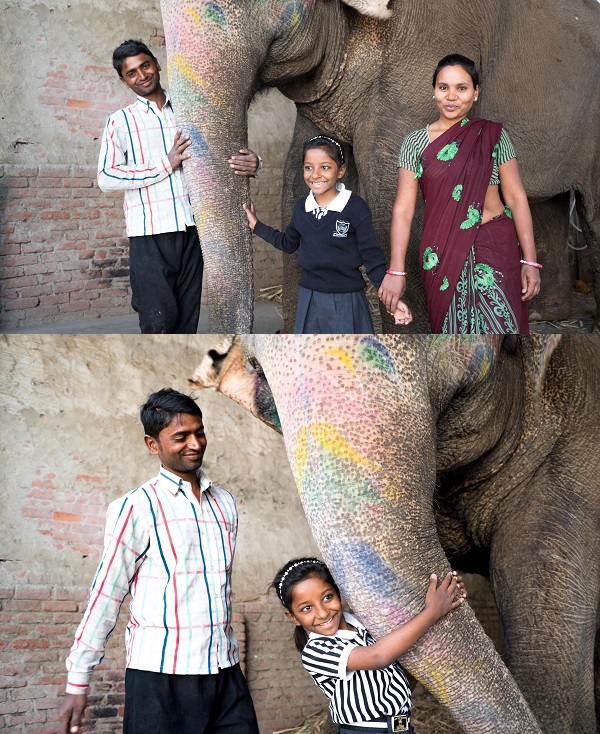
First allow me to provide some context. I taught the Daisy class for the first month of my time here, which is primarily comprised of 7-10 year olds. While I adore all of my students, Muskan has a special place in my heart. She always sat in the very front of the class, was eager to learn, and gave me a high five after class was finished and she went on her way. Sure, she is renowned for her naughtiness, and between her and Falak in batch 1 it’s a daily comedy show, but she is a wonderful example of what the Tushita foundation brings to the Amer community. More importantly, she illustrates how much potential the students at the foundation have. I still can’t wait to teach the Daisy class again and Muskan is a big reason why I wish to return.

 

Blog 7 a


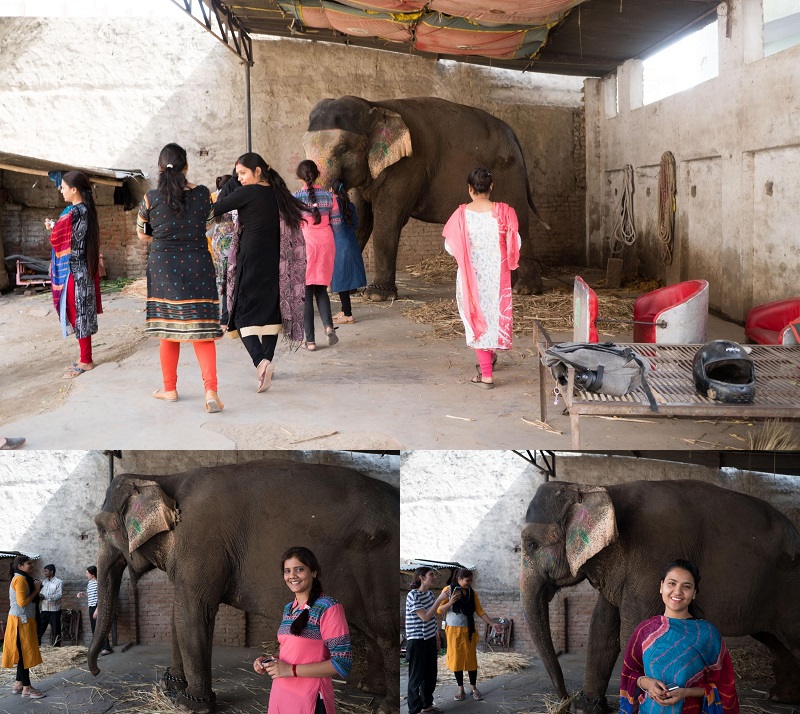
Anyways, back to the field trip, which in my humble opinion should happen again with the next batch of volunteers. The idea developed yesterday, when Pooja, Rahila and I were walking around Amer practicing our photography; each day before the students arrive I work with two of the teachers and we explore various parts of Amer and the community. We stumbled upon Muskan’s house and Pooja suggested that we enter to see if her elephant was home. She was not, and neither was Muskan, however her mom was there and kindly invited us to return the following day. So then and there the date was set!

Word spread quickly among the teachers that we would be visiting Muskan and her elephant, so I decided to bring the whole gang. Pooja, Rahila and I arrived first for photography related reasons, and her family gladly offered for the rest of the teachers to join. Soon enough I found a core of the Tushita family together with Muskan’s family, in a way further integrating Muskan and her family into the Tushita community. Her family was happy to see all of us there, and I won’t even start with the smile on Muskan’s face. Let’s just say she was the star of the show (along with the elephant) and she knew it. The teachers had a blast, obviously taking selfies with the elephant, and after being served drinks from Muskan’s mom we returned to the foundation.
 

Blog 8 a


Learning about the Amer community has been a major priority for me, and I’m incredibly appreciative of the access photography allows me in being able to do this. An important lesson I learned with this experience was that photography isn’t just about me connecting with the community, rather, it can be used to bring the community and the foundation closer together, with me as just one of its many vehicles. The teachers and students are all excited about photography, and the cameras are staying behind once I leave, so I’m eager to explore ways in which I can develop some system that keeps up this goal of further uniting the Amer community and the Tushita Foundation, with the expansion of the Tushita family as the wonderful consequence. I want the students to begin exploring beyond the foundation with their cameras, and I’ll continue to explore practical and respectful means of achieving this. This could also mean hosting photography related events at the Foundation, for example galleries of students’ works, or take a photo of your parents day. For now, I’m super happy with our field trip today. I’ve now visited over five students and teachers’ homes in the community, and I look forward to visiting more!
 

Blog 10


Here is a video of the day.     https://www.youtube.com/watch?v=bdKtfdK8GqI&t=13s


Blog 9

February 24

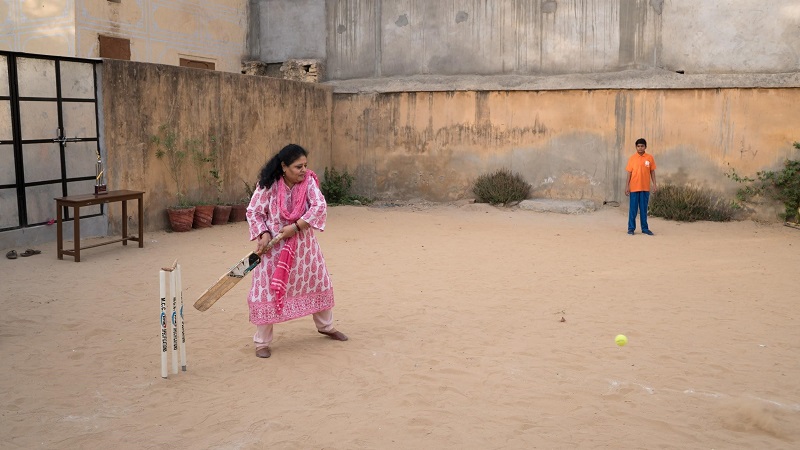
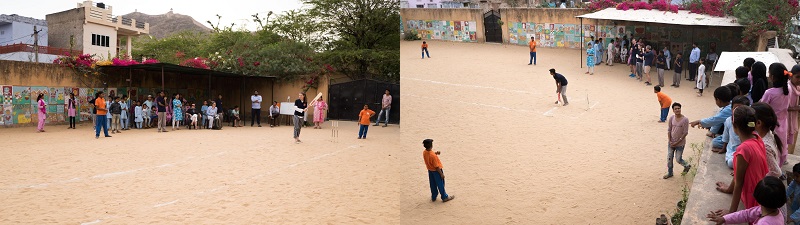
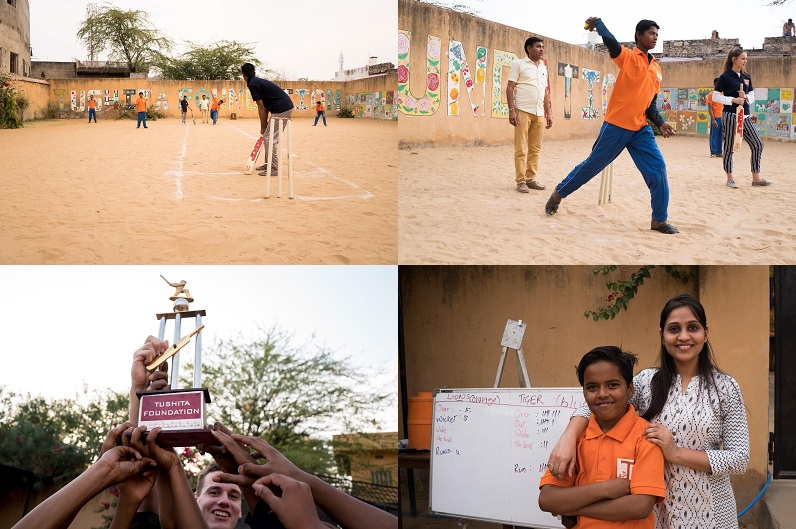
We had a cricket match at the foundation today!
 

Blog 12 a


Even Veenaji played!


Blog 13


We had all the fans.


Blog 14 a


Love having visitors come to TF, great to expand the Tushita family.
 

Blog 15


Plus its great for my students from a photography perspective! For them to practice taking pictures of foreigners, and of events such as this cricket match or the birthday party we celebrated, is a wonderful learn in the moment opportunity for them and I’m seeing a lot of growth out of it. Here are is a video of our day.

https://www.youtube.com/watch?v=dp7BD_rYNZk&t=9s


Blog 10

February 25

I know more than half the students at TF now. Look mom I’m making friends! Nice to meet everyone and begin to feel apart of the community. Great lesson to learn the more you know the people around you, the more you make a tribe, the more you blossom individually and collectively. I use the term tribe deliberately here, but my definition isn’t derived from ethnic or religious lines, rather a strong understanding of community where success and failures are shared. I’m loving the students, teachers, and everyone else involved with the Tushita community here 🙂
 

Blog 16 a


Blog 17 a


Blog 11

February 28

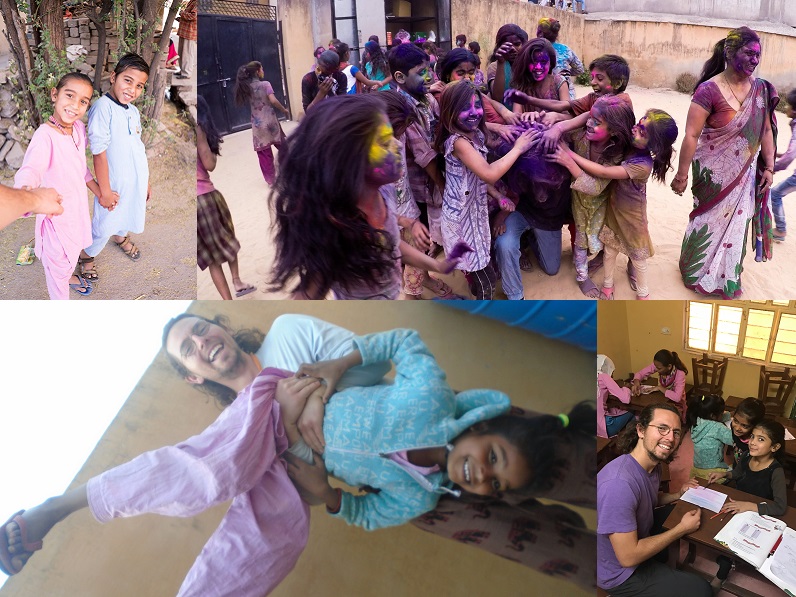
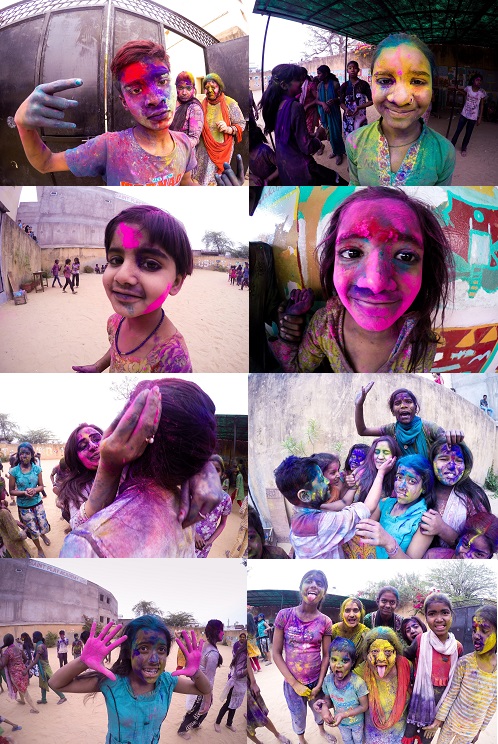
Holi is… just wow. I’ve seen pictures, I’ve heard stories, I’ve watched videos, but there is something about the direct experience of somebody rubbing paint on your face that actually allows you to understand what holi is about. And Holi is special, it’s dynamic, it’s hectic, it’s a free for all, it’s Holi. Words don’t do it justice.

https://www.youtube.com/watch?v=SW7GrvXmyVE
 

Blog 18 a


Blog 12

March 5

I’ve finished teaching the Lilly class, and I’ll talk about my response to my time with the Lilly class in a later post (hint – it was awesome) but for now I wanted to share some pictures from our walk around Amer. The Lilly students were progressing quickly, so I thought it would be a good idea for them to bring their cameras and walk around their community. Here are some of the students pics.
 

Blog 19 a


Blog 13

March 7


Although surprising to me and to no one else, I loved my time teaching the Lilly class. I was very bummed that I had to move on from teaching the Daisy class, for obvious reasons – the Daisy class is rad – and i was skeptical that I would be able to connect to the Lilly class the way I did with Daisy, which I was mostly proven wrong (I still have a special Daisy class bond) but I loved my Lilly Class. So with that in mind, I happily and easily transitioned to my new class this week, the Jasmine Class. I moved to a new classroom, gently tweaked my curriculum, and was excited to begin a new chapter. The Jasmine class has turned out to be super sweet and eager to learn about photography. The Jasmine class is composed of the new kids to the foundation, so their English levels aren’t as high, so I’m not sure how long I’ll be able to teach them photography, as basic English comprehension is a priority for them. Regardless, all of us, the students, and me, are enjoying our short time in class together (Mahir and I are always on the playground together and he is a new basketball prodigee of mine… for a later post) and I’m happy with that. Also, the students love taking pictures of me doing yoga and gymnastics which is a blast, I get a little workout in each class! Overall, Jasmine class, like Lilly and Daisy, has been super fun and meaningful to teach.
 

Blog 20 a


Blog 14

March 11

Basketball is arriving more and more everyday at the foundation and I couldn’t be more stoked! We have the hoops set up and the kids seem to be enjoying the new sport. It took some R&D to get it off the ground but we finally have a sustainable basketball environment for the students to learn the game. Of course, there remain many obstacles the children face, for example they’re playing on sand rather than concrete or hardwood floors, and the backboard doesn’t really exist, but, spin zone, Ray Allen, one of the greatest players of all time, learned to shoot without a backboard, so there is merit is learning in a more difficult environment. The children are still learning the rules, but I am so excited to continue teaching them about professional basketball players, the global nature of the sport, and the teamwork necessary to learn for them to succeed. So far we have been playing 3 vs 3 games on the playground, and everyone plays. My favourite team is Miriam and Alshifa, both 9 year old girls that get super happy and excited when we play. They go against the older boys and we all have a good time. Now I’m excited for them to begin developing skills that can grow together with their new love of the game!
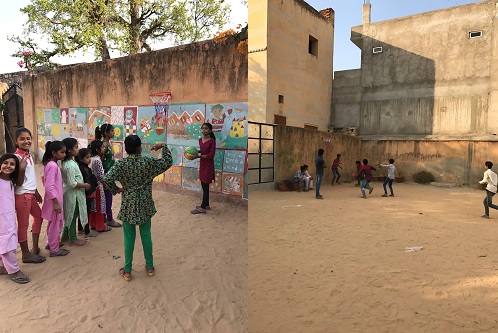
 

Blog 21 a


Blog 15

March 22

Rose class has been a super easy transition. Their level of English is higher than my previous students, and as such they are learning the material much more quickly. Second batch has shown sincere interest in photography, and are smiling the entire team we walk around outside even though it’s almost 40 degrees. Hizba has been a particular treat to teach – I told my students I have three rules: have fun, play, and break the rules, and Hizba is excelling at all three, especially the last rule. Counter-intuitive as it may seem, her ability to do things differently has propelled her to excel in my class. She constantly takes photos of different subjects then other students, and had no issues taking photos of the children that came from Dubai, along with their adult supervisors. In general, batch 2 is doing a phenomenal job in my class.

Batch 3 is good too, very different because I’m dealing with older boys who are nearly men. They are engaged and seem to be having fun as well. Overall Rose class is going well.
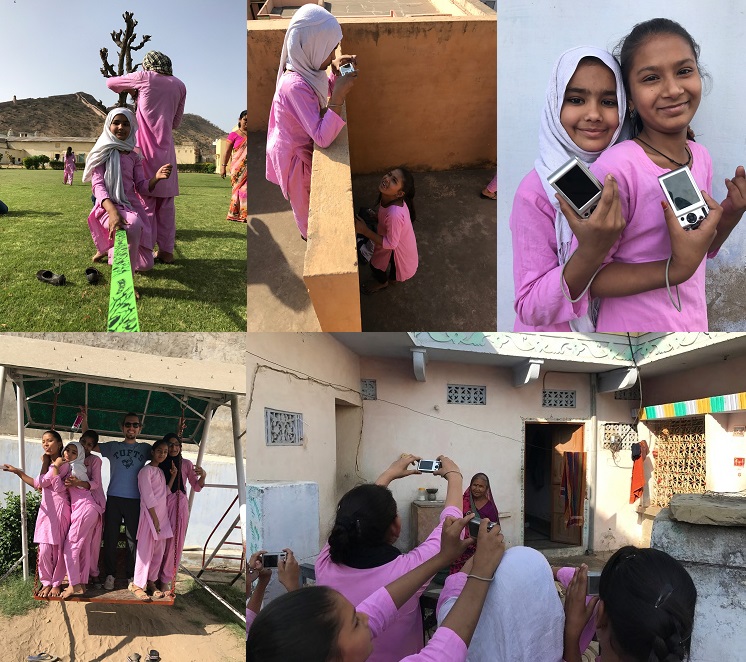
 

Blog 22 a


Blog 16

April 4

Today I celebrated my birthday and it was absolutely wonderful. A couple days ago I was a little down, I missed my friends and family back home and thought about how the beach was calling me. I’m loving my time in India and am so happy and appreciative that I even have this opportunity, but that doesn’t mean from time to time when I’m in traffic and cars are honking beyond normal human capacity I don’t think about tacos and sunset surf seshes. So I was a little unsure of how my birthday here in India would play out. This is far from my first time living abroad or being away from home, but it is my first time living somewhere without a super close friend or family member. There is good and bad in this, but for celebrating your birthday it’s closer to the negative side. But I was determined to stay my optimistic self and see what the day would bring. And my optimism turned out to pale in comparison to how great my day truly was.

My friend Armaan had coincidently texted me asking if I wanted to hike up to Chulgiri temple for the sunrise Wednesday morning, not realizing it was my birthday. Of course I said yes, stoked at the ironic timing of his invitation, and my day begun with a 5:30 alarm ringing, a brief meditation, and hasted departure from the Tushita House so I wouldn’t keep my friend waiting. We went out to the “mountain,” where we “summited” the temple, and said hello to a few early risers and my monkey friends. It was a beautiful hike and nice morning escape from the city.

Afterwards we went to his golf club for breakfast, I hadn’t yet been to a club in India, and I got to do his favourite childhood activity, feeding the fish at the club, which for someone who has always mocked people with aquariums was surprisingly really fun. I felt thankful that I had a friend in Armaan, and that even if he and I weren’t super close, it was still a person who I connected with, and luckily for me he was available to chill during my birthday.

I returned home, it was only 9, and looked at my phone for the first time. I opened up a message from Ankita saying happy birthday, a text from my brother who, using other, more brotherly like words, also said happy birthday, and a message from my parents singing happy birthday, in which I concluded that my dad and his 50+ years of living has not yet learned how to properly sing happy birthday. He messed up the lyrics on multiple occasions, an impressive feat, but I wasn’t home for long because it was time to slackline!

I had an awesome slack sesh at the park, landed all my tricks, and then went to Anokhi for some victory juice. So far the day was going well, but actually, the day was just beginning.
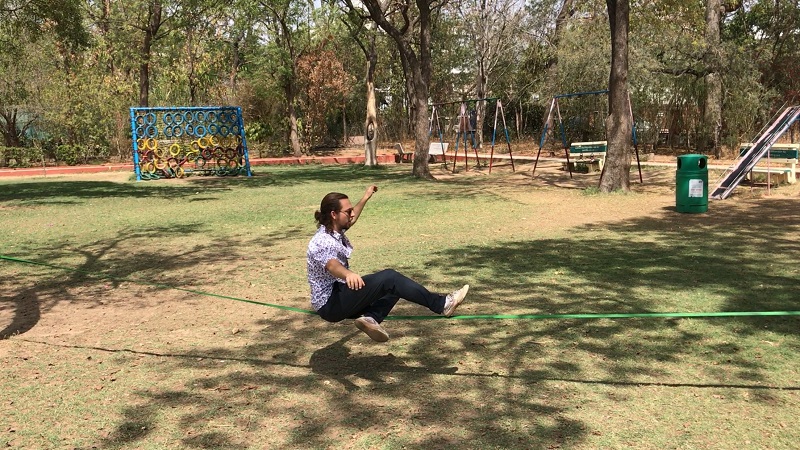


Blog 23


We arrived at the foundation and I didn’t really know what to expect. I entered the office, like normal, and all the teachers were there, like normal, so I figured they didn’t know it was my birthday. We all said hello and then I asked, “teachers sesh?” to which they responded yes. I went to fill up my water bottle, I’m always hydrated, and then opened the door to the Daisy classroom when I was suddenly bombarded with “happy birthday!!!” Acha! They did know it was my birthday. They instructed me to sit, I saw the projector was set up, and what followed was a lovely video of random photos of me that Payal had prepared. I’ve been teaching Payal video editing and it was cool to see some of that in display. I felt loved and was, after some earlier internal debate, happy that the teachers knew it was my birthday and had prepared something.
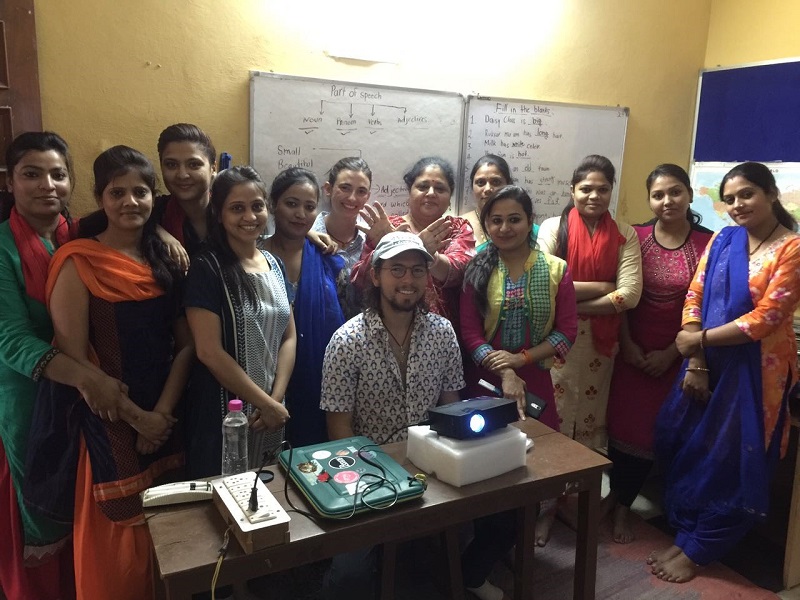
 

Blog 24


I had brought a bunch of candy for the kids since it was my birthday. One of my favourite things here, besides the “good afternoon sir” that I get to hear from various 6 years old each day during lunch, is the tradition of bringing candy for others during your birthday. I’m all about it. I love when students come up to me during their birthday and say “thank you sir” when I take candy from them. I don’t even like candy but the custom is fantastic. So I went to each classroom and gave students candy, until finally I went to my bandar friends class, the class that I actually teach, gave them candy, and then I surprised them by telling them that we were heading to Amer Fort for some bandar activities. Woo!
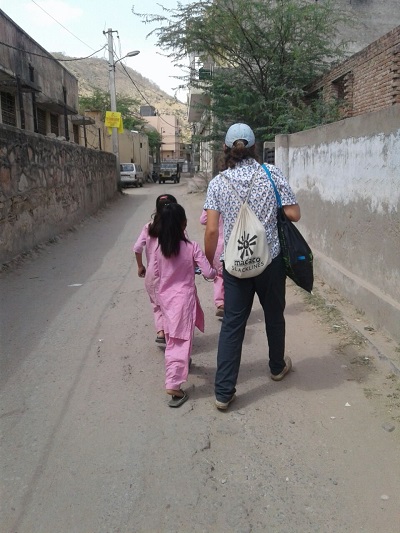
 

Blog 25


I grabbed my slackline and we headed out. It was quite fun to introduce them to slacklining, I’ve now introduced three classes to it, and it was most fun with these students as we practice exercise almost everyday. Falak, who is a beast in general, picked up slacklining more quickly than any of the 100+ people I have introduced to the sport. It was very cool to spend this time on my birthday slacklining at such a historical place with a bunch of eager students filled with positivity. My day was becoming even better.
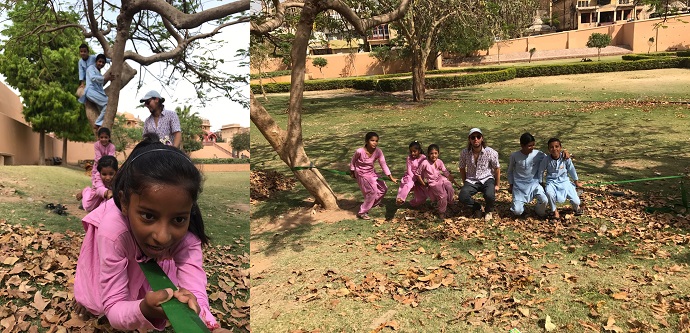
 

Blog 26 a


We came back a bit late for second batch, and Yusra was waiting for me outside the foundation. She said, “it’s your birthday sir?” to which I responded yes, and she took my hand and said come with me. She took me to Hizba’s house, who lives next door to the foundation and couldn’t come to class that day since she had a wedding, so that Hizbi$$le could say happy birthday to me. It was really sweet. I had a good time teaching my second batch, working on their various photo projects, and then the bell rang for tea break. I was still working with two students on their project so I had decided I wouldn’t go to tea break today, as I wanted to help them with their story. Shalu came down and told me it was tea break and I politely responded I’ll be there in a bit. She came down a minute later and was like, ‘Ryan come it’s tea break.” I often miss tea break to either keep working with my students, or, to have a brief period of alone time for some focused breathing to take a break from the stresses of working, so I was confused why she was so adamant that I should come for tea break. Then I remembered it was my birthday, I had forgot for the past hour, and that maybe they would sing or something. What came next I was definitely not expecting.

I opened the door and all the teachers were in the room, along with Ankita and Veenaji, with a cake, and, a bunch of my students in these cute masks and party hats and I just couldn’t believe it. They sang happy birthday, better than my dad, and rubbed cake on my face. Some of the teachers told me it was impolite to rub cake on other’s faces during your birthday, so I refrained for a bit until Ankita told me they were joking and trying to avoid cake on their face, at which point I proceeded to put cake on all my students and the teachers’ faces. We’re always told not to play with our food back home, I love playing in general, so I took full advantage of the opportunity!
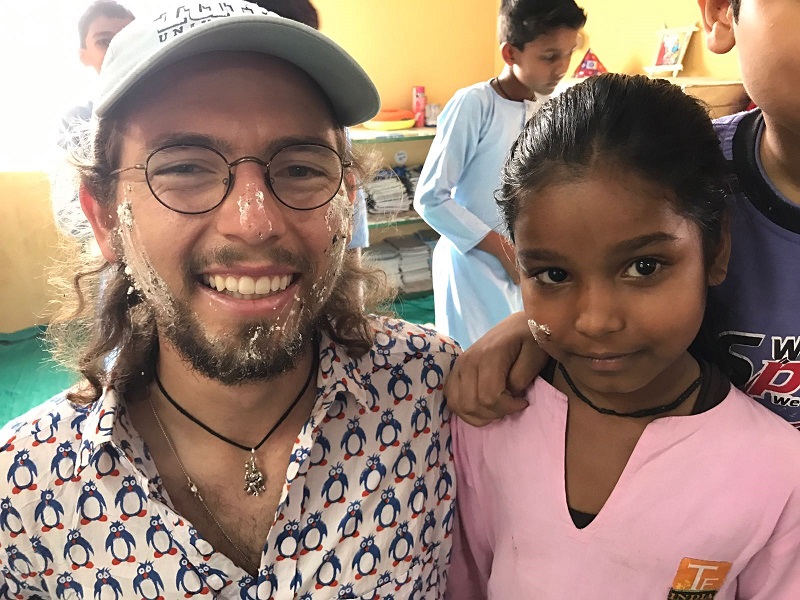
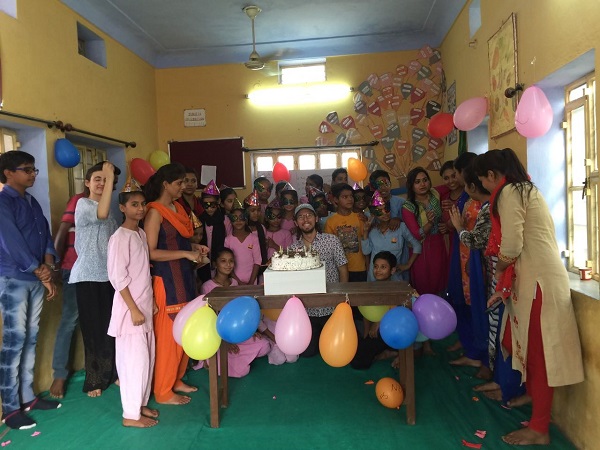


Blog 27

Blog 28

Blog 29


Then, four students from Daisy Class batch 2, the first class I connected with, approached with me something in their hands. They said, “here sir,” with nervous smiles on their faces and then walked away. I saw that they were birthday cards but didn’t read them because I was busy with the group. We took more pictures, danced, and then came back to reality for batch 3. I worked further with my students on their photo journals, finished batch 3, and headed to the ground for some basketball. My teammates Shifa and Nabila were waiting for me, we play everyday, and so were our archenemies Koshik and Aslam. Shifa and Nabila showed a lot of heart on the court, they have to as Nabila’s tiny 8 year old body doesn’t really intimidate the older boys while playing basketball, and I think we won but don’t remember. Finally the day had finished and it was time to return home.
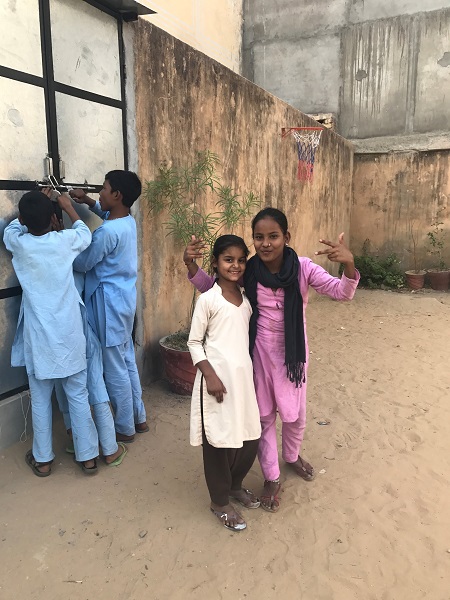
 

Blog 30


I had been so busy at the foundation that I really didn’t have time to process anything, so nothing like an hour long commute for some time to reflect. It was in the car that I started to think about how magical my day had been, how beyond different I thought my 23rd birthday would look like if you asked me a year ago, and it was when we were passing through the hills from Amer into Jaipur that I opened up the cards my students had given me. Writing this now, a few days later, still brings tears into my eyes. This was perhaps my most profound moment in India. Reading these notes that these four little girls wrote me, the first four students I had laughed with at the foundation, Jubiya, Khushbu, Akshi, and Alija, the first four students I saw in Daisy class and decided “yea I wana teach them,” was the highlight of my day. They had all spelled my name incorrectly, and it was the most joy any letters had ever given me. They said, “we love you,” “you are a great teacher,” and, from Alija, who was my first and secretly my favourite student, a “you are my favourite sir.” It couldn’t have been a coincidence that I was reading these for the first time, during the most beautiful part of the drive, during sunset. I was crying in the backseat silently I was so filled with love and joy from these notes. I just feel so lucky to have been able to experience anything remotely like that.
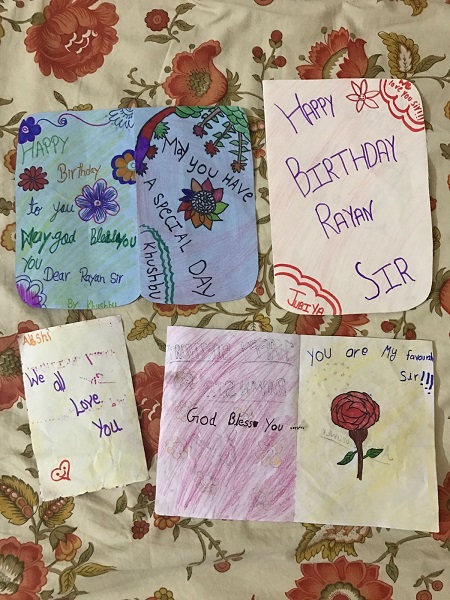
 

Blog 31


We got back to the foundation and made plans to go to dinner, me, Veenaji, Ankita, and Sara. Before we left Bheemji hit me with a “happy birthday sir” and a big hug, and then we were off to dinner. We talked about the day, about the foundation, I even ate “indian tacos” (fried paneer is definitely not the same as carne asada) and it was a nice closing of the day. I came back home exhausted and went straight to sleep.

 

Blog 32


This whole time I have been talking about me, about myself, and have probably used the term “I” and “me” at least 50 times in this short journal entry. But the profound takeaway from this was that each precious moment of joy that I experienced today was because of someone else. Because my brother texted me, because Ankita texted me, because my parents sang me happy birthday, because Armaan went on a hike with me, because my slackline is my friend, because the foundation is an unreal community that has generously allowed me to contribute to it, and get in return much much more, because Bheem is the homie, because all my other friends and family who texted me were kind enough to take time out of their day to think of me. So I feel lucky that I get to have experienced such a wonderful day, and take with me the important lesson that we can contribute to and generate other people’s happiness, and in turn, our own. I started this entry saying I felt a little sad about not having my close friends and family with me here in India, and this is still true, but I feel blessed to be able to have been welcomed into the Tushita community the way that I have, and learned the importance, on a more direct level, of inter-being with those around us.


Blog 17

April 7

It took me 3 months but I’ve now been to Amer fort twice in the past 3 days. The first time to go slacklining with my daisy batch bandars on my birthday, and then today for two of my penguin students’ photography projects. And while I thought the first time I went to the fort for slacklining was incredibly special, this second trip was just as memorable. For context, after working with each of the Tushita classes – except for the little ones (wow I love sunflower class though) – I created a new class dedicated towards photography and storytelling. It’s just two weeks long but it gives students who showed higher levels of interest in photography an opportunity for some more individualized attention, new lessons, and most importantly a chance to create a photo journal for exhibition on any topic of their choice.

The class was designed to be quite fluid, with students having the opportunity to control their workload and free to pursue whatever project they wanted. I gave two quick lessons, a review session on what they had previously learned and a new lesson on the importance of lighting. Additionally, I gave a quick lecture on narrative, and how its a tool students can use in their journals. But the ultimate purpose of the class was for the students to create a photojournal, to be storytellers, about something of relevance in their community.

I offered the students some potential story options, including “Animals of Amer,” “architecture or gates of Amer,” and “Cricket in Amer.” While the students were allowed to adopt any of these stories for their projects, I made it very clear that they were more than welcome to choose something different, and that anything was possible. Most of the students used one of my examples, and that’s fine; they are fine options. But a few were able to tap deeper into their creative sides, and explore something different. This is best exemplified by Hizba.

From day one Hizba has been a delight to teach. I remember on the first day I told my students I had three rules: have fun, remember to play, and break the rules. She was the only one who took this last rule seriously. I would open my laptop, Hizba would touch it, I’d tell her please don’t touch it and she would respond with “but you said break the rules sir.” I was so shocked, and incredibly pleased, with her assertiveness, that I no longer cared if she touched my laptop. And this confidence from her has been on full display during my time teaching her, so I wasn’t too surprised that she decided to pick her own topic.

At first she wanted to do a project on students of Amer, which I thought was brilliant. I was happy that she identified her own topic for her project, and looked forward to seeing her work. But the next day came and the groups had some reorientation – Yusra, her partner at the time, wanted to work on “Gates of Amer” with Palak and Samiya – so Hizba changed her mind. She told me “I have a new idea. I will make a project on tourists of Amer.” Forget her last idea, this was actually brilliant. She told me she would ask tourists some questions, take their photos, and make her photojournal. Her partner was Prerna, and they decided they needed to go to Amer Fort in order to meet more tourists. Prerna had an exam Saturday morning, quite frustrating that 11 year olds have compulsory exams here, so she wouldn’t come. So Hizba was left independent (relatively) to pursue her project and interactions with her subjects – tourists in Amer.

Hizba and Kashish came to the foundation early on Saturday (Kashish and her project “What is Amer Fort” – also a delightful and creative idea – were also part of our Saturday group). They each left their other school early, which made me super happy because I used to miss school all the time when I was younger, either for tennis, travel, or other opportunities, and they were some of my favourite memories. We headed out by car, Virendraji drove us, to the fort, with the team very excited for a new adventure. The girls especially were really stoked.

We arrived at the fort and I could see that Hizba had become a little nervous. We saw a tourist and I told Hizba go talk to her, but she was shy. Kashish did, however, go up and say hello, but the tourist ignored her. This happened a few times, and I was surprised by some of the responses Hizba received initially. She was ignored or dismissed, and essentially I needed to go up and say “hey she is creating a really cool photojournal please give her a minute of your time.” It was so cute each time she would start her introduction by saying “My name is Hizba and I am a photographer.” After a few times she became much more comfortable approaching complete strangers, especially after she met a family of girls from the UK who took an interest to her. They went with her to a shaded area, answered all of her questions including “why is your skin so pale if you also are spending time in the sun?” and showed her pictures of their home and the snow that was there an explanation for their skin colour. It was really funny. I could see Hizba become more confident.

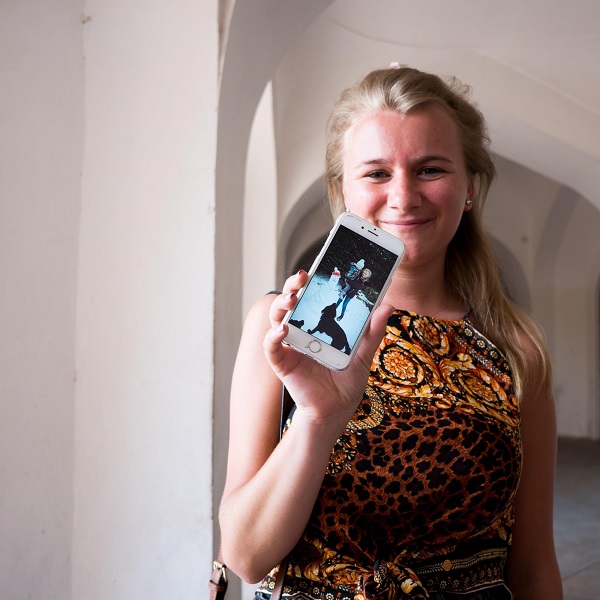
 

Blog 33

Blog 34


We then went inside the fort, where it was easier for her to approach people. I was happy that more people were open to talking with her, especially since I was quite upset initially at some of the responses. I understand that there are a lot of people trying to sell whatever to visitors at the Fort, so people have their guard up, but still a few people could have been more friendly. The girls loved the inside of the fort, as did I wow amazing doesn’t even do it justice, and they took turns alternating between my personal camera and then one they use for class. This smaller environment allowed me to feel comfortable with a student using my camera, so it was cool for them to play around with a different creative tool.
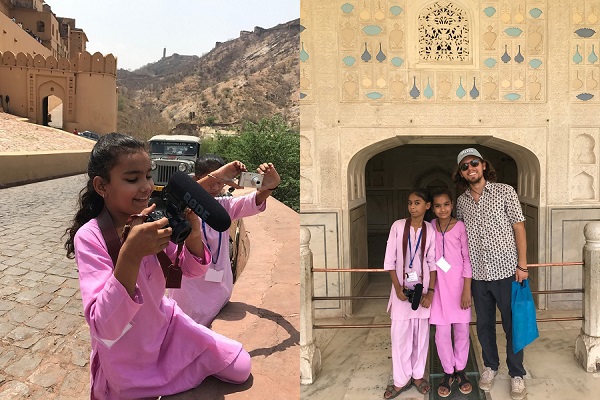
 

Blog 35


After our fun exploring we returned from the fort, exhausted from the heat, and hungry. Hizba had skipped lunch and gone straight from school to the fort, so I told her to go home and eat. She replied “no sir, I will upload my photos onto the computer.” Ok I said, impressed at her work ethic. After she uploaded her photos, I had begun eating my lunch at this point, I told her to go home and eat. She again replied “no sir, now I write about the photos.” I was absolutely bewildered. In general, my observations have been that the concept of “hard work” isn’t widely understood in Amer. What I mean is that people often do what they are told to do, and that’s that. Even with the teachers, they aren’t going home and working on their English for hours on end. They come to the foundation, where they practice as their told, and then they go home. It’s not that they don’t want to work hard, or maybe they don’t, but regardless of intention the result seems to be that conceptions of hard work differ than that of my upbringing. I don’t really know the cause, just some rather uninformed guesses, but I do know that Hizba and her resilience to keep working on this project made me laugh out of sheer shock. She ended up staying at least an hour at the foundation uploading her photos, analyzing them, and reflecting on her project. Finally she went back home to eat, and then she came right back to the foundation for an afternoon of dancing. She’ll finish her project this week and I’m so stoked for the end result.

On a side note, while it was relatively clear who belonged in the class and who did not, some students were a little upset that they were not in the class. While some of these students either said they weren’t coming to class during this time because of exams or had shown less interest in photography, I regardless would not want to exclude them from getting a chance to stretch their creative muscles. At the same time, I wanted to provide a better environment for the students who have clearly demonstrated a keen interest in photography. Fortunately, I think I found a great solution to this concern. Any student is allowed to use the cameras during tea break, after batch 3 or during batch 1, as well as at times during second or third batch when my students are using their computers. I’m also always available to talk with the students, so anyone who wants to practice their photography is welcome to. Farah is a perfect example of this. She isn’t in my class but has said that she is interested in photography, so she comes to me after her batch 2 class and takes a camera for a stroll. She talks to me more about photography than some of my students do, but she doesn’t want to do a photo journal for the exhibition, she just likes going to Muskan’s house and taking pictures with the elephant. On the other hand, Tarnnum and Muskan come during batch 1 and batch 3 for photography and are preparing something for the exhibition. So the students who want to use the cameras have plenty of access even if they aren’t in my class.

I’ve also tried hard to prepare Firdous to the best of my ability to continue teaching photography, and storytelling, at the foundation, so that eventually each student, including future students, can play around with a camera and learn how to shape a story to their liking. My thinking is that Firdous shouldn’t work with a certain class at a time, but should instead take two or three students with her for a week where they can have the ability to explore Amer and complete a cool photo journal or a different project. Because I have found that any outing with a few students has been much more beneficial to their growth than larger group classes.

Ultimately, this smaller class gave students like Hizba an opportunity to really push her comfort zones and improve her skills as a photographer, storyteller, and communicator. It goes to show how important having an opportunity is, just to be positioned in an environment where something can be achieved, and the more intimate class environment is allowing my students to embark on bigger, more in depth projects. I’m so happy how Hizba, and many of my other students, have been able to take advantage of this class and upcoming exhibition. I’m having some Indian photographer friends come who can talk with my students about what their jobs are like, and most importantly I’m grateful that my students have allowed me to introduce a new creative medium to them. I’m so excited to see what my students produce!

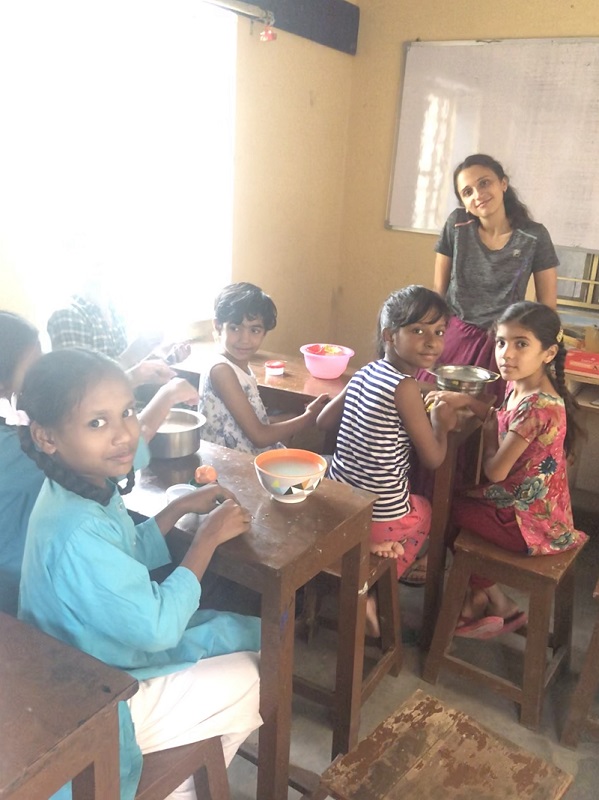
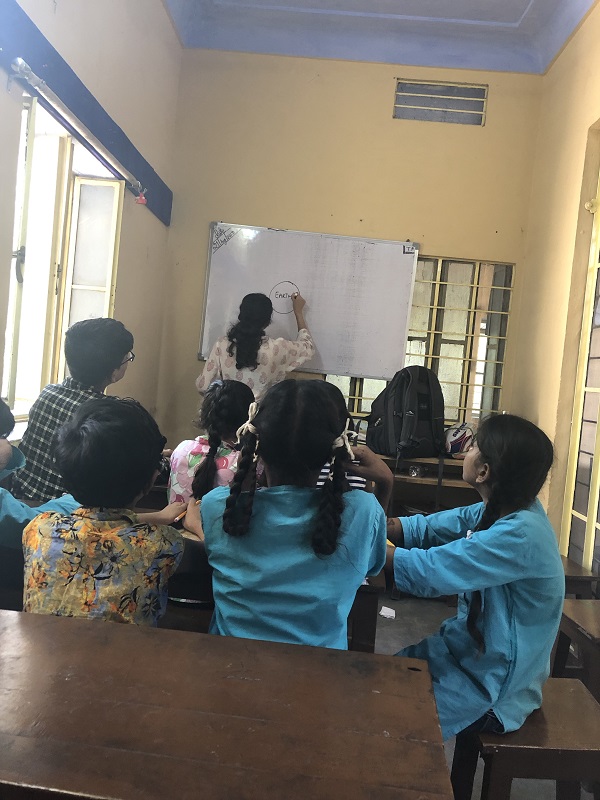
 

Blog posts by Dimitris Chaidas

Dimitris 1


“Everything is Pink in my Garden”: The beginning of a new journey

“I did not know what to expect from India or Jaipur”, this sentence was one of the first things I told Ankita, the programme coordinator, and Ana, the second volunteer at Tushita Foundation, upon my arrival at the airport of Jaipur. I was thrilled, but also sceptical. Eager and, at the same time, hesitant. First time in India…first time in Asia…first time outside Europe.

On my way to Tushita House, the place where I would stay until the end of my internship, I was looking out of the car window. Movement, sounds, colours, the high temperature… everything was triggering my senses. Without having realised where I was, I found myself outside Tushita House, my new home. Veenaji, the mother figure of Tushita Foundation, and of course Virendraji and Bheem, the people who would be my everyday companions, were all there to embrace me and to make me feel comfortable. All of them with a big and welcoming smile on their face to incorporate me in the Tushita House. By the end of the first day, I was calm, satisfied and curious about what the Foundation itself will be like. But my initial question remained: “Will I enjoy this experience?”

The big day of my first exposure to the Foundation arrived two days later. After a long trip through the city of Jaipur, the car which carried me, Ana, Ankita, Veenaji and Virendraji stopped. An image was right in front of me. An image of a building with the logo “Tushita Foundation” and, in front, eight happy faces staring and smiling at me.  I approached and bowed my head before the teachers of the Foundation. A garland of flowers, a tilak on my forehead, some rice throwing and a big ‘Welcome Dimitris’ banner made feel like from then on I was one of them.

Deconstructing sports: the case of the Olympic Games

If I could summarise the project that I am currently conducting at Tushita Foundation in one sentence that would be the following: the development of the children’s communication skills and critical mind. As a linguist specialised in (Critical) Discourse Analysis and Second Language Acquisition, my goal for the kids is to train them to become independent speakers of English, able to present their thought clearly and effectively in front of an audience and while participating in a discussion. The improvement of their argumentation skill, namely the skill to make statements grounded in justifications and evidence, is the focus of my project.


Dimitris 2

After the end of our class, we all strike a pose.


For my first encounter with the Rose class and the Lily class as a teacher, I chose the Olympic Games as week 1’s topic. During the first session, the children had the opportunity to watch a short video from the opening ceremony of the 2004 Olympic Games in Athens, Greece. Using media appeared to be a successful way for sparking the kids’ interest. After the end of the video and some information about the Olympic Games that I provided them with, we discussed about the Olympic Games’ value and the lessons one can learn from them. My aim was to make the children think themselves about the importance of sports in our life and why they play sports. At the end of the first session, the Olympic values of friendship, respect and excellence together with the four Paralympic values of determination, inspiration, courage and equality were not only embraced by the students, but they also advocated their role in modern societies. During the second session, the children learnt new vocabulary related to the Olympic Games and, in general, sports. Additionally, the second session was oriented in the cultivation of the kids’ writing skills. Thus, they were asked to use the new vocabulary for the production of a text of two paragraphs. In that way, I was able to identify both the level of the vocabulary’s acquisition by the students and their proficiency level. After the end of this exercise, the class included some grammar teaching. This week’s grammar session was focused on modal verbs (may, might, can, should/ought to, must, have/has to) and their different use and meaning in our discourse. The teaching procedure involved the kids themselves through their citation of examples in which they use each of the modal verbs. As a result, the kids were able to handle the new knowledge and managed to infer the unique usage of each modal verb on their own.  Now that my first week has come to an end I can say that I am very happy with the kids’ response and their eagerness to continue this project with me. I am already looking forward to seeing its results and the growth of my students.


Democracy: approaching its history and place in India and the world

After a busy weekend at the Tushita Foundation, where all the volunteers and the staff alike helped in checking the students’ health, a new week full of new knowledge and fun started last Monday. The classes were oriented in the teaching of the structure of paragraphs and the role of democracy in modern societies, like India. To begin with the first part, my classes focused on the text production and, to be more specific, the parts of a text, namely the paragraphs. In order for the kids to be able to present their thoughts in a clear and successful way, they first needed to learn the parts of a paragraph: the topic sentence, the supporting details and the concluding sentence. After having practiced on some paragraphs-examples with my help and under my guidance, the kids were asked to produce their own text. All of them managed to produce a paragraph successfully and, at the same time, to incorporate the tripartite structure. This class helped them understand that, when one speaks or writes, s/he needs to have a topic and elaborate on it in such a way that the reader or interlocutor is able to understand the issue under discussion. The difference between the way in which the kids used to write before this class and the way in which they managed to write during the class was significant.


Dimitris 3

Learning about the structure of paragraphs


The second part of my weekly work at the Foundation included the teaching of and discussion about democracy. First, I presented one picture of India’s Parliament to the kids and, when they recognised the building, the class on democracy started. After I had explained what is the meaning of the word ‘democracy’ and how democracy used to work in ancient Greece (Athens), the kids and I watched a short introductory video on democracy.


Dimitris 4

One picture of India’s Parliament to kick off this week’s topic


The interest of the kids was greatly sparked when we started discussing about the importance of democracy in our everyday life. Rights and ideas such as the freedom of speech and thought, the equality for all regardless of gender, race or religion and the active participation of citizens in their country’s future (through the elections) were not only understood by the students, but they also advocated the role of democracy in modern societies. Democracy was juxtaposed to tyranny and the practices of rulers who are not elected by the people of a country. The kids received prompts (questions) and had to think about the difference of the two systems of government and the implications that these have on the people’s everyday life. I was positively surprised by the fact that the children presented arguments based on the theory they learnt. Albeit initially unsure if the kids would find this topic interesting, they were happy with what they learnt and the importance of learning and discussing about topics like democracy. Their active participation during this class was the best reward for what I hope to achieve at the Foundation.


All together watching the introductory video on Democracy.

All together watching the introductory video on Democracy.

Animal testing: a short introduction

After a break of four days and a trip to the cities of Mathura and Agra, a new educational week at the Foundation started. For this week, I wanted to introduce the students of the Rose Class to the debate regarding animal testing. In other words, I attempted to discuss about the practices that are commonly implemented for the production of medicines and cosmetics. I started this topic by asking the kids if they knew how the medicines and the cosmetics are produced. Some of the students already knew that animals (especially rats and mice) are tested for that cause. Just like I have done every week so far, I kicked off my class by showing them a video on the topic. This time, an animated educational film was selected and served as an appropriate way for familiarising the students with a topic like animal testing. The link of the video is the following:

Questions about the video itself preceded questions about the week’s topic. The children had to answer questions of the type: “What was the video about?”, “What is the speaker’s point of view?”, “Does he agree with animal experiments or not and why?”, “Does he offer any alternative solutions?”. Then, a discussion started and the kids were asked to give their opinion on animal testing and support their statement with arguments. All the kids appeared to understand how the animals are treated in laboratories and they were very empathetic. Especially in the case of cosmetics production, they were straightforward: animal experiments should stop and be substituted by other methods. Among all the topics that have been covered so far, the kids’ interest in this week’s topic was arguably the keenest.


Dimitris 6

Jayant and Vishal highlighted the need for a change


The second half of the week was dedicated to grammar teaching. After four weeks of checking texts and paragraphs written by the kids, I realised that they need to revise what they know about the tenses. This time I started with Present Simple. Its teaching did not take place in the traditional way, that is by offering the kids the theory and then practicing with examples. What I chose to do instead was to start with some examples that the kids themselves came up with. The class focused on both correct examples and mistakes. The kids had to analyse and explain to everybody why they made the choices they made. In that way, the theory of Present Simple emerged from the examples themselves. At the end, we continued working on sentences-examples. The kids managed to incorporate the knowledge successfully and they were able to use Present Simple in their discourse in a grammatical way.


Dimitris 7

Happy to see that the kids are interested in the topic. P.S. I think should change the arrangement of the desks for next week’s video:D 


Rose Class: 1st batch:)

Rose Class: 1st batch:)

Arts: approaching their place, role and value in our lives

This week has been special in the sense that the atmosphere at the Foundation, just like in the city of Jaipur, has been festive. The excitement and the anticipation for the celebration of Diwali created a very positive context for this week’s classes. The creativity and the imagination that the local people have shown so far for the preparation of the festival made me decide to choose the Arts as this week’s topic.  Following last week’s pattern, a video was shown to the kids. A scene from the movie ‘Avatar’ was used by me to spark the attention and the interest of the kids.

My goal was to introduce them to the world of the Arts through (perhaps) the most widespread art, that is cinema. The discussion that followed the video centred around the different kinds of Art that exist and the kids know: the visual arts – including drawing, painting, photography, ceramics, sculpting and architecture; the performing arts – among them music, theatre and dance; and, of course, literature. The kids were surprised by the fact that there are so many arts. Moreover, they did not know that photography and architecture were both arts, for example. The kids received questions (prompts) and had to reflect on the video they watched in order to figure out some characteristics of the arts. I wanted them to realise why humans since the beginning of recorded history attempted to create works of art. The kids gave me multiple answers and they managed to infer from the video that arts foster our imagination, creativity, perspective and make the world more beautiful. Some kids, like Prachi, offered me and her classmates interesting views and answers on the topic. When she told the whole class that arts make people feel and think free I was positively surprised. Apart from the differences between the arts, I was constantly trying to show the kids the similarities that they share, with the story-telling character being their most common feature. Some kids looked a bit sceptical when I was trying to explain to them how arts like music and dance tell stories just like literature or painting. Their first exposure to this comparative approach of the arts was successful. By the end of the class, they were able to tell the similarities and dissimilarities among the arts.

At the end of our discussion session we all watched a second short video on the views of other students on the arts and we all paid attention to the answers that were given. Then, we talked about the importance of the arts and we compared the answers that my students gave with the answers of the kids in the video. Moreover, the children learnt new words related to the arts and they enriched their vocabulary. I am quite satisfied with the participation of the kids and their ability to communicate their views. After more than one month at the Foundation, I can notice some improvement of the communication skills of the kids and this makes feel particularly happy.

During this week I also worked with the kids on Present Simple and Continuous. We revised the theory together and we spent much time on examples and exercises. My main concern was to make them understand the differences between the two tenses in our discourse. I am confident to say that the kids showed a significant improvement and from now on they will continue to use the two tenses properly. If not, I will simply be there for them to help!


Rose class, Second Batch

Rose class, Second Batch

Post-Diwali Grammar Classes at the Tushita Foundation

It’s been almost two weeks since the last time I wrote about my experience at the Tushita Foundation. Although I’ve been almost two months in India, this country continues to amaze me and provide me with some unique life experiences. Of course, I am referring to the Diwali festival which I had the pleasure to celebrate in Jaipur for one week. The city was beautifully decorated and its festive atmosphere offered everyone the perfect setting for the Diwali celebrations. After the end of this lovely break, all the volunteers and I returned to the foundation to start our classes again and continue our work for the education of the children of Amer.


Through the eyes of a teacher

Through the eyes of a teacher


This week found my project slightly modified. After having been exposed to the kids’ proficiency level, I realised that more grammar classes are necessary for the improvement of the grammatical aspect of their speech. As such, I decided to dedicate the entire week to the revision of the tenses that the kids knew, that is Present Simple and Present Continuous, and the teaching of Past Simple, a tense that not all the kids appeared to be familiar with.


Credits to my friend and colleague Firdaus

Credits to my friend and colleague Firdaus


Before I teach something new, I try to spend some time on summarising what has already been taught. On Monday, the kids revised the tenses of present under my guidance and with my support. They worked on examples and applied their knowledge to exercises. I was very happy to see the excellent use of Present Simple and Continuous by the kids. Moreover, they were able to choose the right tense when they wanted to speak about actions that happen regularly (Present Simple) or at the moment (Present Continuous). Tuesday and Wednesday were both dedicated to the teaching of the theory of Past Simple and the past tense of the most common irregular verbs we all use in our discourse. As I always aim to do in class, the teaching of the theory occurred through using an inferential approach. To wit, the theory was inferred by the kids after working on examples I gave to them. After this had been achieved, the kids applied their knowledge to an exercise on Thursday and Friday. The students were given images that were suitable for prompting story writing. They were asked first to describe what they see in the picture (in that way they had to use Present tenses) and then to think what was the image they were offered about. Their story had to include a scenario about what happened before the action in the image. Thus, the kids were led to use Past Simple in their story. This exercise seemed demanding to the children at the beginning. The fact that they had to come up with a story and use their imagination made them think that they would not write a nice story. Of course, my predictions that they would enjoy this exercise proved correct and the kids not only gave me some very good stories, but they were also happy while writing. They managed to use the tenses they know successfully and this made me feel very satisfied with their progress and the results of our collective efforts in class.


The students, Firdaus and I after the end of our class

The students, Firdaus and I after the end of our class


I am half way through my internship at the Foundation. The first positive feelings I had during my first weeks have kept growing stronger and I am already looking forward to the continuation of my project. Both the bonds I have developed with my students and their constant improvement make me feel proud to be here.


We played Jenga on Saturday and, as the picture suggests, we had fun!

We played Jenga on Saturday and, as the picture suggests, we had fun!

My time with the Lilies

The first text I wrote about my internship at the Tushita Foundation was published more than two months ago. My work, my experiences, my relationship with the kids and the teachers, the special moments that we have shared together so far, they have all made time fly very fast.


Payal writing some exercises for the students

Payal writing some exercises for the students


I have spent the last couple of weeks with the second older class at the Foundation, the Lily Class. After working with the Rose Class for 1,5 months, it was good and refreshing to expose myself to new students.


Palak focusing on her task 

Palak focusing on her task


With the age difference comes proficiency difference. Having that in mind I first wanted to check the communicative level of the Lilies. Some group discussions in class as well as some written exercises showed me which sides of the children’s linguistic competence are the weakest. Unlike the Rose kids who can develop more original and complex linguistic structures in their discourse, the Lilies appeared to lack this skill which is related not only to the proficiency level, but also the age. The biggest weakness of the Lilies was their repetitive and one-dimensional discourse. To be more specific, when the kids were asked to write a paragraph or talk about a topic they kept repeating the same words, not due to vocabulary issues but mainly because they were not able to use pronouns. So, for example when the kids wanted to write something about the Foundation, they used to repeat the word ‘Foundation’ instead of using the personal pronoun ‘it’. This observation of mine made me decide to dedicate as much time as needed to change and improve the students’ repetitive discourse.


The most challenging pronouns for the Lilies: the indefinite group

The most challenging pronouns for the Lilies: the indefinite group


This sub-project of mine took me almost two weeks. The classes focused on almost all types of pronouns: personal, possessive, demonstrative, reflexive (reciprocal), interrogative and indefinite. With the help of one of the teachers at the Foundation, Payal, I made an extensive use of helping material. Sentences and paragraphs in exercises helped the kids understand why we use and why we need the pronouns when we speak. Out of all the six types of pronouns that the Lilies learnt, five types were acquired very quickly. The only group that seemed to be the hardest for the kids to understand was the group of the indefinite pronouns. The students faced some difficulties in separating the no-pronouns from the any-pronouns. This obstacle, however, was one of the obstacles that all teachers face and need to tackle doing two things: showing patience and remaining determined. This was the case with the indefinite pronouns. The students managed to understand the difference between the no-pronouns and the any-pronouns as their performance during the test they had to write at the end of this sub-project indicated.

Now, I am only looking forward to our next sub-project!


Our everyday visitor!

Our everyday visitor!

Learning how to write a text

One of the first classes I delivered at the Foundation regarded the paragraph structure and, to be more specific, how to write a paragraph in a systematic way. The rationale behind teaching the structure of the paragraph is the need to organise our thoughts before starting writing or speaking, so that the reader or interlocutor is able to follow the arguments made.

Building upon the knowledge that the students already have about the structure of paragraph which is the small unit (after the sentences) in a longer text, I started teaching the so-called “text structure” this week. Teaching the text structure means teaching the ways in which a writer (the students in our case) can organise the information s/he includes in a text. The importance of “text structure” lies not only in making arguments, but also in interpreting them.


Dimitris 18


So, having that in mind I delivered several classes on the commonly used patterns of organising the text information, that is the cause and effect
 structure, the chronological order, the compare and contrast structure, order of importance and problem and solution structure. By providing the students with examples first and making sure they can understand the exercise itself, I went on to deliver the new theory on text structure. Despite the age of the rose kids, they appeared to lack the knowledge about text writing, since this type of class is delivered relatively late at schools. The kids were able to acquire the new knowledge surprisingly fast. Apart from the cause and effect structure which took the children some extra time to learn, all the other structures were easily understood as the written exercises indicated.

Since the classes this week were about text writing, the students were asked to produce their own texts while adopting the structure that I had asked from them each time. Today, for example, the students produced their own essays on the problem of obesity. By applying the structure of problem and solution, they managed to write a text about how we can all tackle obesity and adopt a healthy lifestyle. The texts that were produced were of high level, with Mehek’s and, especially, Lalit’s essays being of exceptional quality.

A steady improvement in the kids’ communication skills has been evident since my arrival here. This not only satisfies me as a teacher, but also motivates me to keep working hard for them.


The Rose and I post-class selfies

The Rose and I post-class selfies


Jayant and I chilling after a two-hour dance

Jayant and I chilling after a two-hour dance

During the breaks, students can also become teachers as part of a role play game!
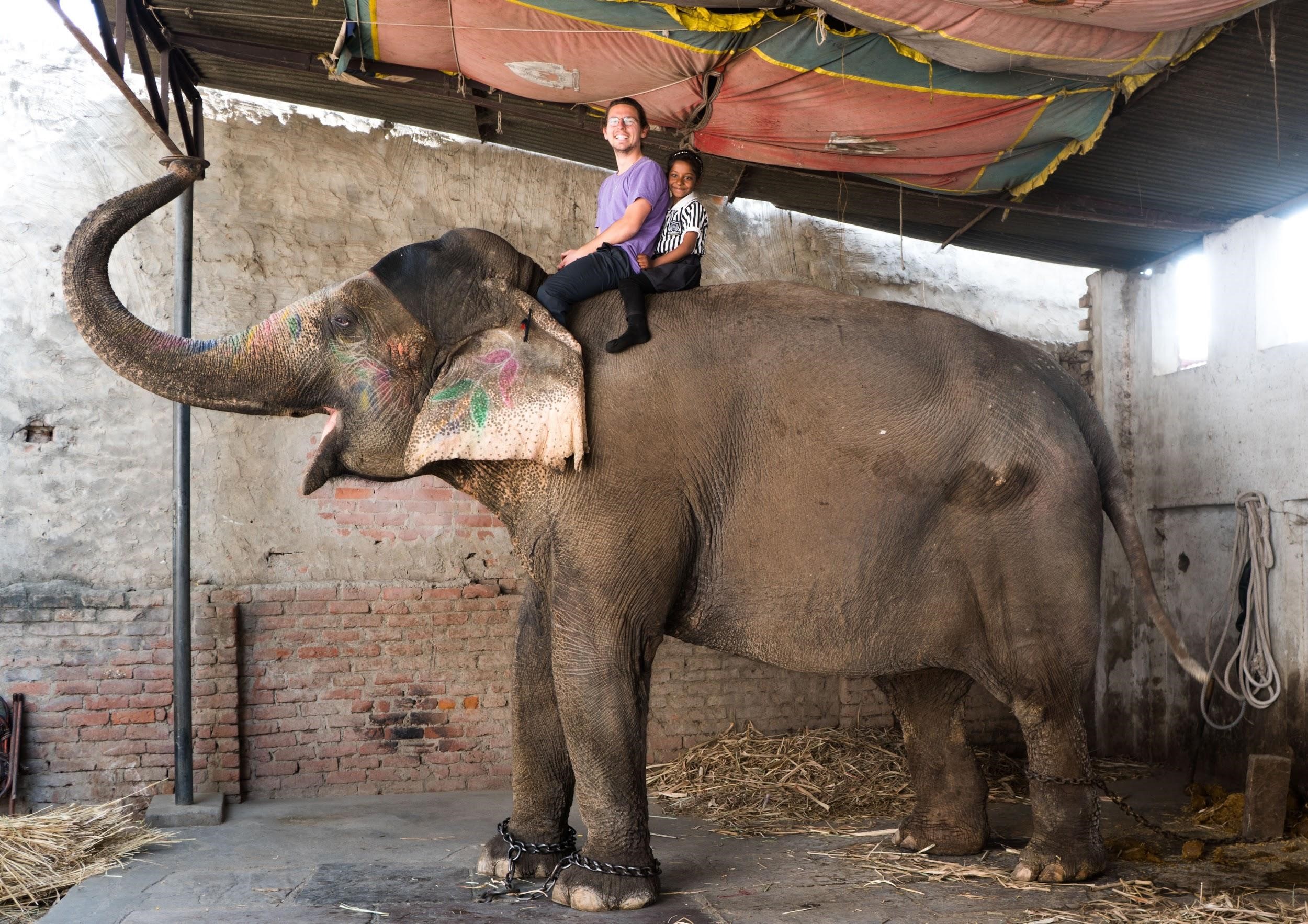
During the breaks, students can also become teachers as part of a role play game!
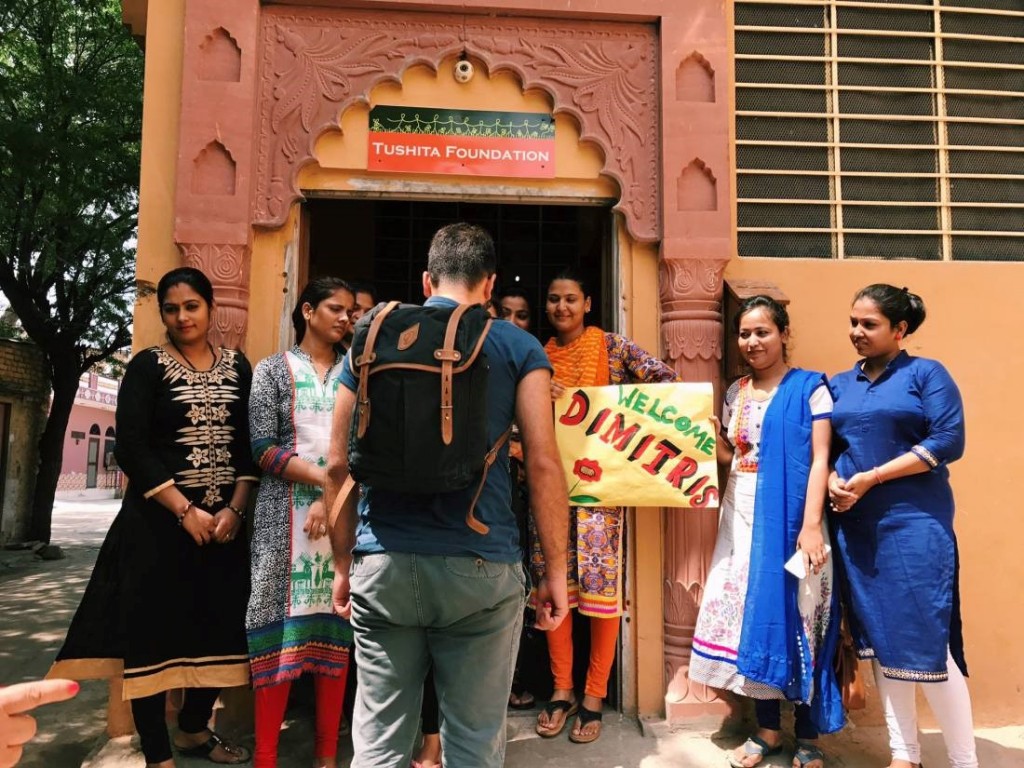
Teachers sessions and Text Structure vol. II

My time here in India continues to provide me with unique moments and experiences. After a four-day trip to the beautiful cities of Jodhpur and Jaisalmer, I returned to my duties at the Tushita Foundation where work and fun always await me around the corner.

This time I decided to write a post not only about my classes with the kids, but also another part of my work at the Foundation: my grammar classes with some of the teachers. To begin with, this week found me and the Rose class finish our sub-project on text structure. We worked on the two remaining patterns of text organisation: the order of importance and sequence/process writing. As I wrote in my last post, the teaching of text structure serves the skill to recognise and de-construct the way in which information is structured in a text in accordance with the aims of the person who writes or speaks. Since it is mainly a practical issue (apart from theoretical), I dedicated much time on exercises this week. To be more specific, the kids worked on texts-examples under my guidance and they were asked to find the main idea of the text, to give a suitable title to the given passage and recognise the textual pattern that was used by the author. This exercise which is not related only to the English language, but to the kids’ ability to handle textual information in general proved to be challenging for the younger students at the beginning. However, the two didactic hours that we dedicated and the big number of examples that we worked on together were very useful. All the kids managed to develop their understanding of information organisation in a text.


My students love Domino and they prapared a D for their Greek teacher ❤

My students love Domino and they prapared a D for their Greek teacher ❤


Since the start of my teaching duties I have worked with the junior teachers at the Foundation. Before the classes with my students every day, I spend almost 1,5 hours with Rahela, Shalu, Firdaus, Pooja and Jyoti. Together we have been working on the tenses, so that their speech becomes even more proficient and more complex. Almost three months have passed and this period has been very interesting in the sense that working with adults differs from teaching children. This difference is mainly biological. Since I am a linguist trained in language teaching I already knew that the parts of the brain, that are linked with linguistic competence, become more fixed and less malleable as people grow older. I have become familiar with this fact during my work with the junior teachers. The biggest challenge for me was, on the one hand, to teach everything from scratch and, on the other hand, to make the teachers acquire meta-linguistic knowledge, namely the ability to realise their mistakes when they speak. The first was not as difficult as the second one since former volunteers taught the tenses in the past. It was the second part that proved to be the most challenging and required determination. Now, after three months of hard collective work, I am in the very pleasant position to write a post about their steady growth and improvement. As a teacher I am not interested in the excellent performance of one or two students of mine, but rather in the development of all my students. When I first began teaching the teachers, Rahela’s proficiency level was already quite high. However, the younger teachers like Shalu needed to cover the discrepancy between them and the more advanced teachers. Gladly this has been the case the last weeks. The younger teachers, among them Shalu and Firdaus, have shown the biggest improvement since the beginning of our grammar classes. As a result, I have been lucky to witness a collective growth in all of them. This has made me particularly happy and feel proud, since I always believed we can make it happen. Kudos to them !
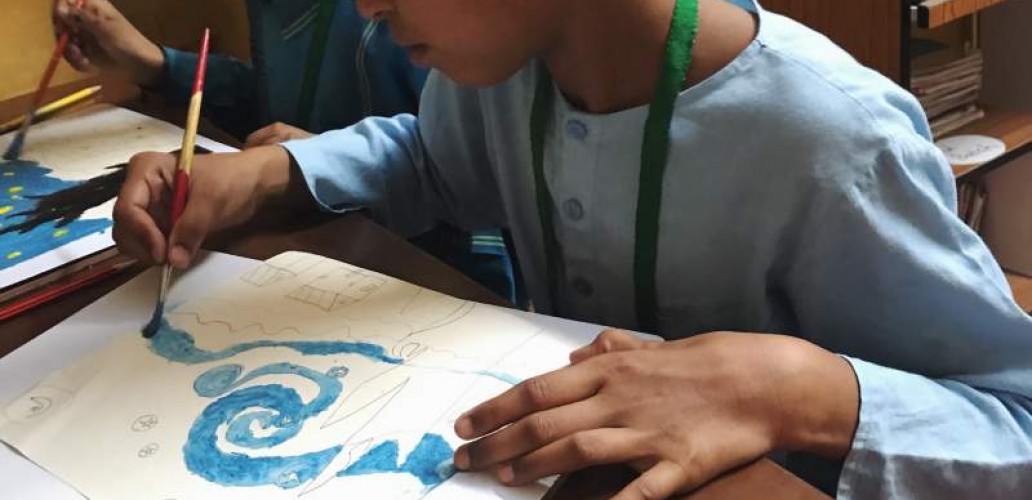
 

Post-class picture ❤

Post-class picture ❤


IT Skills and Class Presentations Before the Christmas Break

Three and a half months ago I first started writing my posts and it feels like yesterday. This post is the last post of 2017 and the last of my internship at the Tushita Foundation.

This week I wanted my students, especially the younger ones, to start using a computer and familiarise themselves with the procedure of searching and finding information online. This week’s task for the kids was to come up with a topic that they would like to present in front of the whole class the last day before the foundation closes for Christmas. Most of the students liked my recommendation for them to talk about their role models, people they admire or like and feel inspired by. From Steve Jobs to J.K. Rowling and Mark Zuckerberg, many famous and non-famous people who serve as an example of what a person can achieve if s/he works hard and stays committed, they were presented by students in the rose class.


Overall, their performance was quite good and they seemed to enjoy this sub-project. Some of them were shy in front of their audience (e.g. Prena), whereas other were quite comfortable (e.g. Lalit). The final result of their work reflected the improvement that they have shown since the beginning of our classes and this made me particularly happy.

Friday was my last day as a teacher at the Tushita Foundation and it had everything. Christmas celebration, gifts, role playing, games and fun.


Having the chance to be the Santa for this year’s festivity was a great experience. The excited faces of the students will remain in my memory for a long time…


Three hours of playing, dancing, eating and smiling. Three months of teaching, learning and making bonds…


The best gift from the sweetest girls, my “grammar class” ❤

The best gift from the sweetest girls, my “grammar class” ❤


Images, colours and emotions in this post….images, colours and emotions during this internship…


Dimitris 38


Kabbadi was our everyday ritual ! Playing together everyday after our classes is one the things that I will miss the most…

I came in India and at the Foundation as a teacher, to offer my knowledge. How am I leaving?

Better, grown and richer in experiences….

Until the time I return, as I promised….


Dimitris

24 December 2017

Water Filter Lab

By Samantha Chai


Two of the most memorable days that I spent at the Foundation were dedicated to building a homemade water filter in the Rose and Lily classes (which consist of the oldest students.) I had prepared the students for this activity by teaching lessons about water purification and water contamination, which fit into my broader project of water sanitation and conservation. We discussed important terminology, the risks of drinking dirty water, and the materials we would need in order to build a simple charcoal water filter. All of this talking and learning culminated in a lab experience—their first, the students insisted.

A basic water filter requires only a few materials and the procedure for building it is simple. We put charcoal, sand, and rocks inside an upside-down plastic water bottle and used a cloth to hold the materials inside the bottle. As I questioned the students about which step came next in the procedure and interrogated them as to the use of each material, students who answered correctly were able to physically complete the step in front of the class. The room came alive as students shouted out anecdotes from the lesson on water purification and furiously jotted down notes from the whiteboard—all of them wanting to be lucky enough to add a few scoops of charcoal in the filter. I was amazed by the enthusiasm, having forgotten myself the intrigue of helping and participating for a child.

One of the most entertaining aspects of the experiment was the imperfection of our filter. The charcoal we used was regular charcoal collected from one teacher’s home instead of activated charcoal, which is mixed with a calcium chloride solution and baked. Our charcoal made the initial water that came out of the filter black, even though I had described to the students in our water purification lesson that the water would be pure and clear. This gave me the opportunity to instigate critical thinking amongst material that was otherwise review.

I guided the students in writing lab reports to accompany the experiment. We brainstormed certain elements as a group, specifically the purpose, materials, procedure, and results. The students individually crafted their own hypotheses and discussions, the latter of which prodded:


“Why do you think the water was black?”

“Why do you think the water came out slowly?”

“If you did this experiment again, what would you do differently?”

“Was your hypothesis correct?”


The discussion questions in the students’ lab reports provoked some clever responses, as one girl suggested that if we were to do this experiment again, we should boil the water. Another girl suggested that we put the charcoal in the water filter last rather than first so that the water wouldn’t turn black. Perhaps the most insightful response to my question, “Why do you think the water was black?” was “The water was black because it was dirty.”

This water filter lab was not only interactive and exciting, but also a drastic change from the lecture-style lessons in crowded classrooms that define the schools that most of the kids attend. Having grown up in classrooms equipped with so many supplies and small class sizes, I’ve taken for granted my opportunities for hands-on learning and individual attention. This is the kind of exercise in which the students were finally rewarded for their attentiveness and careful notes. Here they benefitted not only from learning material presented to them, but also from using their creativity and deeper understanding to explain how and why their experience differed from what was expected. I hope this type of learning encourages the students to adapt what they learn in the classroom to real-life scenarios as they continue their careers as both students and privileged members of their community.


ALL Children are Artists

By Ana Paula Berlin


Art is defined as “the expression or application of human creative skill and imagination“, children are without a doubt the purest form of creative skill and imagination and, as a result, Picasso was only right to state that ALL children are artists.

I have been in India and at Tushita Foundation for a little over a month now, it feels like I arrived yesterday and like I have been here all my life.


0_Optimized

Amer Fort, less than a 5 minute walk from Tushita Foundation.


The first class I taught my Art History lesson to was the Daisy class and I believe it was the perfect fit to begin my time as a teacher at Tushita Foundation, these children are very young (they are divided mainly by their English skills) but what is wonderful about them is that most of them started in Sunflower class (youngest class) and learned enough English to move on to the third most advanced class even though some of them are only 6 or 7 years old. It was ideal because young children have not developed a sense of self-consciousness and this translates automatically into great artwork. Some of my oldest children in Daisy needed a little push but were undoubtedly proud of their final work (as they should be!).


1_Optimized

2_Optimized


If there is one thing I believe true is that art cannot and should not be graded. Effort can be measured in a classroom but ALL children must be encouraged to create and very much applauded when they do; it boosts their confidence and their skill and makes them feel capable and proud. Art is, in my opinion, the purest and most effective tool to provide a child with those powerful feelings and it has been such a joy and such an unmeasurable privilege to guide these amazing children in their creative process.

The class is designed to provide them with a little bit of English vocabulary and history. As a result, I begin my lesson with a brief 15 minute Power Point presentation explaining the specific art period we are covering that day as well as some fun facts (main artists, place where it emerged, etc.) and the rest of the class is dedicated to the project itself. The covered art periods are:

Cave Art

Artist: Noman.

Artist: Noman.


I was very surprised at their art skills and concentration, I always play classical music as soon as they begin painting and talking is extremely discouraged during the lesson as I believe they have to focus on their artwork without distraction (classical music helps them enormously; after the second class we barely heard a sound during the 45 minute period).

For my first project I asked them to scrunch the piece of paper I had given them (to create  a rocky, cave-like texture but also to help them relax and enjoy) and they stared at me like I was crazy so I had to grab one of their papers and scrunch it myself and received nervous laughter from all of them as they started (cautiously at first) scrunching their own piece of paper and laughing.


4_Optimized


Renaissance

For the second period I jumped straight to Leonardo DaVinci’s Mona Lisa, the only time they were allowed to look at the picture for a longer time period and even then I was positively surprised to see them reaching out for bright colors and adding flowers to their work!


Artist: Alija.

Artist: Alija.


The first one to do it (brilliant little girl named Muskan) looked up at me as if asking for permission and I gave her back a stare as if to say “your art work, your call” they now recognize this stare whenever they look up at me asking me to help them with something or my approval on their sketch before they move onto using paint.


Brilliantly confused by her expression, Aslan decided to put sad and happy faces around his Mona Lisa.

Brilliantly confused by her expression, Aslan decided to put sad and happy faces around his Mona Lisa.


Impressionism

Art with children is tricky, it requires innovation because using the same technique can get quite boring and the last thing you want is to discourage them and so, for this movement, I decided to introduce them to Monet’s Water Lilies and provided them with paper so they could cut and paste it to come up with their own flowers. I could not find maché paper (ideally the second class will be provided with only pastel-colored-maché paper) but I think this was once of the most successful projects, they loved the technique and had a lot of fun experimenting.


7_Optimized


Pointillism

For this project I decided to let them paint anything they wanted. The main problem I faced with this class is that, because of their age difference, the little ones tend to look over to the older’s work for “inspiration” so I tend to encourage them to restart when I see plagiarism in their work. Anyway, the technique included 8 different colors, pencil, paper and cotton swabs. They looked at me once again like I was crazy when I pointed at the cotton swabs and called them paintbrushes but they all found it quite funny (perks of having children for an audience!).


Artist: Khushboo

Artist: Khushboo


At this point the class knew Art History day was on Tuesdays and Thursdays and we barely had one or two children missing during those days. They also knew they were allowed to stay longer if they wished to finish their artwork on that day and so the bell did not apply to them. It was such a great feeling to look at their excited faces when they came in the classroom to find it rearranged for art class (the tables get put together to form one big table and the supplies are always in place by the time the kids come in) but also great to have them ignore the bell sound and stay focused on their work.

Pointillism was a great project, they came up with some brilliant art work and it was great to begin seeing them gain the confidence to focus on their own paper and come up with their own ways of using their materials.

Post-Impressionism

Van Gogh! What do you mean he didn’t sell one single painting? Their little expressions trying to figure out whether that big black thing was a tower, or a castle, or a tree? “whatever you want it to be” is the correct answer to that one I believe (I personally always saw it as a big scary tower).

For this project the kids used paint mixed with powder soap to give it a heavy, oily consistency and help them recreate the thick brush strokes our Dutch friend loved so much.


10_Optimized

Artist: Zoya.


The results are pretty amazing and they captured Van Gogh’s sky brilliantly.

Cubism

This was, to my great sadness, the last art movement that I could teach the Daisies as I only had one month in each class. It was definitely a challenging and perfect way to wrap up the first batch of Art History at Tushita Foundation. We took inspiration in some Picassos and the results (in process, tomorrow batch 2 and 3 will complete their art works) are amazing:


11_Optimized


I believe that staying a whole month with one single class was the right approach, having been a student of many art teachers I deeply believe a connection between student and teacher is very important as they need to feel comfortable creating and the space has to feel right and prepared, in all, I believe an art class has to provide the children with the opportunity to escape life for a little and just concentrate on the artwork, and that takes time. And so, alternating between classes would not have provided me with the trust I needed to obtain from the kids and learning their (very complicated!) names as well as their personalities, teaching them English besides art, learning their ways and little quirks because all that took some time and I am left feeling incredibly nostalgic that for now, my time with the Daisies is over but also very excited to apply the lessons learned and get to know my second class: the Jasmines.


It has been a great privilege to learn from these kids, to enjoy their pride and to discourage their self-doubt, to see them smiling when they found their artwork hanging on the wall of the classroom and listening to them when they greet me by saying “hello Ana-ma’am, I am an artist“. Yes, you are. Every single one of them is the best artist I know.